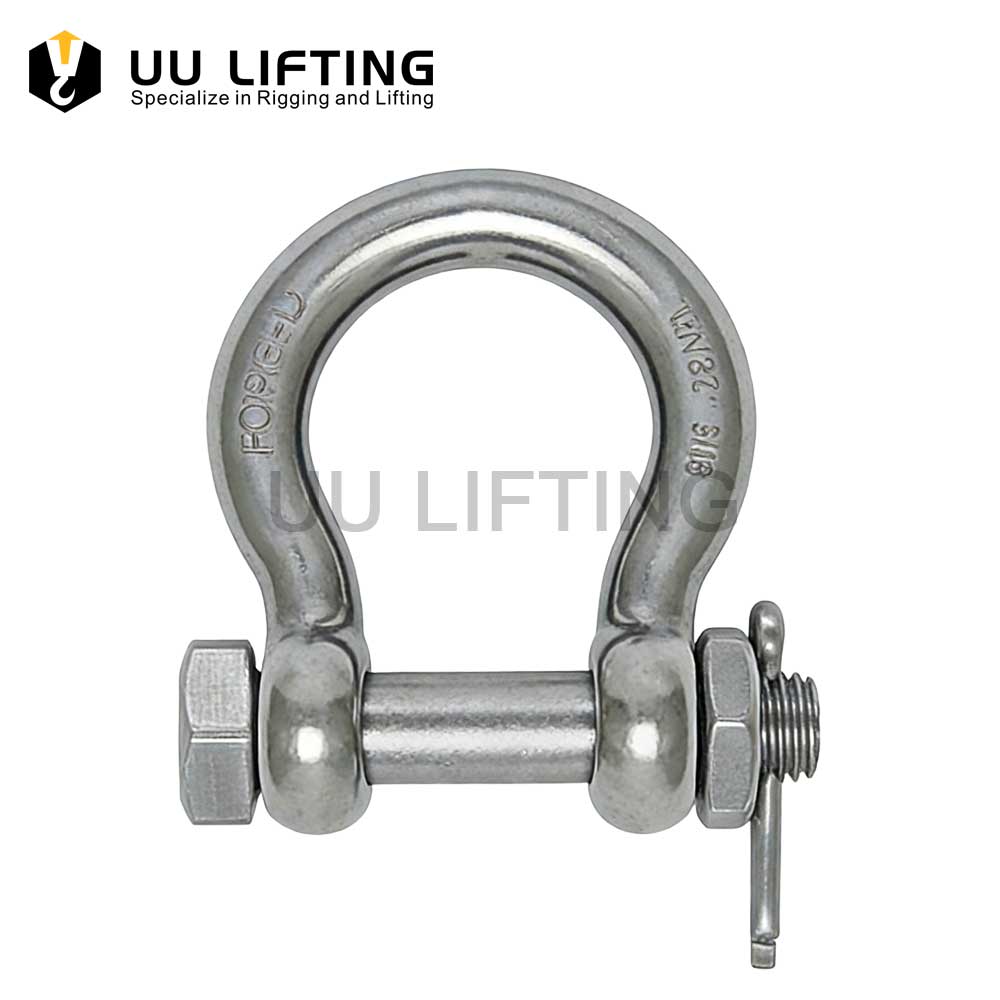
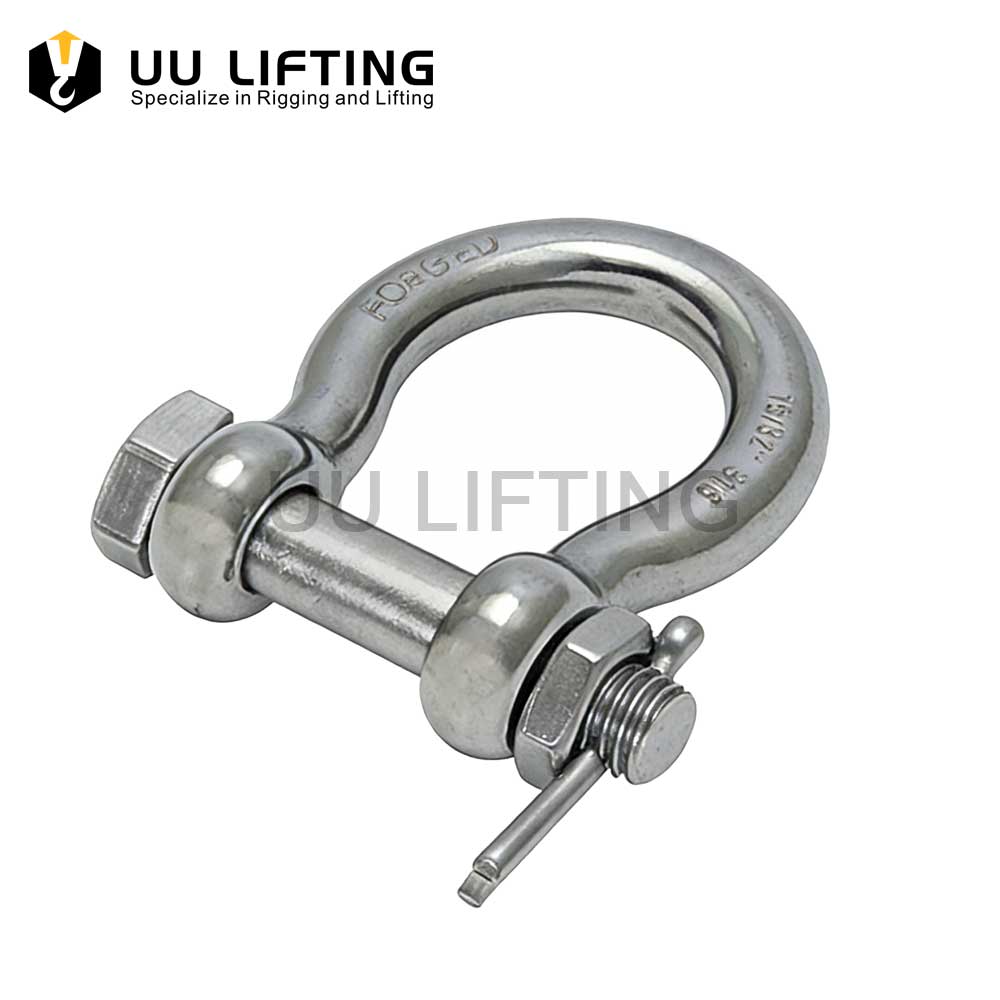
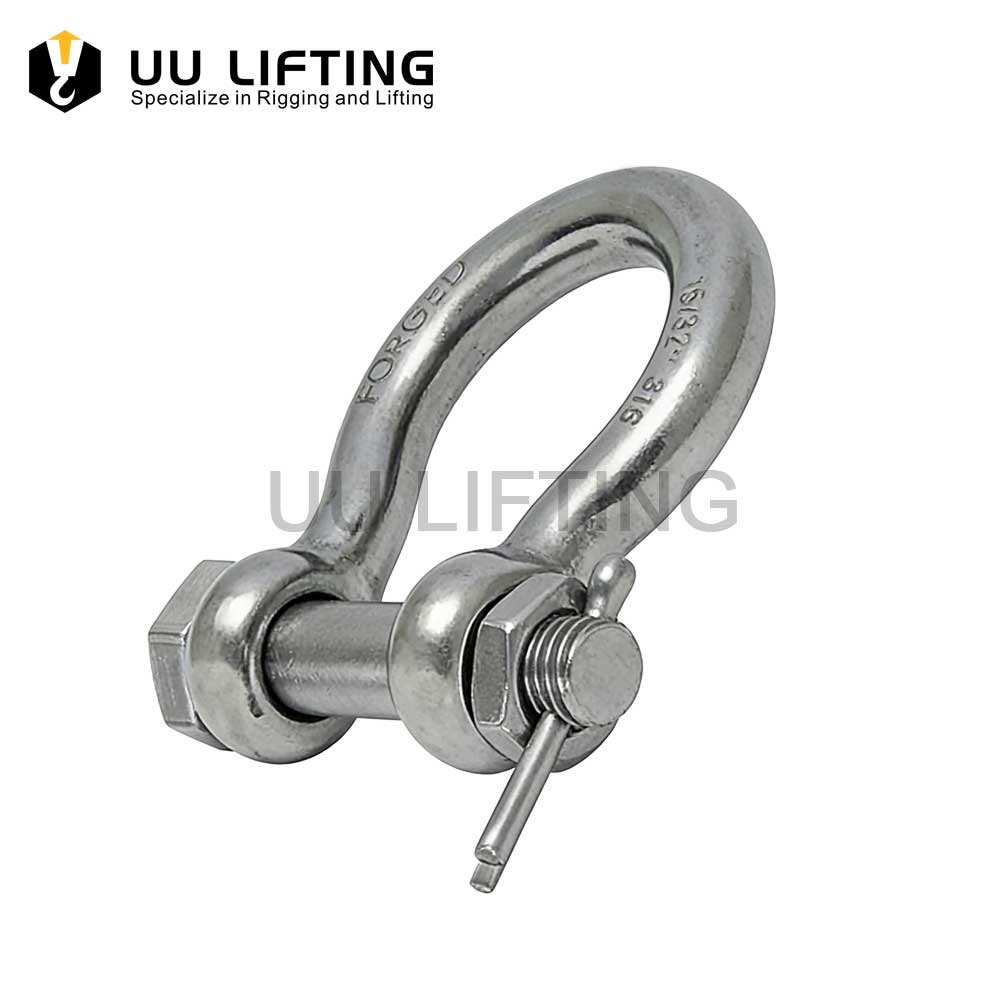
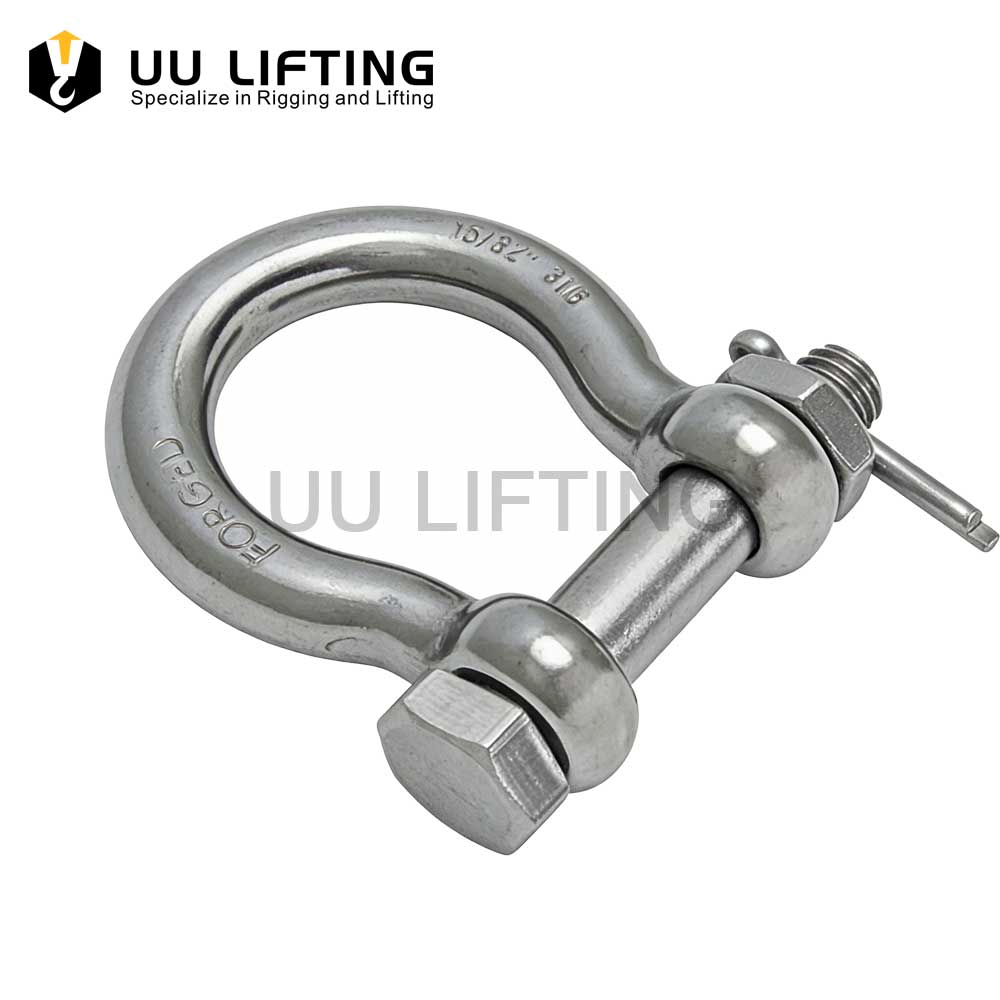
Stainless Steel Bow Shackle with Bolt Specifications:
MOQ
1 Pallet, 1 Ton or 3000USD
Material
Grade 316/304 Stainless Steel
Surface Finish
High Polished Finish
Sizes
From 1/4″ to 3/4″
Technique Procedure
Free Forging
Stainless Steel Bow Shackle with Bolt Sizes:
Stainless Steel Bow Shackle with Bolt Sizes
Stainless Steel Bow Shackle with Bolt Sizes
A Size (in)
Weight (lb)
Work Load Limit (lb)
Dimension (inch)
B
C
D
E
X
Y
Z
1/4″
0.06
750
0.23″
0.52″
0.93″
0.83″
1.37″
1.50″
0.47″
5/16″
0.14
1200
0.31″
0.66″
1.25″
1.11″
1.77″
2.05″
0.62″
3/8″
0.26
2000
0.39″
0.83″
1.57″
1.28″
2.20″
2.52″
0.78″
15/32″
0.46
3000
0.47″
0.98″
1.94″
1.50″
2.63″
3.07″
0.94″
5/8″
1.09
4000
0.62″
1.31″
2.49″
2.20″
3.40″
3.93″
1.20″
3/4″
2.31
5500
0.77″
1.62″
3.10″
2.55″
4.30″
5.13″
1.57″
What is a Stainless Steel Bow Shackle with a Bolt?
A stainless steel bow shackle with a bolt is a U-shaped lifting connector made from corrosion-resistant steel. It is secured with a bolt, nut, and cotter pin. This design provides a highly secure connection for lifting slings, chains, and ropes, especially in harsh environments.
Why choose stainless steel for your shackles?
*Stainless steel is chosen for its excellent rust resistance. This is essential for marine, chemical, or outdoor work. It keeps its strength for a long time. This makes your rigging connections safer and more reliable.
The Power of Corrosion Resistance
Corrosion is like a disease for metal. For standard carbon steel, moisture and salt in the air cause rust. This rust eats away at the steel, making it weaker from the inside out. You might not even see the damage until it’s too late. For a lifting component, this hidden weakness poses a significant risk. Stainless steel contains chromium. This element creates a thin, invisible layer on the surface that protects the steel from rust and corrosion. It repairs itself when scratched. This means the shackle stays strong for much longer, even when it’s constantly exposed to rain or saltwater.
Stainless Steel Grades: 304 vs. 316
Not all stainless steel is the same. The two most common grades we use are 304 and 316.
Feature
Grade 304 Stainless Steel
Grade 316 Stainless Steel
Best For
General use, freshwater, indoors
Marine, saltwater, chemical areas
Corrosion Resistance
Good
Excellent
Key Element
Chromium
Chromium + Molybdenum
Cost
Lower
Higher
Grade 304 is excellent for most applications. But for Mark’s customers who might work near the ocean, I always recommend Grade 316. It contains an additional element,d molybdenum. This makes it much more resistant to saltwater and harsh chemicals. The client at the port switched to Grade 316. His replacement costs went down, and his safety inspections became much easier. The higher initial cost saved him a lot of money in the long run.
What makes the bolt-type pin different?
The bolt-type pin uses a bolt, a nut, and a split cotter pin to lock it in place. This design is more secure than a screw pin. It stops the pin from loosening accidentally, making it perfect for long-term or permanent lifting setups.
Screw Pin vs. Bolt-Type Pin
Choosing the correct pin is just as important as selecting the right shackle material. Each type has a specific purpose. For someone like Mark, who sells to a variety of customers, understanding this difference is key to giving the right advice. The choice depends entirely on how the shackle will be used.
Feature
Screw Pin Shackle
Bolt-Type Shackle
Security
Good, but can loosen with vibration
Excellent, locked with a cotter pin
Installation
Fast and easy, no tools needed
Slower, requires tools
Ideal Use
Temporary lifts, frequent changes
Permanent or long-term installations
Vibration Risk
High
Very Low
A screw pin is well-suited for tasks where you need to connect and disconnect components frequently. Think of a temporary lift on a construction site. But for Mark’s customer’s project, the shackle would be left in place for years. A bolt-type shackle is the only safe choice here. The bolt goes through the shackle, the nut is tightened, and then a small cotter pin is inserted through a hole in the bolt. This cotter pin acts as a lock, physically preventing the nut from ever backing off. I explained this to Mark, and he immediately understood. He chose bolt-type shackles for his customer, ensuring a safe, secure connection he wouldn’t have to worry about.
How do you choose the right stainless steel bow shackle?
First, determine the maximum load you need to lift, known as the Working Load Limit (WLL). Then select the appropriate steel grade (304 or 316) for the environment. Finally, mensurethe size and bbolt typematch your specific lifting nrequirements
Every time I send a quote to a client, I ask for details about the application. I don’t just sell a product; I provide a solution. A buyer might ask for a “1-inch stainless shackle,” but that’s not enough information. Is it for a boat anchor in Florida or for lifting equipment inside a factory in Ohio? The environment matters. The type of sling it connects to matters. Getting these details right from the start prevents problems later.
Understanding Working Load Limit (WLL)
The most important number on any shackle is the WLL. This is the maximum mass or force the shackle is certified to handlesafely. It is stamped directly onto the shackle body. You must never, ever exceed this limit. At UU LIFTING, our shackles are made with a safety factor, often 6:1. This means the shackle’s actual breaking strength is six times its WLL. This factor of safety is there to account for unexpected stresses, but it is not an invitation to overload the equipment. Always match the shackle’s WLL to the heaviest load you plan to lift.
Matching the Shackle to the Application
The “bow” shape of this shackle is essential. It has a larger, more rounded “O” shape compared to a D-shackle. This shape is ideal for connecting multiple slings, such as in a two-leg or three-leg bridle hitch. It allows the load to be distributed correctly from different angles. If you are doing a simple, straight-line pull, a D-shackle works well. But for anything involving multiple connection points or side loading, the bow shackle is the right tool. I always remind customers like Mark to check the inside dimensions and pin diameter. Make sure your wire rope thimble or sling webbing fits properly inside the bow and over the pin. A poor fit can damage the sling and create an unsafe lift.
FORGING PROCESS
With eight automatic forging and semi-automatic forging line of up to 1600ton press machines and specialized drillng, tapping, heat treatment and inspection equipment. Strict and standardized production process ensures you receive perfect products.
All rigging and lifting products are subjected to strict working tension and breaking the tension test. Complied with ISO9001 and CE certification. Our promise to you: Guaranteed safety at work for people and materials.