What Are Crane Lifting Shackles?
A lifting shackle connects parts of a rigging assembly, such as a sling, hook, or lifting point. It has a metal body and a removable pin. Before I choose one, I check its marked working load limit, pin type, dimensions, and the direction of the planned load. The right choice depends on the whole connection, not just the shackle’s shape.

Understanding what a shackle is represents the first step. But as a buyer who has been in this business for over two decades, I know that’s not enough. To truly protect your investment and ensure safety on site, you need to know the different types, the materials they’re made from, and how to select the right one for your specific job. I’ve seen enough mistakes to know that this knowledge is not optional. Let’s go through what I’ve learned, so you don’t have to learn it the hard way.
What are the main types of lifting shackles?
Have you ever looked at a catalog and felt overwhelmed by all the shackle options? Choosing the wrong one isn’t just inefficient; it can be incredibly dangerous for your entire operation. Let me simplify it for you.
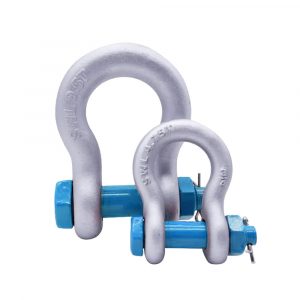
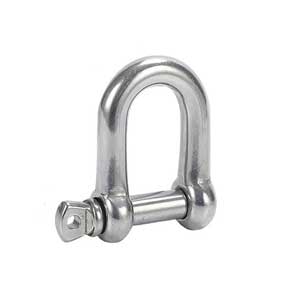
Two common shackle body shapes are bow (anchor) and D (chain). A bow shackle has a wider curved body, while a D shackle has a narrower profile. I check the manufacturer’s load rating and application instructions before using either shape, especially when the load is not in line with the shackle.
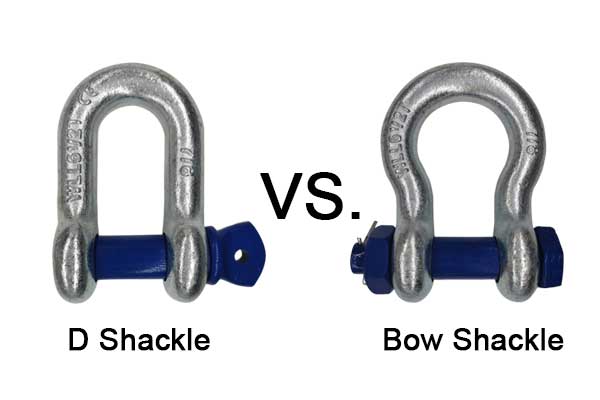
Body shape alone does not approve an angled lift. I check whether the exact shackle model permits the planned loading direction and, if it does, what reduction to its working load limit the manufacturer requires. I also confirm that the connected sling or fitting has enough room and will not be pinched. If the loading direction or fit is unclear, I ask a qualified person to review the connection.
Beyond the shape, you also need to consider the pin type.
Shackle Pin Types
- Screw Pin: This type uses a threaded pin that is quick and easy to install and remove. It is perfect for temporary applications or jobs where you need to frequently assemble and disassemble your rigging.
- Bolt-Type: This shackle uses a bolt, nut, and cotter pin. It offers a more secure connection that is resistant to rotating or backing out under vibration. It is the best choice for semi-permanent or long-term installations.
I learned this the hard way years ago. We had a contractor using screw pin shackles on a vibrating conveyor system. The constant movement caused a pin to slowly work its way loose. Luckily, we caught it during a routine inspection. Since then, for any long-term or vibrating load, I only specify bolt-type shackles.
| Feature | Bow / Anchor Shackle | D / Chain Shackle |
|---|---|---|
| Shape | Rounded "O" Shape | Narrow "D" Shape |
| Best Use | Multi-leg slings, angular loads | Single-leg slings, in-line pulls |
| Common Pin Types | Screw Pin, Bolt-Type | Screw Pin, Bolt-Type |
| Versatility | High | Low |
What materials are lifting shackles made of?
Do you worry about your equipment failing in harsh conditions? The material of your shackle directly impacts its strength and durability, and a rusty or weak shackle is an accident waiting to happen. Choosing the right material gives you peace of mind.
Lifting shackles are typically forged from high-strength metals to handle heavy loads. The most common materials are carbon steel, higher-strength alloy steel, and stainless steel. Each material offers a unique balance of strength, corrosion resistance, and cost, making them suitable for different jobs and environments.

The choice of material is not just about strength; it’s about matching the shackle to its working environment. As a distributor, my customers rely on me to provide equipment that lasts. If I sell a standard carbon steel shackle to a company working in a marine environment, it will rust and degrade quickly. That’s bad for my customer and bad for my reputation.
Here is a breakdown to help you understand the differences.
Common Shackle Materials
I compare materials only after I know the required working load limit and the operating environment. Carbon steel, alloy steel, and stainless steel are available in different shackle products, but the material name alone does not tell me the rated capacity or corrosion performance of a particular model. For each quote, I ask for the product specification, finish, markings, and any environmental limits that apply. If the shackle will be exposed to saltwater, chemicals, or unusual temperatures, I confirm suitability for that exact product before ordering.
How do you choose the right shackle for your lifting job?
You know the types and materials, but are you confident you can pick the perfect shackle for a specific lift? Making the wrong choice can overload the equipment or create an unsafe connection. Following a simple process removes the guesswork.
To choose the right shackle, you must first know the required Working Load Limit (WLL). Then, match the shackle type to your sling setup (e.g., Bow shackle for multi-leg slings). Finally, consider the environment to select the correct material, like stainless steel for marine use.

I once visited a job site where a crew was preparing to lift a large generator. They were using a two-leg bridle sling, but they had it connected to a D-shackle at the crane hook. The side-loading was already starting to contort the shackle before the lift even began. I immediately stopped the operation. We switched it out for a properly-rated bow shackle, which distributed the angular forces correctly. That day reinforced a simple truth for me: knowing the rules isn’t enough; you have to apply them every single time.
Here are the key steps I follow for every purchase and recommend to all my clients:
Four Steps to a Safe Selection
- Confirm the load and rigging arrangement. Work out the force the shackle will see, including the effect of sling angles. Compare it with the rating for the exact shackle and loading direction.
- Check the fit. The sling, hook, or lifting point should bear on the intended surfaces without pinching a synthetic sling or turning the pin.
- Choose the pin type for the job. Check the manufacturer’s instructions for screw pin and bolt-type shackles, especially when the connection may remain in place or experience movement.
- Check the environment and documentation. Ask for the specification and any limits related to corrosion, chemicals, or temperature before selecting a product.
What are the key parts of a lifting shackle?
To properly inspect a shackle, do you know exactly what you’re looking for? Missing a tiny crack on the bow or a bent pin can have catastrophic consequences under load. Knowing the parts helps you spot danger before it happens.
A lifting shackle has three main parts: the "bow," which is the curved body; the "ears," which are the tabs with holes at each end; and the "pin," the bolt that passes through the ears to close it. Bolt-type shackles also include a nut and a cotter pin for security.
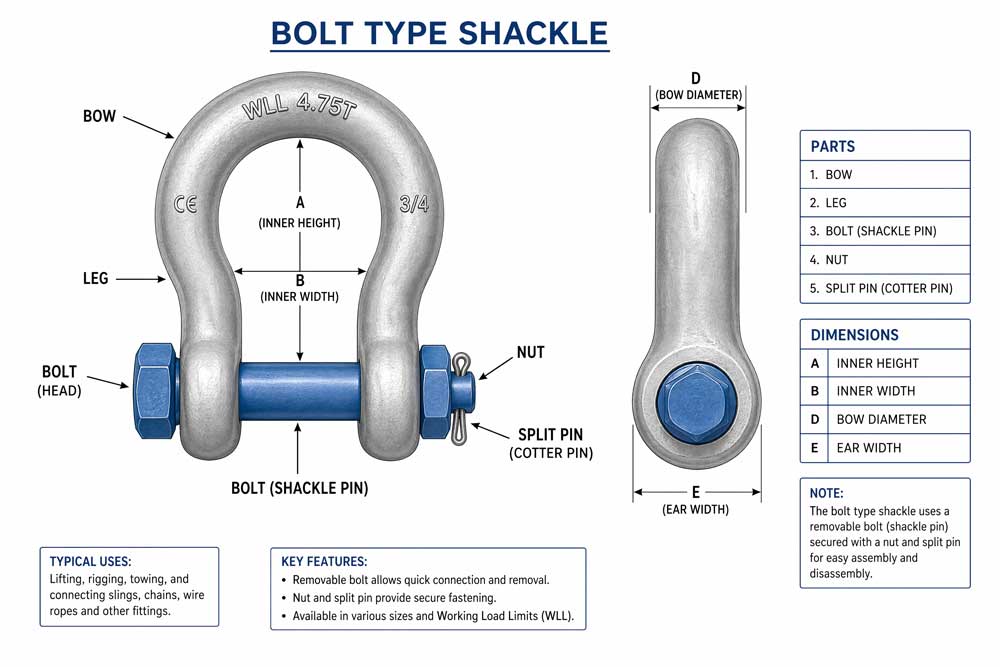
A formal inspection is only as good as the inspector’s knowledge. Before any lift, I insist that my team physically handles and inspects every piece of rigging. You can’t just glance at it from a distance. You need to know each component and its potential failure points. This hands-on approach is non-negotiable for me. It’s a simple habit that prevents major accidents. A damaged shackle should be immediately removed from service and destroyed so no one can mistakenly use it again.
Understanding these parts is the basis for a reliable pre-use inspection.
Anatomy of a Shackle
| Part | Description | What to Inspect For |
|---|---|---|
| Bow | The "U" or "O" shaped body of the shackle that takes the load. | Check for bending, stretching, cracks, or excessive wear, especially at the point where the load rests. |
| Ears | The tabs at the ends of the bow with holes for the pin. | Look for any signs of elongation or cracks around the pin holes. |
| Pin | The removable bolt that secures the shackle. Can be a screw pin or a bolt with a nut. | Ensure it is straight and not bent. Check threads for damage. The pin should seat perfectly. |
| Nut & Cotter Pin | (On bolt-type shackles) The nut secures the bolt, and the cotter pin prevents the nut from loosening. | Confirm the nut is tight and the cotter pin is properly installed and not damaged. |
Conclusion
I choose a lifting shackle by checking the marked rating, loading direction, pin security, connection fit, and the manufacturer’s instructions for the exact model. These checks help me identify a suitable product before a lift.