What Are Wire Rope Clips and What Are Types of Wire Rope Clips?
Struggling with insecure wire rope connections? Worried about load slippage and safety? We have the solution for your rigging needs.
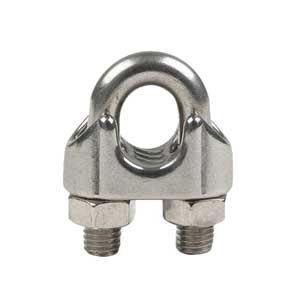
Wire rope clips, also called cable clamps, securely fasten wire rope ends or create loops. They are vital for safe rigging, lifting, and anchoring, using a U-bolt, saddle, and nuts.
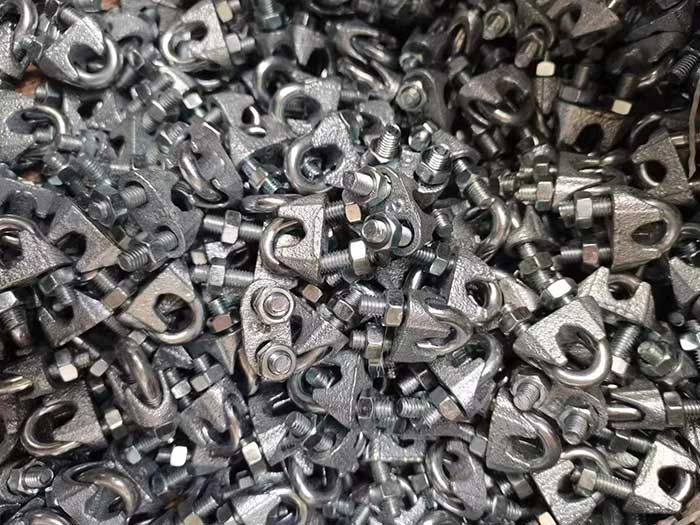
Understanding wire rope clips is key to safe and efficient operations. Let me tell you more about these essential rigging components and how they can benefit your projects. I remember a time when a client, Mark, almost faced a major setback due to using the wrong type of clip. Choosing correctly is crucial, and as a supplier, I feel it’s my duty to share this knowledge.
What Are the Different Types of Wire Rope Clips for Cables?
Overwhelmed by clip choices? Unsure which type suits your specific application? Selecting the right wire rope clip can be confusing.
Common types include U-Bolt, Fist Grip, Double Saddle, Forged, Stainless Steel, Malleable Iron, Galvanized, and Simplex/Duplex clips. Each offers unique features for different rigging demands.

Choosing the right wire rope clip is crucial for safety and efficiency in any rigging job. As a supplier at UU LIFTING, I’ve seen how different project needs call for specific clip types. It’s not just about selling a product; it’s about providing the right solution. Let’s break down some common ones so you can make an informed decision, just like I advise my clients.
Common Wire Rope Clip Varieties
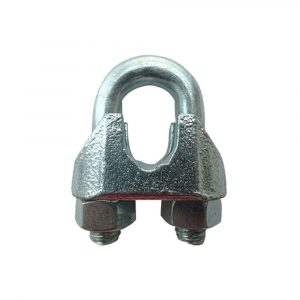
U-Bolt clips are perhaps the most recognized type. They consist of a U-shaped bolt, a saddle, and two nuts. You place the wire rope into the U-bolt, position the saddle over the ends, and then tighten the nuts. They are widely used due to their simplicity and effectiveness in many general-purpose applications. I’ve shipped thousands of these to various industries.
Fist Grip clips, sometimes called double-saddle clips, use two saddles instead of one U-bolt and a saddle. This design provides more uniform compression on the wire rope, which can be gentler on the cable. I recall Mark, a discerning client from the US who values quality, switched to fist grips for some of his applications. He felt they were better at preserving the integrity of the wire rope, reducing the risk of crushing points.
Then we have Forged wire rope clips. These are made from forged steel, making them significantly stronger and more durable than cast iron clips. They are ideal for heavy-duty applications where strength is paramount. For critical lifts or when safety margins need to be higher, I always recommend forged clips. There’s no cutting corners when heavy loads are involved.
Stainless Steel wire rope clips are perfect for outdoor use or in corrosive environments, like marine applications or chemical plants. Their resistance to rust and corrosion ensures longevity and reliability. We export a lot of these to coastal regions and companies dealing with challenging weather conditions.
Malleable iron clips are a more economical option but are less strong. They are generally suited for light-duty or non-critical applications where high strength isn’t the main concern. It’s very important not to use these for overhead lifting or any critical load-bearing situations. I always make this clear to customers who might be tempted by the lower price for the wrong job.
Here’s a quick comparison I often share:
| Clip Type | Key Feature | Common Use | Material Strength |
|---|---|---|---|
| U-Bolt | Most common, simple design | General purpose rigging | Varies (forged/malleable) |
| Fist Grip | Two saddles, uniform compression | When minimizing rope damage is key | Good |
| Forged | High strength, durable | Heavy-duty, critical lifts | Very High |
| Stainless Steel | Corrosion-resistant | Marine, outdoor | High |
| Malleable Iron | Economical | Light-duty, non-critical | Lower |
| Double Saddle | Even pressure distribution | Heavy-duty (not for overhead) | Good (but check specific ratings) |
| Galvanized | Zinc-coated for rust prevention | Outdoor, moist environments | Moderate |
| Simplex/Duplex | Easy to install and adjust | Theater, stage rigging | Light-duty |
At UU LIFTING, we can produce various types, including drop-forged and stainless steel clips, and we also offer custom designs if a project has unique requirements. Helping clients like Mark find the perfect fit is part of our service.
What Are Wire Rope Clips Used For?
Wondering where these small but mighty clips fit into your projects? Their applications are surprisingly diverse. They are essential for secure connections.
Wire rope clips are used to create eye-loop connections or join two wire rope ends. They are crucial in rigging, lifting, and load-securing across many industries.
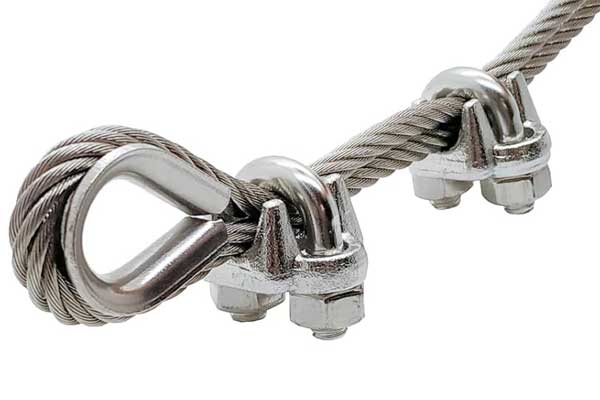
Wire rope clips are fundamental in many operations where wire ropes are used. Their primary function is to securely fasten the end of a wire rope back on itself to form an eye, or to join two separate pieces of wire rope together. Think of them as the critical link ensuring that loops and connections hold under tension. Without them, many lifting and securing tasks would be impossible.
Key Applications Across Industries
In my experience as a supplier at UU LIFTING, I’ve seen our wire rope clips go into a vast array of sectors. It’s always fascinating to hear about the diverse projects our customers undertake. For example, they are indispensable in ports and shipping for mooring lines and cargo handling equipment. The marine environment is harsh, so the right material, like stainless steel, is often key here.
Engineering and construction sites heavily rely on them for hoisting machinery, securing temporary structures, and various rigging setups. The loads can be substantial, so forged clips are common. The metallurgical and mining industries use them in some of the toughest conditions for heavy-duty equipment and lifting operations. Even oil field derricks utilize wire rope clips for numerous rigging tasks, where reliability is non-negotiable.
Other significant uses I’ve supplied for include:
- Forestry machinery: for logging operations and cable systems that pull heavy timber.
- Electrical equipment: for tensioning lines or as support cable grips.
- Transportation (both sea and land): for securing cargo and in towing applications.
- Engineering rescue operations: for creating secure anchor points and in lifting systems during emergencies.
- Salvaging sunken ships: a very demanding application where the strength and reliability of every component, including clips, is paramount.
- Lifting in factories and mines: for everyday material handling tasks, ensuring production flows smoothly and safely.
Essentially, any application that involves creating a loop in a wire rope or connecting wire rope ends will likely use wire rope clips. Mark, my American client who rebrands lifting slings, primarily uses them for creating those secure looped ends. He emphasizes that the security of these connections is vital for his customers’ safety and, consequently, for his business’s reputation. The versatility of these clips truly makes them a staple in any rigging toolkit. We at UU LIFTING ensure our clips are manufactured to high standards to meet the demands of all these critical jobs.
What Is the Rule of Thumb When You Are Applying Wire Rope Clips?
Worried about incorrect clip installation? Proper application is vital for safety. Ignoring guidelines can lead to catastrophic failures.
Always use at least 3 clips, spaced about 6-7 wire rope diameters apart. Ensure the U-bolt is on the dead end and the saddle on the live end, all facing the same direction.

Proper installation of wire rope clips is not just a recommendation; it’s absolutely critical for safety and the integrity of the connection. I always stress this to my clients, including experienced ones like Mark, because an improperly secured wire rope can lead to serious accidents or load failures. Over the years, I’ve learned that reinforcing these basics is never a waste of time. There are some widely accepted rules of thumb that everyone working with wire ropes should follow diligently.
Key Installation Guidelines
First, let’s talk about the number of clips. For most assemblies, a minimum of two to three wire rope clips is standard. However, when you are forming loops or thimble-eye terminations, using at least three clips is highly recommended. I often tell people it’s better to use one too many than one too few, especially when the cost of an extra clip is negligible compared to the potential cost of a failure.
Next is spacing. The clips should be evenly spaced along the wire rope. A general guideline is to space them approximately six to seven wire rope diameters apart. For example, if you’re using a 1/2-inch diameter wire rope, the spacing would be around 3 to 3.5 inches between clips. This even spacing ensures that the gripping force is distributed correctly along the rope, preventing excessive stress on any single point.
Then comes the orientation, and this is a very important one. This rule is often summed up with the memorable phrase: "Never saddle a dead horse." What this means is that the U-bolt part of the clip should always be placed on the dead end (the short tail end that does not carry the main load) of the wire rope. The saddle part of the clip must be placed on the live end (the load-bearing part) of the rope. All clips must be oriented in the same direction; they should not be staggered or alternated. Incorrect orientation can significantly reduce the efficiency of the connection (by some estimates, up to 40%!) and can crush and damage the live end of the rope.
Here’s a simple table I use to remind my team and clients of these rules:
| Aspect | Rule of Thumb | Reason |
|---|---|---|
| Number of Clips | Minimum 3 for loops/thimbles | Ensures sufficient grip and connection integrity |
| Spacing | 6-7 times wire rope diameter apart | Even distribution of clamping force |
| Orientation | U-bolt on dead end, saddle on live end | Prevents damage to live end, maximizes holding power |
| Direction | All clips oriented the same way | Consistent clamping, avoids uneven stress |
When installing, the first clip should be placed nearest to the loop or thimble, typically leaving about one base width of space from the dead end of the rope. Then, apply the other clips with the correct spacing. Use a torque wrench to tighten the nuts to the manufacturer’s recommended value. It’s also very good practice to inspect the clips and re-tighten the nuts after the initial load has been applied, as the rope may stretch or settle into the clips. I remember a case where a customer skipped re-tightening, and the connection loosened over time – luckily, it was caught during a routine inspection before any incident occurred. These simple rules save a lot of trouble.
What Is the Difference Between Malleable and Forged Wire Rope Clips?
Confused by malleable versus forged clips? Choosing incorrectly can compromise safety and performance. Material and manufacturing matter greatly.
Forged wire rope clips are made from forged steel, making them stronger and more durable for heavy-duty use. Malleable clips are less strong and suited for light-duty applications.
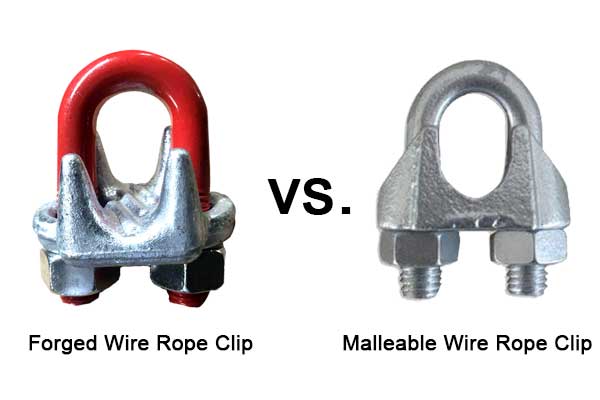
When selecting wire rope clips, one of the fundamental distinctions you’ll encounter is between malleable and forged types. As a supplier with UU LIFTING, I always make sure my customers, especially those like Mark who are both quality-conscious and looking for competitive pricing, understand this difference. It directly impacts the safety, reliability, and suitability of the clip for their intended application. This isn’t just a minor detail; it’s a critical safety consideration.
Manufacturing and Strength Differences
The primary difference lies in their manufacturing process and the resulting material properties, which dictate their strength and appropriate uses.
Forged wire rope clips are made by heating steel to a high temperature and then shaping it using powerful compressive forces, like hammering or pressing (forging). This process aligns the internal grain structure of the steel, resulting in a product that is significantly stronger, more durable, and has better resistance to fatigue and impact. Forged clips are the go-to choice for heavy-duty applications, overhead lifting (where permissible and always following all relevant standards and regulations), and critical connections where failure could have severe consequences. At UU LIFTING, we emphasize top-quality, and our forged clips are engineered for these demanding scenarios. The peace of mind they offer is worth the typically higher cost.
Malleable iron wire rope clips, on the other hand, are usually made from cast malleable iron. Casting is a process where molten metal is poured into a mold. While this can be a more economical manufacturing method, malleable iron does not possess the same tensile strength, ductility, or fatigue resistance as forged steel. Consequently, malleable clips are less strong. They are generally recommended only for light-duty, non-critical applications where the loads are relatively low, and the consequences of failure are minimal. A key point I always highlight, and it bears repeating, is that malleable wire rope clips are not recommended for critical, heavy-load, or any overhead lifting tasks. Using them in such situations is a serious safety risk.
Key Distinctions Summarized
I often use this table to quickly illustrate the differences for clients:
| Feature | Forged Wire Rope Clips | Malleable Wire Rope Clips |
|---|---|---|
| Manufacturing | Forged steel | Cast malleable iron |
| Strength | Higher, more durable, better fatigue resistance | Lower, less resistant to shock loads |
| Application | Heavy-duty, critical connections, overhead lifting (if allowed by standards) | Light-duty, non-critical, static loads |
| Cost | Generally higher | Generally lower |
| Safety Criticality | Suitable for high-safety applications | NOT for high-safety or overhead lifting |
Mark once asked me about potentially using malleable clips for a slightly heavier application to save on costs for one of his product lines. While I understood his need for competitive pricing, I strongly advised against it, explaining the mechanical differences and the potential risks involved. He appreciated the direct and honest advice, as the safety and reliability of his rebranded products are paramount to his business’s success in the American market. Choosing the correct type of clip based on the application is non-negotiable for safety and performance. We offer both types at UU LIFTING, but our priority is always to guide customers like Mark to the most appropriate and safest choice based on their specific operational needs.
Conclusion
Wire rope clips are vital for secure connections. Understanding types, uses, installation rules, and material differences ensures safety and operational success.