How Do You Choose the Right 6×49 SWS Steel Wire Rope?
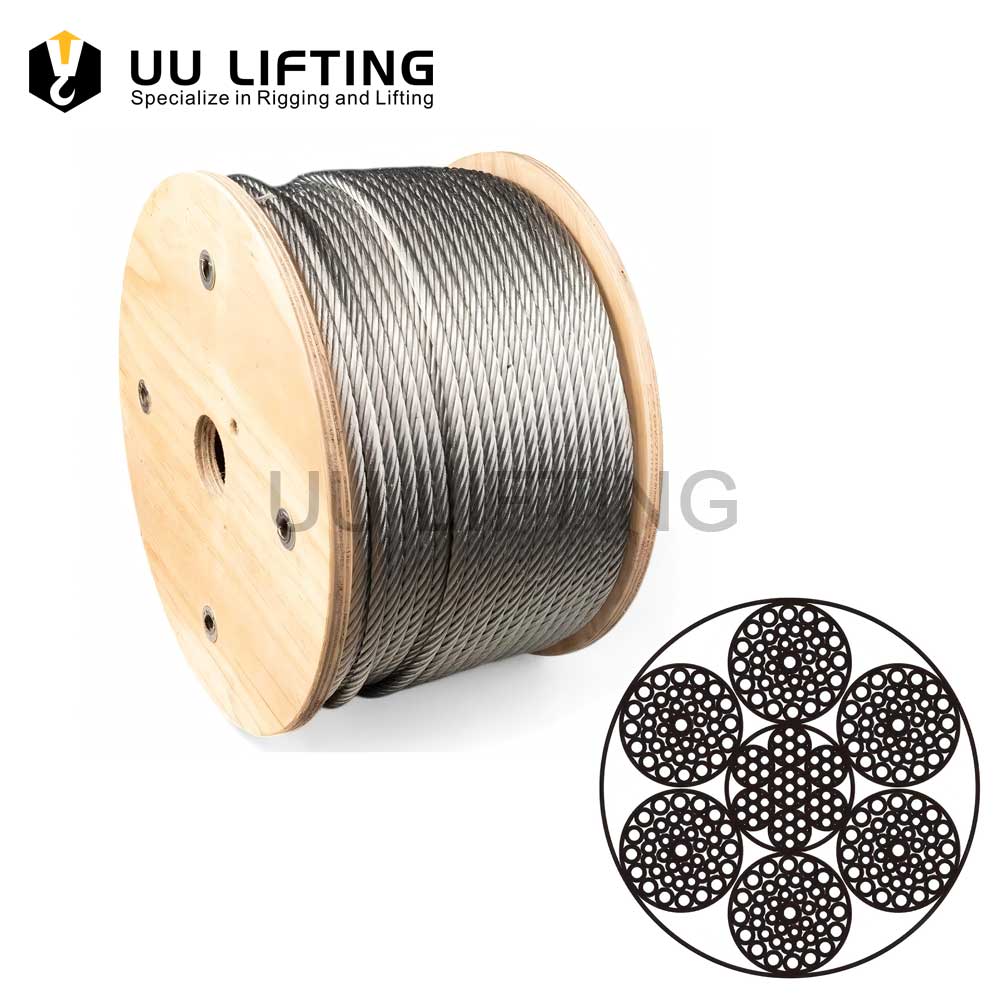
A 6×49 SWS steel wire rope is a specialized choice for heavy lifting. It has 6 strands, each with 49 wires in a Seale Warrington pattern, plus an independent wire rope core (IWRC). This design offers excellent flexibility and resistance to crushing on drums.
Understanding this rope is key to making a safe and cost-effective purchase. I often find that clients, even experienced ones like Mark, appreciate a clear breakdown of the specifications. It helps them see exactly what they are buying. So let’s look deeper into what makes this particular rope construction so special for certain jobs. Knowing these details helps you get the right product and avoid delays.
What Does the ‘6×49 SWS’ Code Actually Mean?
The code is actually quite simple when you break it down. ‘6×49’ means 6 strands with 49 wires in each strand. ‘SWS’ stands for Seale Warrington Strand, a special wire pattern. It almost always includes an ‘IWRC’ (independent wire rope core) for added strength and support.
When I talk to buyers, the first thing we do is go over the specifications. For a business owner like Mark, getting the correct specifications is crucial. A mistake here can cause major problems later on. This simple code tells you almost everything you need to know about the rope’s performance.
Let’s break it down further.
Code
Meaning
Benefit
6
The rope has 6 outer strands.
This is a standard configuration for many ropes.
49
Each strand is made of 49 individual wires.
More wires mean greater flexibility.
SWS
Seale Warrington Strand.
A combination pattern for balanced performance.
IWRC
Independent Wire Rope Core.
A small wire rope at the center for strength.
The Core is Key
The core is the center of the wire rope. Many ropes, like some 6×37 versions we sell, have a Fiber Core (FC). An FC is good for flexibility. But for heavy-duty work, an Independent Wire Rope Core (IWRC) is much better. The IWRC is a separate, smaller wire rope. It provides solid support to the outer strands. This support is very important. It stops the rope from getting squashed flat when it’s wound onto a winch drum under a heavy load.
The Strand Pattern Matters
SWS, or Seale Warrington Strand, is a special design. It is a type of wire pattern combination. The ‘Seale’ part means it has large outer wires. These big wires are good at resisting abrasion and wear. The ‘Warrington’ part means some layers have wires of different sizes sitting next to each other. This helps make the strand more compact and flexible. Combining these two patterns into SWS gives you a rope with good wear resistance and flexibility. It is a high-performance design for tough jobs.
How Does 6×49 SWS Compare to 6×19 and 6×37 Ropes?
It’s all about trade-offs. A 6×49 rope is more flexible than a 6×19 rope but has smaller outer wires, so that it may wear faster. It is more crush-resistant than a 6×37 rope. The best choice always depends entirely on your specific lifting job.
I have many conversations with buyers about this. I remember Mark asking about the differences for a new line of cranes his company was developing. He needed to be sure he was supplying his own customers with the best possible option. Explaining the differences clearly helped him make the right choice.
Here is a simple table to show the main differences.
Feature
6×19 Class
6×37 Class
6×49 SWS
Flexibility
Good
Better
Excellent
Abrasion Resistance
Excellent
Good
Better
Crush Resistance
Good
Better
Excellent
Flexibility vs. Abrasion Resistance
This is the main trade-off. A rope with more wires, such as the 6×37 or 6×49 class, is more flexible. This is great for applications where the rope bends over many pulleys or sheaves. The smaller wires bend more easily. On the other hand, a rope with fewer, larger outer wires, like our 6×19 Bull Rope, is better at resisting abrasion. The big wires can withstand more scraping and wear before breaking. You must decide which is more important for your application.
The Importance of Crush Resistance
Crush resistance is critical for any rope that is wound onto a drum. This is where 6×49 SWS with an IWRC really shines. When a rope is spooled under load, especially when multiple layers are used, the pressure is immense. Ropes with less support, such as those with a fiber core, can flatten or be crushed. This damages the rope, making it unsafe. The IWRC in a 6×49 rope acts like a steel foundation, helping the rope keep its round shape. This is a common failure point that I always warn my customers about.
What are the Best Applications for 6×49 SWS Wire Rope?
You should use 6×49 SWS wire rope for demanding jobs that need high flexibility and high crush resistance. It is perfect for the main and auxiliary hoist lines on cranes, especially when the rope is spooled onto a drum under a heavy load.
The right application is everything for performance and safety. When a client contacts me for a rope, my first question is always, “What exactly will you be doing with it?” The answer tells me which construction to recommend. For someone who distributes lifting equipment, providing the end user with the correct rope is essential to their reputation.
Crane Hoist Lines
This is the number one use for 6×49 SWS rope. A crane’s hoist line is always in motion. It runs over sheaves at the top of the boom and then spools onto the winch drum. It needs to be flexible to handle the bending. It needs to be crush-resistant to handle the spooling. The 6×49 SWS construction is designed for this exact cycle. It provides a long service life and a high level of safety in these dynamic, high-stress conditions. It is the go-to choice for many mobile cranes and overhead factory cranes.
Scenarios to Avoid
This rope is not the best choice for every situation. For stationary jobs, like mast stays or guy wires, its high flexibility is not needed. A stiffer rope,,such ase a 6×7 or 6×19 constructio,n, would be a more cost-effective choice. Also, if the rope will be dragged over rough surfaces and abrasion is the biggest problem, a 6×19 rope with its larger outer wires would likely last longer. I always make sure my customers understand this. It prevents problems and builds trust. It also ensures they get the right certification for the right application, which I know is a major focus for international buyers.
OUR FACTORY
Raw materials of our products are made of high-quality steel that meets the standards, and the raw materials are traceable. And multiple production lines and machines minimize lead times for rigging and lifting equipment.
Raw Material
Forged
Cast
Chain Machine
Heat Treatment
Powder Plastified
Package
Warehouse
MANUFACTURING PROCESSES
With eight automatic forging and semi-automatic forging line of up to 1600ton press machines and specialized drillng, tapping, heat treatment and inspection equipment. Strict and standardized production process ensures you receive perfect products.
QUALITY CONTROL
All rigging and lifting products are subjected to strict working tension and breaking the tension test. Complied with ISO9001 and CE certification. Our promise to you: Guaranteed safety at work for people and materials.