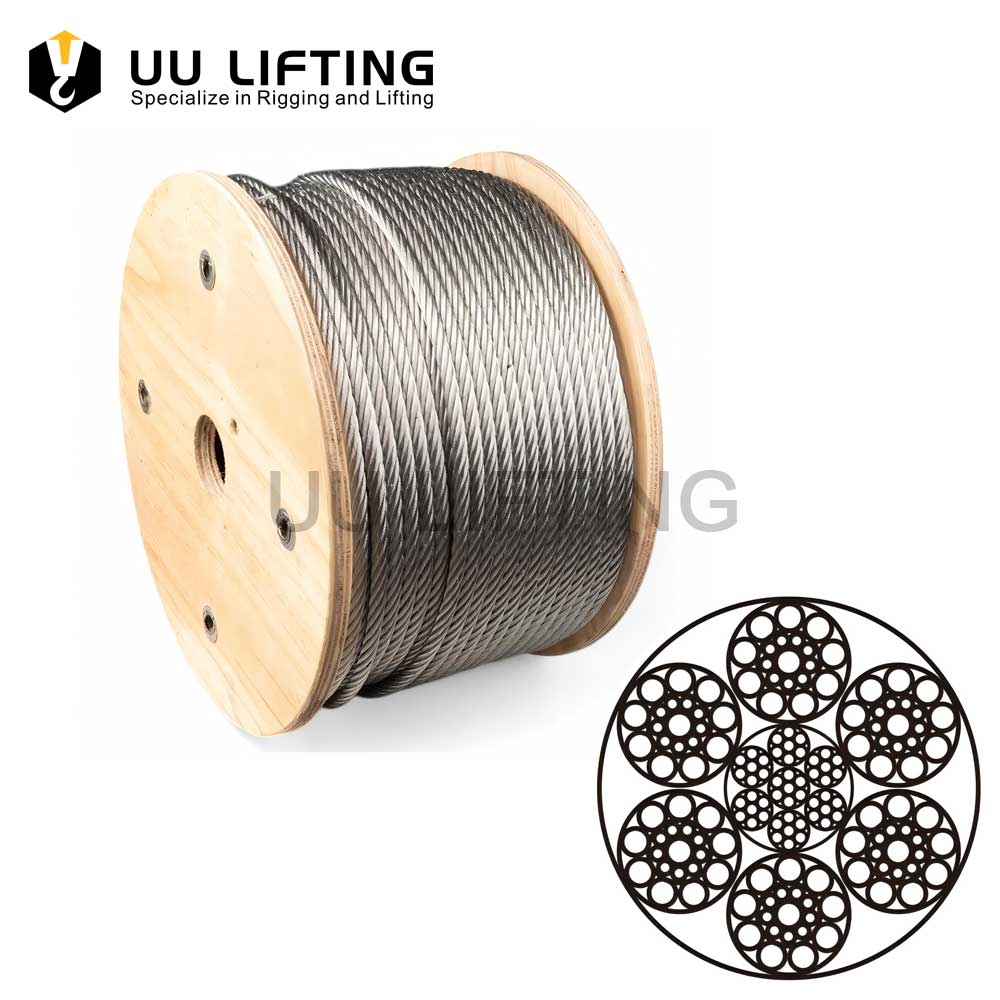
What is 6×19S Steel Wire Rope and Why Does It Matter for Your Project?
Procurement managers often struggle to match wire rope specifications with actual project demands. Using the wrong rope leads to safety risks and costly project delays. I am here to help you get the clarity you need.
The 6×19S steel wire rope is a specific construction featuring larger outer wires that offer excellent resistance to wear and abrasion. This design offers excellent breaking load performance, making it a reliable choice for a wide range of industrial lifting and rigging applications.
I know how difficult it is to choose the right gear when you are dealing with tight budgets and strict safety standards. You need a solution that balances cost with performance. Let us look closer at why this specific rope construction is a smart choice for your inventory.
Why is the 6×19S construction so popular for heavy-duty work?
You are likely tired of wire ropes that fray and break after only a few weeks of use. Replacing equipment constantly eats into your profit margins and halts your productivity. You need a durable solution.
The 6×19S configuration is popular because its larger outer wires provide superior resistance to surface wear and mechanical abrasion compared to other 6×19 constructions. This durability ensures the rope maintains its strength and structural integrity even under harsh, abrasive working conditions.
When I advise clients, I always emphasize that “S” stands for the Seale construction pattern. In this design, the wire rope uses a specific arrangement of wires in which the outer layer consists of larger-diameter wires. This is not just a random design choice; it is a mechanical advantage. Larger wires are simply tougher against scraping and dragging. When your rope drags over pulleys or brushes against rough surfaces, smaller wires snap easily. The 6×19S construction fights back against this type of fatigue.
It is also important to understand that this construction offers a balance. It provides enough flexibility for most standard lifting operations while maintaining the robustness needed for heavy loads.
Here is how the 6×19S compares to general constructions in terms of performance:
Feature
6×19S Construction
General 6×19 Construction
Abrasion Resistance
Excellent (Large outer wires)
Moderate
Flexibility
Good
Good
Breaking Load
Superb
Standard
Best Usage
Rough Environments
Indoor/General
By choosing the 6×19S, you are investing in a rope that resists the wear and tear of daily heavy-duty use. For my customers in the lifting business, this means less downtime for replacements and more time getting work done.
How do you choose between FC and IWRC cores?
You have selected the right wire layout, but if the core type is wrong, your rope will fail. Your rope might stretch too much or get crushed under load, which ruins your schedule. Do not let a simple oversight halt your operations.
Choosing between Fiber Core (FC) and Independent Wire Rope Core (IWRC) depends on your specific flexibility and strength requirements. FC offers better flexibility for lighter tasks, while IWRC provides higher breaking strength and superior crush resistance for heavy-duty lifting applications.
This is a critical decision point for any buyer. When I speak with procurement officers, I tell them to look at the environment first. If you are operating a winch or equipment that frequently requires the rope to bend, you might lean toward a Fiber Core (FC). The FC makes the rope more flexible and easier to handle. However, flexibility comes with a trade-off. Fiber cores can compress under very high loads, potentially shortening the rope’s lifespan in heavy-duty applications.
On the other hand, the Independent Wire Rope Core (IWRC) is made entirely of steel. It is much stronger. It does not compress as easily, so it holds its shape under heavy pressure. If you are using your rope for demanding industrial tasks where crush resistance is vital, IWRC is the professional choice.
Consider these factors when deciding:
Core Type
Key Benefit
Ideal Application
Fibre Core (FC)
High Flexibility
Light lifting, general handling
IWRC
High Strength/Crush Resistance
Heavy lifting, harsh conditions
As a business owner, I always tell my clients: if you are unsure, calculate your maximum load. If you are pushing the limits, always choose IWRC. It costs a bit more, but it prevents the massive cost of a failed lift.
Why is galvanized treatment essential for your wire rope?
Rust eats through metal in seconds. If you buy the wrong finish, your ropes will fail long before their time. Do not deal with the headache of constant equipment failures and safety hazards.
Galvanized steel wire rope is treated with a thin layer of zinc to prevent corrosion. It is the most cost-effective solution for outdoor applications where the rope must withstand moisture, weather, and harsh industrial elements.
I have seen many buyers try to save money by purchasing bright (non-galvanized) wire rope for outdoor projects. It is a mistake. Within weeks, moisture and humidity cause oxidation. The rust creeps into the core, and suddenly, the rope is no longer safe to use. Galvanization is the simple answer to this problem. The zinc coating creates a protective barrier. It effectively seals the steel from the environment.
Is it perfect? Not quite. Stainless steel offers better long-term corrosion resistance in extreme environments, such as saltwater. However, for most outdoor industrial uses, galvanized steel is the “sweet spot” for value. It is much cheaper than stainless steel but provides all the protection you need for typical construction or site work.
When buying, remember to ask your supplier about the quality of the galvanization. A good coating should be even and smooth.
Treatment Type
Cost
Corrosion Resistance
Bright (No coating)
Lowest
None
Galvanized
Moderate
Good (Outdoor/Industrial)
Stainless Steel
High
Excellent
For my clients, choosing the right surface treatment is about protecting the asset. A galvanized rope lasts much longer, which means you do not have to buy replacements as often. This is the smartest way to manage your purchasing budget.
Conclusion
The 6×19S wire rope offers excellent abrasion resistance due to its large outer wires. Select the right core—FC for flexibility or IWRC for strength—and always choose galvanized for outdoor durability.
OUR FACTORY
Raw materials of our products are made of high-quality steel that meets the standards, and the raw materials are traceable. And multiple production lines and machines minimize lead times for rigging and lifting equipment.
Raw Material
Forged
Cast
Chain Machine
Heat Treatment
Powder Plastified
Package
Warehouse
MANUFACTURING PROCESSES
With eight automatic forging and semi-automatic forging line of up to 1600ton press machines and specialized drillng, tapping, heat treatment and inspection equipment. Strict and standardized production process ensures you receive perfect products.
QUALITY CONTROL
All rigging and lifting products are subjected to strict working tension and breaking the tension test. Complied with ISO9001 and CE certification. Our promise to you: Guaranteed safety at work for people and materials.