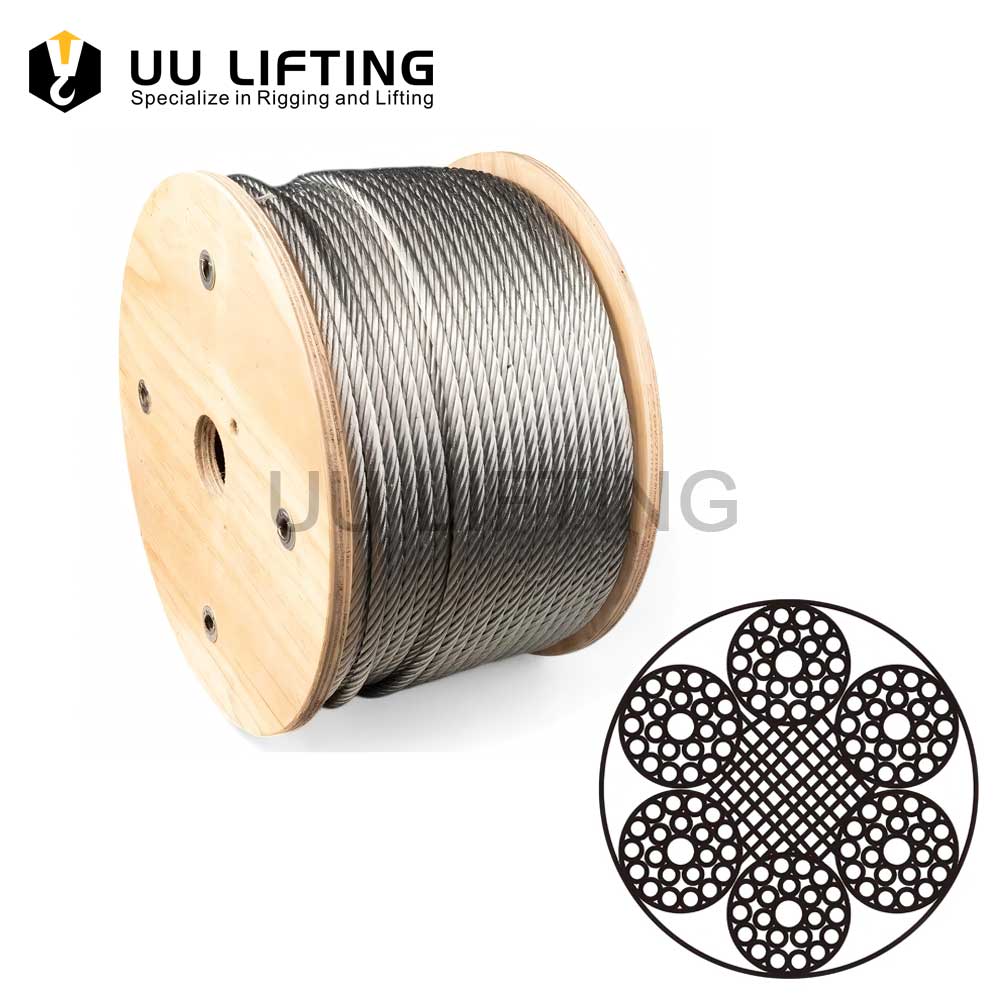
What Are 6×29Fi Steel Wire Rope Sizes and Why Do They Matter?
You struggle to find the right wire rope for your heavy-lifting projects. Standard ropes wear out too fast and cause dangerous delays. Choosing the correct 6×29Fi wire rope size solves your reliability problems.
6×29Fi steel wire rope is available in various diameters, typically 8mm to 60mm. The “6×29Fi” code means it has six strands with twenty-nine wires each. This specific construction uses filler wires to create a strong, flexible rope. It serves as an excellent choice for demanding industrial lifting tasks.
I often see buyers get confused by the technical codes on steel wire ropes. You need to understand these numbers to ensure your equipment runs smoothly and safely. Let us break down the details so you can make a confident purchasing decision.
Why Should You Choose 6×29Fi for Your Lifting Tasks?
You are tired of buying ropes that snap or degrade under pressure. Weak cables lead to costly downtime and safety risks. Understanding why 6×29Fi is a superior choice helps you protect your business and your bottom line.
You choose 6×29Fi because it offers exceptional fatigue resistance. The “Fi” stands for filler wires. These wires fill the gaps between the inner and outer layers. This design keeps the rope flexible while maintaining high breaking strength. It is a smart investment for your repetitive lifting operations.
When you look for a rope that handles heavy loads on cranes or winches, you need something that balances wear resistance and flexibility. A 6×29Fi rope provides this balance. Because of the filler wires, the rope maintains its shape even when it bends over sheaves.
I recommend this construction for clients who need longevity. Standard ropes often crush or deform under heavy load. The 6×29Fi design distributes pressure more evenly across the wires. This means your rope lasts longer. You save money on replacements.
Feature
Benefit for Your Business
Filler Wires
Prevents internal wire crushing
6 Strands
Provides good overall flexibility
High Strength
Handles heavy industrial loads
Fatigue Resistance
Longer lifespan in repetitive work
You should also focus on the quality of the steel core. Most 6×29Fi ropes use an IWRC (Independent Wire Rope Core). This core supports the strands and prevents the rope from collapsing under high tension.
How Do You Measure the Right Size for 6×29Fi Wire Rope?
Measuring wire rope correctly can be difficult without the right tools. Wrong measurements lead to poor fits and dangerous slippage. Getting the size right saves you time, money, and stress during installation.
You must measure the diameter of the rope at its widest points. Always use a precise caliper for this task. You measure across the “crests” or peaks of the strands, not the valleys. This ensures you buy a rope that fits perfectly inside your sheaves and drums.
When I help clients, I always emphasize the importance of using a caliper. A tape measure is not accurate enough for wire rope. If you measure in the “valleys,” you will get an undersized reading. This leads to buying a rope that is too loose for your equipment.
You also need to consider the tolerance. A reputable manufacturer, like us at UU LIFTING, ensures that the diameter remains within specific standards. If the rope is too thick, it will not pass through the sheaves easily. If it is too thin, it will slip and wear out prematurely.
Always check your equipment manual before ordering. It will list the required diameter and the tolerance range. You should also check the rope’s lubrication. A properly sized rope with the right lubrication will last significantly longer in the field.
Step
Action
Why it matters
1
Use a Caliper
Tape measures cause errors
2
Measure Peaks
Ensures true diameter
3
Check Equipment
Prevents jamming or slipping
4
Verify Core
Confirms load capacity
Consistency is key to your procurement process. Once you find the right size that works for your machinery, keep a record of it. This makes your future reordering process much faster and more reliable.
Conclusion
6×29Fi wire rope is a durable, flexible solution for heavy-duty lifting. By accurately measuring your diameter and understanding the construction, you improve equipment safety and reduce operational costs.
OUR FACTORY
Raw materials of our products are made of high-quality steel that meets the standards, and the raw materials are traceable. And multiple production lines and machines minimize lead times for rigging and lifting equipment.
Raw Material
Forged
Cast
Chain Machine
Heat Treatment
Powder Plastified
Package
Warehouse
MANUFACTURING PROCESSES
With eight automatic forging and semi-automatic forging line of up to 1600ton press machines and specialized drillng, tapping, heat treatment and inspection equipment. Strict and standardized production process ensures you receive perfect products.
QUALITY CONTROL
All rigging and lifting products are subjected to strict working tension and breaking the tension test. Complied with ISO9001 and CE certification. Our promise to you: Guaranteed safety at work for people and materials.