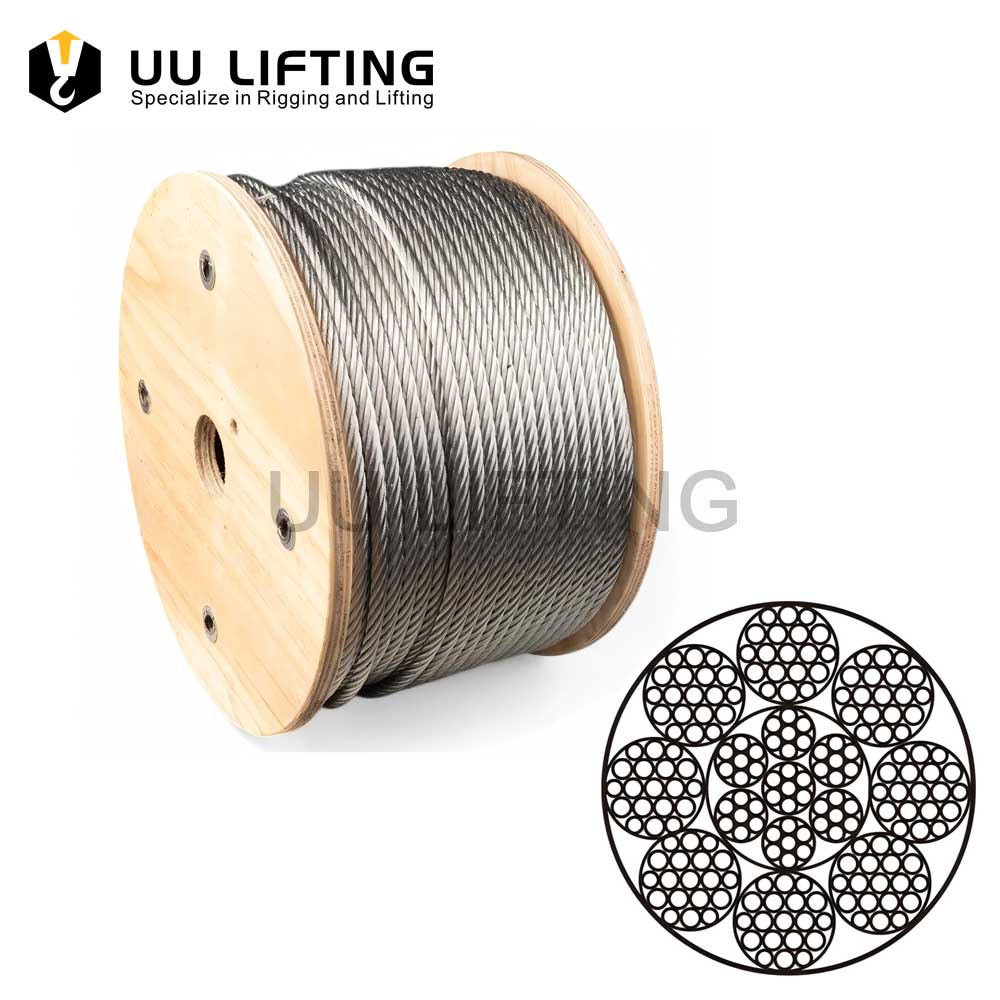
An 8x19W elevator steel wire rope is a specific construction designed for lifting people and goods. It has 8 strands wrapped around a core, with each strand made of 19 wires in a Warrington pattern. This design offers excellent flexibility and fatigue resistance, making it ideal for elevator use.
Choosing the right elevator rope is one of the most critical decisions a procurement officer can make. The safety of every passenger depends on it. I’ve seen clients get overwhelmed by the technical jargon. But it’s simpler than it looks when you break it down. I want to walk you through exactly what these numbers and letters mean. This will help you source the perfect rope for your needs with confidence, just like I helped my client Mark do last month. Let’s look at the details.
What does the “8x19W” classification actually mean?
The code “8x19W” describes the rope’s mechanical build. “8” is the number of strands. “19” is the number of individual wires in each strand. “W” stands for Warrington, a special wire arrangement that improves flexibility and wear resistance, making it ideal for lifting.
Understanding the Parts
When I talk to new buyers, I always explain that the code is like a recipe. Each part tells you something important about the final product. An 8-strand rope is different from a 6-strand one, and the wire pattern makes a huge difference in performance.
The Strands: 8
The first number, “8,” tells us the rope is made of 8 strands. These strands are twisted together to form the rope. For elevator ropes, 8 strands offer a significant advantage. It creates more surface area to grip the elevator sheave (the grooved wheel it runs over). This means better traction and less slippage. It also makes the rope more flexible than a 6-strand rope of the same size. This flexibility reduces wear as the rope bends and straightens thousands of times a day.
The Wires: 19W (Warrington)
The “19W” part is about the strands themselves. Each of the 8 strands contains 19 wires. The “W” is for Warrington style. This means the outer layer of wires in the strand has alternating large and small diameters. This design is clever. The smaller wires nestle into the gaps left by the larger ones. This gives the strand a more rounded profile and increases the total steel content. The result is a rope that resists wear and fatigue from bending very well.
Here’s a simple table to compare it with other types:
Construction
Description
Best For
Warrington (W)
Alternating large and small outer wires
Excellent balance of flexibility and wear resistance
Seale (S)
Large outer wires for abrasion resistance
Resisting external wear and abrasion
Filler (F)
Small filler wires for density
Resisting crushing and distortion
For elevators, the Warrington (W) design is often the best choice. It balances the need to resist rubbing against sheaves with the need to be flexible.
Why is the core type so important for elevator ropes?
The core supports the outer strands and is critical for strength and durability. A Fiber Core (FC) provides flexibility and internal lubrication. An Independent Wire Rope Core (IWRC) offers superior strength and crush resistance, essential for high-rise and high-speed elevators.
I remember a conversation with Mark, an American company owner who buys lifting equipment from us. He was sourcing ropes for a new 40-story office building. He initially asked for a rope with a Fiber Core (FC) because it was a little cheaper. I had to stop him. For a building that tall, the weight and speed demand a much stronger core. I explained the difference between FC and IWRC, and he quickly understood why IWRC was the only safe option. It’s a technical detail, but it has huge safety implications.
Fiber Core (FC)
A Fiber Core is made from natural fibers like sisal or synthetic fibers like polypropylene. Its main job is to provide a flexible foundation for the steel strands. A big benefit is that the fiber is soaked in lubricant. As the rope bends and flexes, it squeezes the core, which releases small amounts of lubricant. This lubricates the rope’s wires from the inside out, helping to reduce friction and prevent corrosion. FC ropes are very flexible. But, they have lower breaking strength and can be crushed under high loads or if spooled incorrectly on a drum.
Independent Wire Rope Core (IWRC)
An Independent Wire Rope Core is exactly what it sounds like: a small, separate wire rope running down the center. This steel core makes the entire rope much stronger, increasing its breaking strength by about 7.5%. More importantly, it provides excellent support to the outer strands. This prevents the rope from crushing or flattening when it runs over sheaves or is wound onto a winch drum under heavy load. Because of this strength and crush resistance, IWRC is the standard for almost all modern high-rise, high-speed elevators. It’s a bit stiffer than an FC rope, but the safety and durability gains are massive.
Core Type
Pros
Cons
Best Application
Fiber Core (FC)
Very flexible, self-lubricating
Lower strength, can be crushed
Low-rise buildings, slower elevators
IWRC
High strength, crush resistant
Less flexible, higher cost
High-rise buildings, high-speed elevators
How do you choose the right specifications for your project?
To choose the right rope, focus on three key things: diameter, tensile strength, and finish. The diameter must match the elevator’s sheaves. The tensile strength must meet safety factors. The finish should suit the environment; “bright” is standard for indoor elevators.
Every project is different, so the specifications must be exact. As a manufacturer, we rely on our customers to provide the correct details. But I always double-check the application to make sure the specs make sense. A small consultation can prevent a huge headache later. Let’s look at the most important numbers you’ll see on a spec sheet.
Diameter and Lay
The rope’s diameter is critical. It must match the groove size on the elevator’s sheaves. If the rope is too big, it will pinch and wear out quickly. If it’s too small, it will slip and won’t get proper traction. You also need to know the lay direction. Most elevators use Right Regular Lay (RRL), in which the wires in the strand twist left, and the strands in the rope twist right. This provides good stability and is easy to handle.
Tensile Strength
Tensile strength tells you how strong the rope is. It is often measured in N/mm² (newtons per square millimeter). A higher number means a stronger steel grade. For elevators, you will typically see two grades:
1570 N/mm²: Often called Traction Steel. It’s a strong, durable grade that is very common.
1770 N/mm²: Known as Extra Improved Plow Steel (EIPS). This is a higher-strength grade used for elevators with heavier loads or greater safety factor requirements. The elevator manufacturer determines the required strength, so always check their documents.
Finish: Bright vs. Galvanized
The finish is the coating on the wire. For most elevator ropes used inside a building, a bright (or ungalvanized) finish is standard. These ropes are protected by lubricant, and the indoor environment isn’t corrosive. Galvanized ropes are coated in zinc to protect against rust. They are used in environments with moisture, like marine applications or elevators in outdoor or humid locations. For a typical office or apartment building, a bright finish is all you need.
Here is a sample table of what to look for:
Example Specifications: 8x19W+IWRC Elevator Rope
Diameter (mm)
Approx. Weight (kg/100m)
Min. Breaking Strength (kN) – 1570 N/mm²
Min. Breaking Strength (kN) – 1770 N/mm²
10
39.8
56.0
63.2
12
57.3
80.6
91.0
13
66.8
94.0
106.0
16
102.0
143.0
162.0
OUR FACTORY
Raw materials of our products are made of high-quality steel that meets the standards, and the raw materials are traceable. And multiple production lines and machines minimize lead times for rigging and lifting equipment.
Raw Material
Forged
Cast
Chain Machine
Heat Treatment
Powder Plastified
Package
Warehouse
MANUFACTURING PROCESSES
With eight automatic forging and semi-automatic forging line of up to 1600ton press machines and specialized drillng, tapping, heat treatment and inspection equipment. Strict and standardized production process ensures you receive perfect products.
QUALITY CONTROL
All rigging and lifting products are subjected to strict working tension and breaking the tension test. Complied with ISO9001 and CE certification. Our promise to you: Guaranteed safety at work for people and materials.