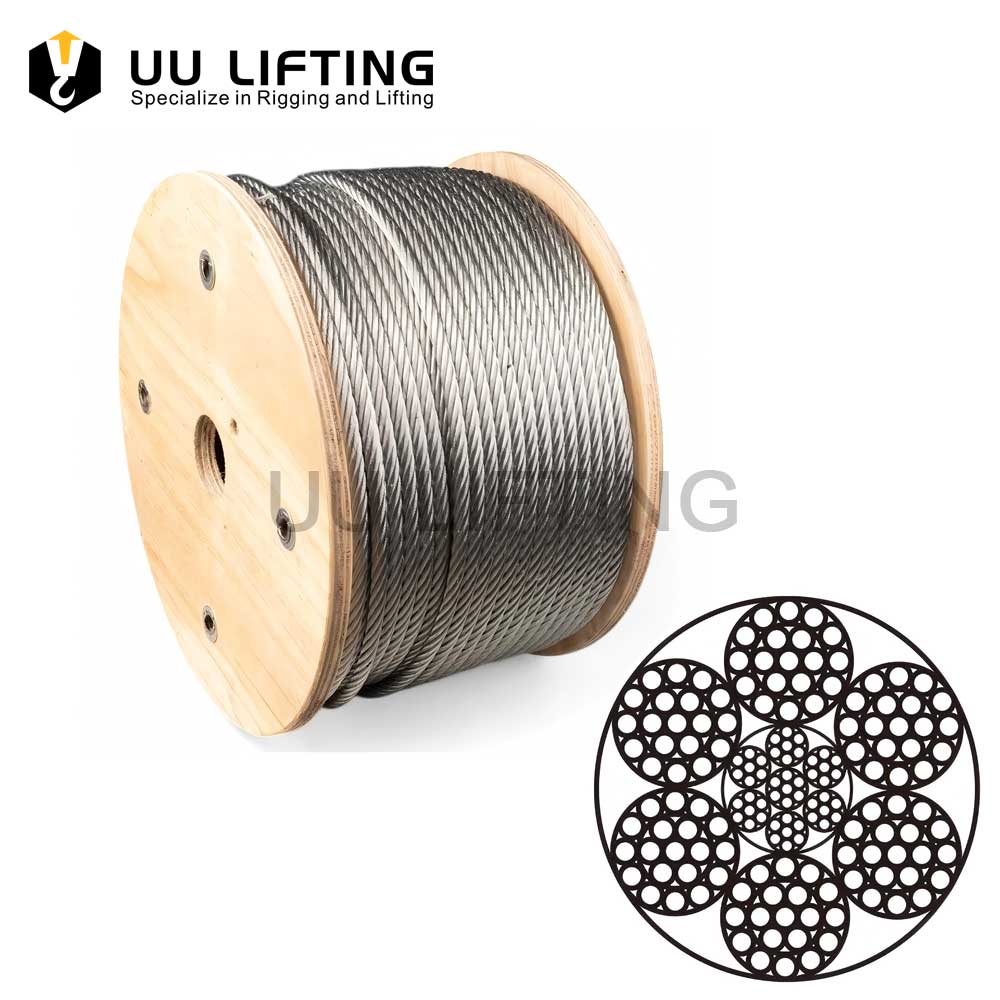
What exactly is 6×19 Steel Wire Rope, and why do you need it?
Are you struggling to find a durable rope that balances strength and wear resistance for your projects? Many buyers feel lost when selecting the right steel construction. Let me clear this up.
A 6×19 steel wire rope is a specific construction known for its high breaking load and excellent abrasion resistance. Its larger outer wires make it a popular choice for demanding tasks where wear is a major concern.
Many of you ask me why this specific configuration matters for your operations. You might think one rope looks just like another, but the differences in quality and performance are huge. Let us dive into the details to see how this fits your business.
What makes the 6×19 construction stand out from other options?
Confused by all the different wire rope codes found in catalogs? Choosing the wrong cable type can cause equipment failure and project delays. I will help you identify the right choice.
The 6×19 construction features larger outer wires, which provide superior resistance to wear and abrasion compared to other designs. This makes it highly effective for heavy-duty industrial applications where the rope faces constant friction during daily use.
When I talk to clients, they often ignore the internal structure. It is a big mistake. The 6×19 group includes several variations, such as the 6×19(S) or 6×19(W) designs. The letters refer to the arrangement of the wires, which affects both flexibility and breaking strength. You also need to select the right core type. A fiber core (FC) is more flexible, while an independent wire rope core (IWRC) offers greater strength and better crush resistance.
Feature
Benefit
Larger Outer Wires
Better Abrasion Resistance
High Breaking Load
Stronger Performance
Multiple Core Options
Fits Specific Needs
I always tell my customers that quality inspection is critical here. You want a rope that lasts in your environment. Do not settle for low-quality options that break after a few uses. This specific construction is reliable for many industrial tasks. It provides a solid balance between flexibility and durability.
How does the galvanized coating affect the wire rope’s performance?
Worried about your equipment rusting in harsh weather conditions? Outdoor projects often face environmental damage. I will explain how the right coating saves you money and trouble.
Galvanized steel wire rope is treated with a layer of zinc to prevent rust and corrosion. It is the most cost-effective solution for outdoor use, offering reliable protection against the elements and harsh working environments.
In my years in the lifting industry, I have seen many companies waste money. They use the wrong material for their specific environment. Galvanization is a simple process. It coats the steel in zinc, which acts as a protective shield. This stops moisture from reaching the steel. I often recommend this for outdoor work. It is much cheaper than stainless steel. While stainless steel offers better corrosion resistance, galvanized rope is actually stronger than stainless steel of the same size.
Comparison Point
Galvanized
Stainless Steel
Corrosion Resistance
Good
Excellent
Strength
Higher
Lower
Cost
Cost-Effective
Higher Cost
If you work in irrigation, agriculture, or general engineering, it is a smart pick. Do not overspend on stainless when galvanized works perfectly well. It handles the elements and provides the strength you need to get the job done.
Why is choosing the right supplier for 6×19 wire rope important?
Tired of dealing with late shipments or fake certifications? Finding a supplier who cares about quality is hard. Let me share how to protect your investment and reputation.
A reliable supplier provides certified, top-quality wire rope that meets strict industry standards. Choosing the right partner ensures consistent quality, transparent documentation, and timely delivery for your lifting projects.
I know how frustrating it is to get bad products. You are a business owner. You cannot afford equipment delays. When you buy 6×19 steel wire rope, you must ask for certifications. If a supplier cannot prove the quality, you should walk away. I have seen too many fake certificates in this industry. It is a big risk for your safety and your business.
Supplier Check
Importance
Certificate Review
Ensures Safety Compliance
Lead Time Check
Maintains Project Efficiency
Direct Communication
Avoids Costly Misunderstandings
I prioritize clear communication because I know you need goods on time. My team focuses on these details. We handle the logistics so you do not have to worry. Always inspect the raw materials used in production. Quality steel means a safe lift. Build a relationship with a supplier who values your time and money. That is the best way to grow your business and keep your customers happy.
Conclusion
6×19 wire rope is a durable, high-strength choice for heavy-duty work. Select the right core and coating, and always choose a trusted supplier for your long-term success.
OUR FACTORY
Raw materials of our products are made of high-quality steel that meets the standards, and the raw materials are traceable. And multiple production lines and machines minimize lead times for rigging and lifting equipment.
Raw Material
Forged
Cast
Chain Machine
Heat Treatment
Powder Plastified
Package
Warehouse
MANUFACTURING PROCESSES
With eight automatic forging and semi-automatic forging line of up to 1600ton press machines and specialized drillng, tapping, heat treatment and inspection equipment. Strict and standardized production process ensures you receive perfect products.
QUALITY CONTROL
All rigging and lifting products are subjected to strict working tension and breaking the tension test. Complied with ISO9001 and CE certification. Our promise to you: Guaranteed safety at work for people and materials.