What Are The Common Sizes For 6×7 Steel Wire Rope And When Should You Use Them?
Are you feeling overwhelmed when browsing different wire rope catalogs? It is stressful to find the right equipment when technical specifications seem to change with every supplier you contact. I am here to help you understand the basics so you can make a smarter choice.
6×7 steel wire rope is a general-purpose cable construction. It is most popular in smaller diameters, ranging from 0.5mm up to 2mm, where it remains highly flexible. However, once you choose diameters of 6mm or more, the rope becomes quite rigid and stiff, making it better suited for static applications.
I have spent many years in the lifting industry, and I know that buying the wrong rope is a mistake that wastes both time and money. Before we get into the details, let us look at why this specific rope construction matters for your inventory.
How Do You Understand The Structure Of 6×7 Steel Wire Rope?
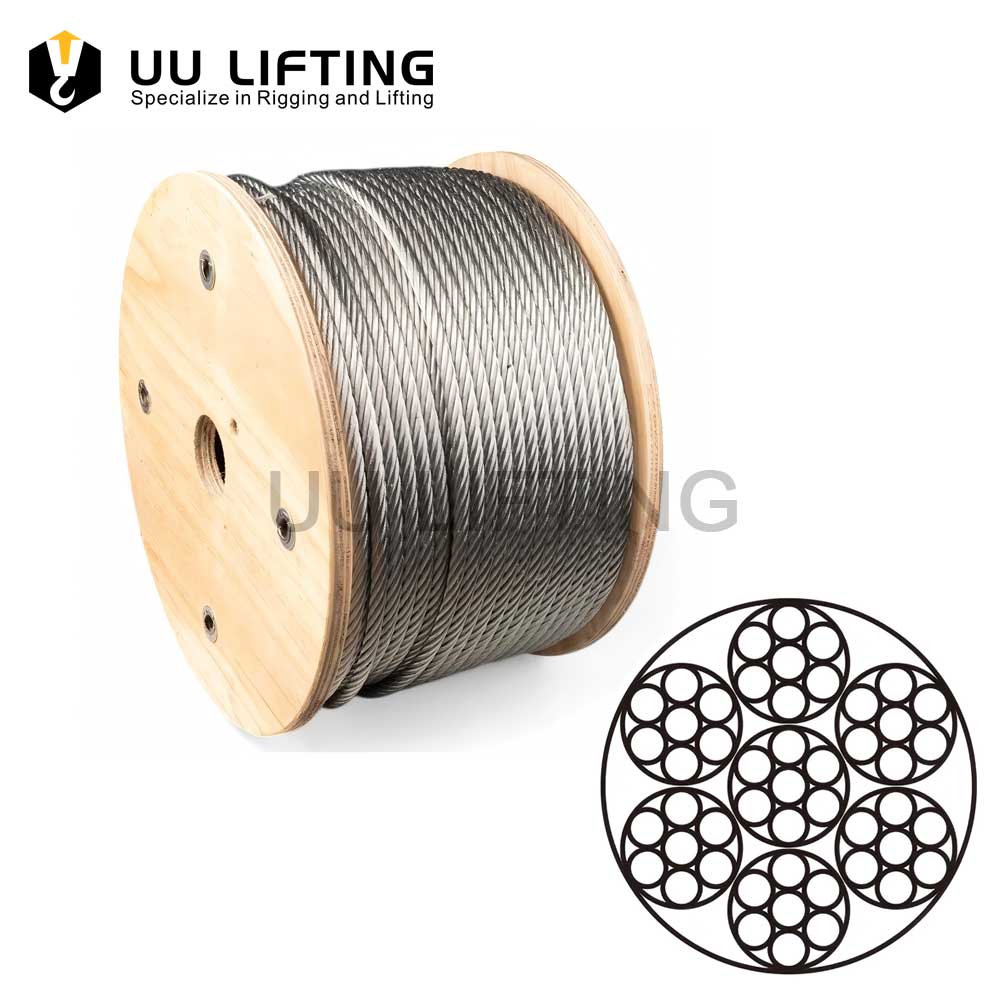
Do you find it difficult to keep track of all the different rope constructions? You are not alone. When you see “6×7,” it simply describes the wire rope’s physical makeup. It means the rope has 6 strands, each containing 7 individual wires.
The 6×7 construction is considered a standard for general use. It is available with either a fiber core (FC) or a wire strand core (WSC or IWS). The core is the center of the rope that supports the outer strands. When you choose a rope with a steel core, it becomes a 7×7 construction because the core is also made of wire. As a business owner, I always advise checking which core your customer actually needs. A fiber core offers more flexibility, while a steel core provides better strength and resistance to crushing. I have learned to always ask for the datasheet before I place a bulk order to ensure I am getting the right material for my client’s specific lifting project.
Feature
Description
Construction
6 Strands, 7 wires per strand
Core Types
Fiber Core (FC) or Wire Strand Core (WSC)
Flexibility
High in small sizes, low in large sizes
Typical Use
Static rigging and small diameter cables
Strength
Dependent on steel grade and core type
Choosing the right structure is the first step in avoiding costly returns. If you sell a rope with a fiber core to someone who needs the strength of a steel core, your customer will have a failed project. You must clearly communicate these technical details to your supplier before you sign the contract.
Which Sizes Should You Choose For Your Projects?
Are you wondering how the rope’s diameter affects its performance? This is a common question, and the answer is actually quite simple. The size of the rope directly affects its flexibility.
The 6×7 rope is very popular in smaller diameters. I am talking about sizes from 0.5mm to 2mm. In these small sizes, the rope is very easy to handle. It is flexible enough to bend around small pulleys or fit into tight spaces. However, the performance changes as the diameter grows. Once you reach 6mm or larger, the individual wires become thicker and harder to bend. The rope loses its flexibility and becomes very rigid. I see many new buyers make the mistake of buying thick 6×7 rope for applications that require constant bending. This leads to early fatigue and premature breaking. If your customer needs to move the rope through sheaves frequently, a large-diameter 6×7 rope is not the right tool for the job. You should look for a more flexible construction instead.
This rigidity in larger sizes is exactly why you need to be careful. As a procurement officer, I always ask myself: “What is the end use?” If it is a mast stay or a garage door cable, stiffness might actually be a good thing because the rope holds its shape well. But if the rope is for an active hoist or a crane, stiffness is an enemy. I recommend keeping a sample of the rope in your office at all times. Having a physical sample of the rope lets you test its stiffness before you commit to buying a full container from a factory. Do not just rely on the pictures in a catalog. The physical feel of the rope tells you more about its quality and suitability than any spreadsheet can.
What Are The Best Applications For This Wire Rope?
Are you trying to decide whether 6×7 wire rope is the right choice for your customer’s job? You need to know exactly where this product shines and where it fails.
Because of its construction, 6×7 wire rope is ideal for static applications. This means it is used in places where the rope does not move or bend frequently. Common uses include stay wires for masts, fencing, catenary wire, garage door cables, and hanging signs. It is also used for general engineering applications where the rope is intended to remain in place and support a load. Because the wires are thicker than those in more complex constructions, they resist wear and abrasion better in certain conditions. This makes the rope durable for long-term outdoor use, especially if it is galvanized to prevent rust. However, I must emphasize that you should avoid using this rope for dynamic tasks such as high-speed hoisting or heavy lifting, where the rope undergoes constant stress cycles. In those cases, the stiffness will lead to fatigue cracks.
When you are buying this material, you must also consider the environment. If your customers are in coastal areas, you should always source hot-dipped galvanized wire to prevent corrosion. I have faced issues in the past where a supplier sent electro-galvanized rope when I specifically needed hot-dipped. The difference is huge for longevity. My advice is to always ask for the test certificates. Verify that the tensile strength matches your requirements. Do not be afraid to push the supplier for proof of testing. If they delay the shipment or act vaguely about the certificates, that is a red flag. I have learned that the quality of the communication with my supplier is just as important as the quality of the steel wire rope itself. Reliable suppliers will always provide the documentation you need without a fuss.
Conclusion
The 6×7 wire rope is a flexible choice for small diameters and a rigid choice for large diameters. Always match the core type and size to your specific static application.
OUR FACTORY
Raw materials of our products are made of high-quality steel that meets the standards, and the raw materials are traceable. And multiple production lines and machines minimize lead times for rigging and lifting equipment.
Raw Material
Forged
Cast
Chain Machine
Heat Treatment
Powder Plastified
Package
Warehouse
MANUFACTURING PROCESSES
With eight automatic forging and semi-automatic forging line of up to 1600ton press machines and specialized drillng, tapping, heat treatment and inspection equipment. Strict and standardized production process ensures you receive perfect products.
QUALITY CONTROL
All rigging and lifting products are subjected to strict working tension and breaking the tension test. Complied with ISO9001 and CE certification. Our promise to you: Guaranteed safety at work for people and materials.