What Is an 8x36WS Line-Contact Wire Rope, and Why Should You Care?
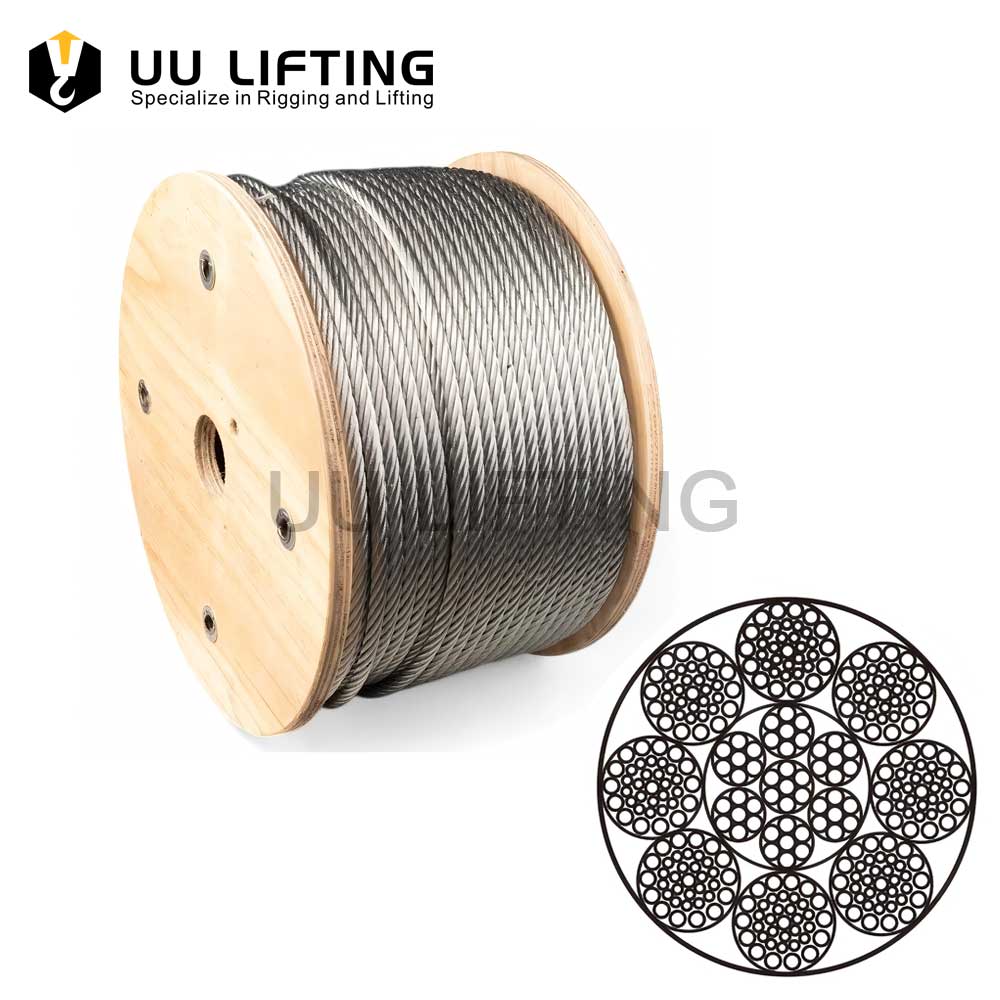
An 8x36WS is a high-performance wire rope with 8 strands. Its””Warrington Seal”” design and”” line contac”” build give it superior flexibility, crush resistance, and fatigue life. This makes it ideal for demanding crane, hoist, and winch applications where durability is critical.
I often talk to buyers like Mark, a business owner from the United States. He was frustrated because the hoist ropes on his cranes were wearing out way too quickly. He was using a standard 6-strand rope, thinking all wire ropes were more or less the same. I explained that the specific construction, like an 8x36WS, makes a huge difference. Understanding these details saved him a lot of money and prevented unexpected failures.Let’slook deeper into what makes this rope so special, so you can make a better choice for your business, too.
What Does the””8x36W”” Classification Actually Mean?
“8x6W”” means 8 strands of about 36 wires each in a Warrington Seale pattern. The”” gives flexibility,”3” indicates wire density for strength, and”W” specifies a durable wire arrangement. It’s a code for a robust, wear-resistant rope.
Let’s break down that code. It’s simpler than it looks and tells you everything about the rope’s design and purpose. When I’m helping a customer, I always start here. Each part of the name gives you a clue about how the rope will perform.
Breaking Down the Code
The name””8x36W”” is a technical shorthand.
8: This is the number of strands that are wrapped around the rope’s central core. Most standard ropes have 6 strands. Having 8 strands makes the rope more flexible and much more resistant to crushing on a winch drum.
36: This is the nominal number of individual wires in each strand. A higher number of wires generally indicates a more flexible rope.
WS: This stands for Warrington Se. It’s a combination wire pattern within each strand that offers the best of both worlds. The outer wires are large (Seale pattern) to resist abrasion, while the inner wires have alternating sizes (Warrington pattern) to provide great flexibility.
Here’s a simple table showing what each part does for you.
Code Part
What it Means
Your Benefit
8
8 strands
Better flexibility and crush resistance.
36
~36 wires per strand
Good fatigue life and durability.
WS
Warrington Seale pattern
Excellent resistance to abrasion and internal wear.
This construction is not an accident. It is engineered for top performance in tough conditions.
Why Is” LineContact ” so importantt for Performance?
“Line contact” means wires in a strand touch along their length, not just at single points. This design spreads pressure, reduces internal friction and wear, and drastically increases the rope’s fatigue resistance. It simply lasts longer under heavy use and repeated bending.
The””W”” in therope’ss name creates what we call line contact. This is the most important feature for longevity. In simpler, older rope designs, the wires in different layers only touch at small points. Think of it like a pile of baseballs. All the weight rests on tiny points, creating high stress. This causes the wires to grind against each other and break down from the inside. This is called point contact.
An 8x36WS rope is different. Its wires are arranged to lie side by side along a continuous line. Imagine stacking logs instead of baseballs. The contact is spread out over a much larger area. This simple change has huge benefits for anyone buying the rope. It reduces internal stress, reduces friction, and prevents the wires from nicking and wearing each other out.
Here is a clear comparison.
Feature
Line Contact (e.g., 8x36WS)
Point Contact (e.g., standard 6×19)
Wire Contact
Wires touch along a line.
Wires cross and touch at points.
Internal Stress
Low
High
Internal Wear
Minimal
Significant
Fatigue Life
Excellent
Poor to fair
Best For
Dynamic loads, repeated bending.
Static loads, less demanding use.
When Mark switched his crane ropes to a line contact design, his replacement cycle went from every few months to over a year. The initial cost was slightly higher, but the long-term savings were massive.
What Are the Best Applications for an 8x36WS Wire Rope?
The 8x36WS excels in applications involving high bending stress and crushing forces. It is a top choice for main hoist lines on mobile and overhead cranes, winches, and various heavy-duty lifting operations where flexibility and extreme durability are essential.
Because of its unique design, this rope is a problem-solver for specific, demanding joYou wouldn’tn’tt use it for a simple garage door cabbut it’st’ss the perfect choice for high-value machinery where performance is everything.
Core and Applications
Most 8x36WS ropes come with an IWRC, which means Independent Wire Rope Core. The center of the rope is actually a smaller wire rope. This steel core provides immense strength, supports the outer strands, and strongly resists crushing when the rope is spooled onto a winch drum. A fiber core (FC) would offer more flexibilbut wouldn’tn’tt stand up to the crushing forces seen in heavy crane work.
This rope is the go-to choice for:
Main Crane Hoist Lines: Their flexibility is ideal for running over multiple sheaves, and their fatigue resistance allows them to withstand thousands of lifting cycles.
Winch Ropes: The 8-strand IWRC design is highly resistant to crushing, a common problem when rope is wound onto a drum under load.
Drilling Rigs: It stands up to the harsh, repetitive work cycles found in the oil and gas industry.
Heavy-Duty Overhead Lifting: For any application where the rope is constantly moving and under heavy load, the 8x36WS provides a longer service life and a greater margin of safety.
Choosing the right rope is not just about meeting a strength requirement.—It’ssabout matching therope’ss design to the demands of the job.
OUR FACTORY
Raw materials of our products are made of high-quality steel that meets the standards, and the raw materials are traceable. And multiple production lines and machines minimize lead times for rigging and lifting equipment.
Raw Material
Forged
Cast
Chain Machine
Heat Treatment
Powder Plastified
Package
Warehouse
MANUFACTURING PROCESSES
With eight automatic forging and semi-automatic forging line of up to 1600ton press machines and specialized drillng, tapping, heat treatment and inspection equipment. Strict and standardized production process ensures you receive perfect products.
QUALITY CONTROL
All rigging and lifting products are subjected to strict working tension and breaking the tension test. Complied with ISO9001 and CE certification. Our promise to you: Guaranteed safety at work for people and materials.