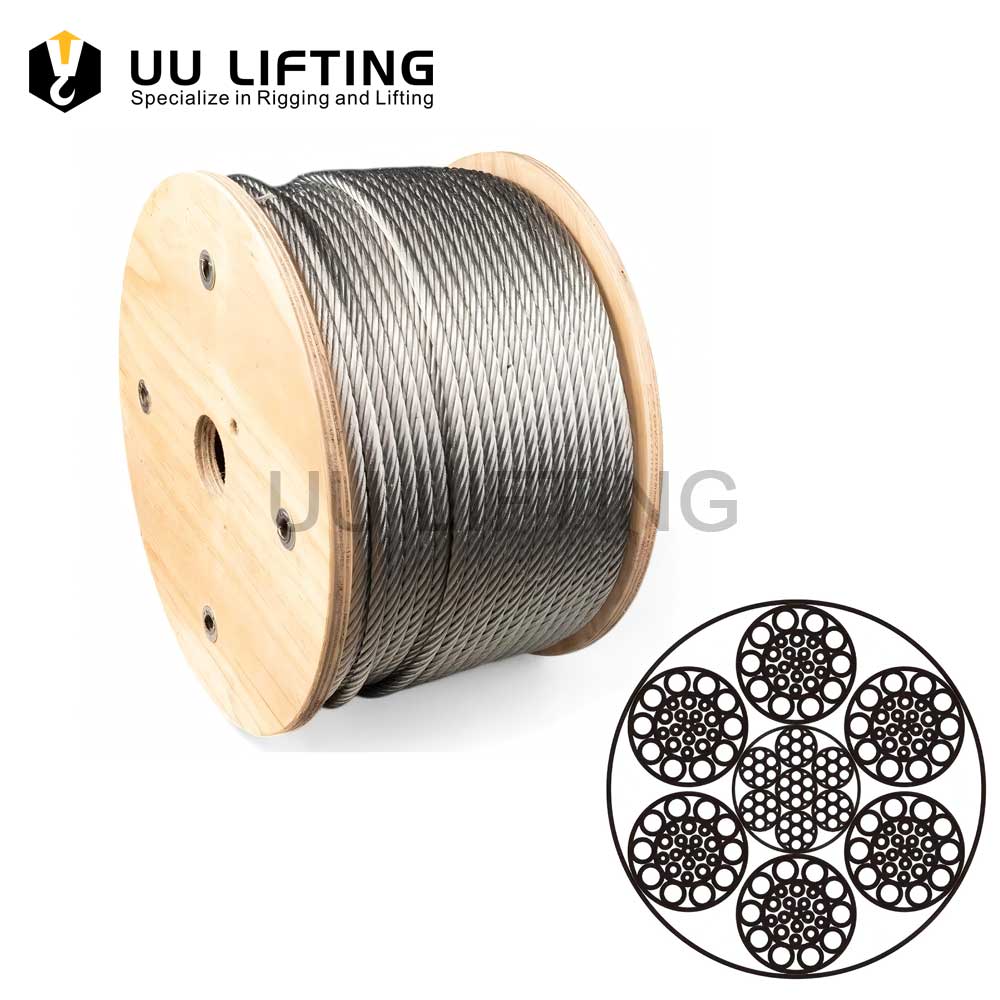
Do you feel confused by all the wire rope numbers? You are not alone. Picking the wrong rope wastes money and causes safety risks on your job site. I will explain the 6×26WS rope.
6×26WS is a steel wire rope with six strands, each containing 26 wires. The “WS” stands for “Warrington Seal” construction. It is a very balanced rope. It offers a great mix of flexibility, fatigue resistance, and durability for heavy-duty lifting and industrial work.
Many buyers ask me if this rope is better than what they use now. It is a common question. I have seen many companies struggle to find the right balance between strength and flexibility. Let us look at what makes this specific rope work so well for your daily business operations.
Why is the 6×26WS design special?
Does your current rope wear out too fast? This leads to equipment downtime. It also puts your workers at risk. The 6×26WS design solves these common problems by changing how the rope is constructed.
The “WS” design uses a smart wire arrangement. It puts larger wires on the outside for better wear resistance. It puts smaller wires on the inside for better flexibility. This makes the rope last longer. It handles heavy work without breaking down or losing shape quickly.
The 6×26WS construction is a masterpiece of engineering. Most people see just a metal rope. I see a specific pattern. The “Warrington” part of the name means the outer layer uses wires of different sizes. This fills the gaps well. The “Seal” part means the inner wires are protected. This layout provides the rope with strong resistance to crushing. It also handles the bends over a sheave very well.
When you look at different rope constructions, you need to see how they behave.
Feature
6×19 Class
6×26WS
6×37 Class
Wear Resistance
High
Excellent
Moderate
Flexibility
Moderate
Good
Excellent
Crush Resistance
Moderate
High
Low
The 6×26WS is the middle ground. It is stronger than the 6×19 but more flexible than the 6×37. It takes the best parts of both. This is why it is my top recommendation for many of my clients who need a general-purpose, high-performance rope. The construction includes a center core. We often use an Independent Wire Rope Core (IWRC). This core supports the strands. It prevents the rope from flattening under load. This is vital for safety and longevity. You want a rope that keeps its shape under tension. The 6×26WS does exactly that.
Where should you use 6×26WS wire rope?
Are you tired of replacing crane ropes every few months? You might be using a rope that isn’t suited to your drum. This wastes your budget and slows down your shipping. I want to help you pick the right tool for your specific equipment.
You should use 6×26WS wire rope for cranes, draglines, and oil well drilling. It handles drum crushing very well. It also resists abrasion better than standard ropes. It is a workhorse in many tough industries. It performs well where other ropes fail.
Think about where you use wire ropes. Cranes have drums—the rope winds on and off the drum. Sometimes, the rope sits on itself. This is called drum crushing. A soft rope will flatten. A flat rope will break. The 6×26WS rope resists this crushing force. This is because the wires are arranged tightly.
Consider these common uses:
Application
Why 6×26WS works
Tower Cranes
Resists wear on sheaves and drums.
Logging Winches
Handles harsh, abrasive environments well.
Mobile Cranes
Offers the right flexibility for many reeving systems.
Oil Industry
Strong enough to pull heavy loads without stretching too much.
I always tell my customers to look at the environment first. If you drag the rope across dirt or rocks, you need abrasion resistance. The 6×26WS outer wires are thick. They take the abuse so the inner wires stay safe. If you have a machine that bends the rope back and forth, you need fatigue resistance. This rope has enough small inner wires to bend without snapping. It is a dual-threat rope. You get strength for the lift and flexibility for the machine. This is why it is popular in my export markets. It saves money because it lasts longer. You replace it less often. That is good for your profit margin.
Conclusion
The 6×26WS wire rope is a great choice. It mixes strength, wear resistance, and flexibility perfectly. Use it to improve your safety, reduce downtime, and save on replacement costs.
OUR FACTORY
Raw materials of our products are made of high-quality steel that meets the standards, and the raw materials are traceable. And multiple production lines and machines minimize lead times for rigging and lifting equipment.
Raw Material
Forged
Cast
Chain Machine
Heat Treatment
Powder Plastified
Package
Warehouse
MANUFACTURING PROCESSES
With eight automatic forging and semi-automatic forging line of up to 1600ton press machines and specialized drillng, tapping, heat treatment and inspection equipment. Strict and standardized production process ensures you receive perfect products.
QUALITY CONTROL
All rigging and lifting products are subjected to strict working tension and breaking the tension test. Complied with ISO9001 and CE certification. Our promise to you: Guaranteed safety at work for people and materials.