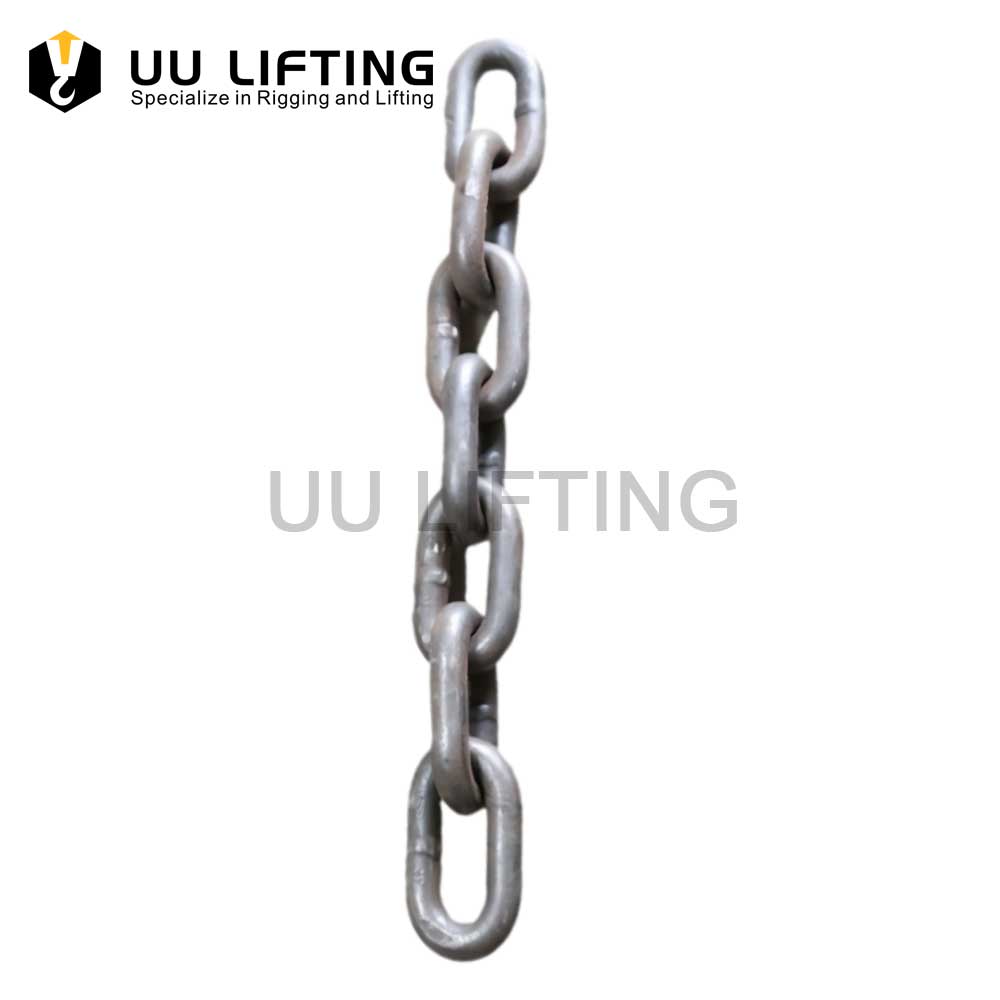
What is a Studless Anchor Chain and Why Should You Care?
A studless anchor chain is a type of marine chain where the links are simple, open ovals without a central bar (or “stud”). It’s lighter and more flexible than its stud link counterpart, making it easier to handle and store, especially in specific marine applications.
Choosing the right anchor chain is a big decision. It directly impacts safety, operations, and your bottom line. I’ve worked in this industry for years and seen how a small detail, like the type of chain link, can make a huge difference. I once had a client, a U.S. company owner named Mark, who was struggling with this exact choice for his mooring buoy business. He was used to dealing with standard chains and wasn’t sure studless was the right fit. Let’s explore this topic further so you can make an informed choice for your business, just like Mark did.
What’s the Difference Between Studless and Stud Link Anchor Chains?
The main difference is the “stud,” a bar in the middle of a stud link chain. This stud adds strength and prevents kinking, but makes the chain heavier. Studless chains lack this bar, making them lighter, more flexible, and easier to clean, but with a lower breaking strength.
The Obvious Difference: The Stud
The most basic difference is visual. A stud link anchor chain has a small steel bar welded across the middle of each link. A studless anchor chain is just a simple oval link. This small bar, the stud, does a few things. It increases the link’s strength and helps prevent the chain from tangling or kinking when it’s handled or stored in a chain locker. However, it also adds weight and can sometimes trap mud and debris, making it harder to clean. The studless design is simpler and avoids this problem.
Strength, Weight, and Flexibility
Because of that center stud, a stud link chain is stronger than a studless chain of the same material and diameter. The general rule is that a studless chain has a breaking strength about 20% lower than its studded counterpart. This means you would need a larger-diameter studless chain to match the strength of a smaller stud-link chain. But the studless chain is also lighter and much more flexible. This makes it easier to handle, especially with smaller equipment, and it can be used in applications where the chain needs to wrap around tight corners.
Which One is for You?
The choice depends entirely on your application. I’ve outlined the key differences in a simple table below.
Feature
Stud Link Chain
Studless Chain
Structure
Oval link with a center bar (stud)
Simple oval link, no bar
Strength
Higher breaking strength
~20% lower breaking strength
Flexibility
Less flexible
More flexible
Weight
Heavier
Lighter
Kinking
Resists kinking and tangling
More prone to kinking
Cleaning
Can trap debris
Easier to clean
Common Use
Main anchoring for large vessels
Mooring, buoys, towing, aquaculture
For a large cargo ship, the strength and anti-kinking properties of a stud link chain are essential. But for my client Mark’s mooring business, the lighter weight and flexibility of the studless chain were perfect. It made deployment and retrieval of the mooring systems much more efficient for his team.
How Do You Choose the Right Grade for Your Studless Anchor Chain?
Choosing the right grade depends on the required breaking strength for your application. Common grades for studless chains are U2 and U3. Grade U3 is made from higher-tensile-strength steel, offering greater strength for the same chain size. Always check classification society rules for your specific requirements.
Understanding Chain Grades: U2 and U3
When we talk about grades in anchor chains, we are talking about the tensile strength of the steel used to make them. The higher the grade, the stronger the steel. For studless anchor chains, the two most common grades you will encounter are Grade U2 and Grade U3. Both are made from special-quality alloy steel, but they undergo different heat treatment processes. This gives Grade U3 steel a higher tensile strength. A Grade U3 chain can handle a significantly higher load than a Grade U2 chain of the same size and weight.
The Impact on Weight and Size
This difference in strength has practical advantages. If you have a specific strength requirement for a project, you can meet it with a smaller and lighter Grade U3 chain compared to a Grade U2 chain. This can be a huge benefit. A lighter chain is easier to transport, handle, and store. For a vessel, it means less weight on the bow, which can improve performance. For a mooring system, it might mean you can use smaller buoys. This is a conversation I have often with procurement officers. They are sensitive to pricing, but also see the long-term value in a lighter, stronger product.
Certification and Compliance
This is the most critical part. Your choice of grade is not just a matter of preference; it’s often dictated by rules from marine classification societies such as ABS, DNV, or Lloyd’s Register. These organizations set the standards for what grade and size of chain is required for a specific vessel or application. A trustworthy supplier must provide full certification for their chains. I’ve heard too many stories about suppliers providing fake certificates. This is incredibly dangerous and can lead to massive liability. I always make sure every chain we ship has complete, traceable documentation from the steel mill to the final proof test. It’s about ensuring my client’s safety and peace of mind.
Here is a simplified comparison:
Grade
Material
Advantage
Main Consideration
Grade U2
Alloy Steel
Standard strength, cost-effective
Heavier for a given strength
Grade U3
High-Strength Alloy Steel
Higher strength-to-weight ratio
Higher initial cost
What are the Key Manufacturing and Quality Control Steps?
Quality studless chain manufacturing involves several key steps. It starts with selecting certified raw steel, followed by forming, flash butt welding, heat treatment, and proof load testing. Each step requires strict quality control to ensure the final product meets international standards.
As a manufacturer in China, I know the concerns buyers like Mark have about quality. Inefficient communication and inconsistent products are real pain points. That’s why I believe in transparency. Let me walk you through how a high-quality studless anchor chain is made.
From Raw Steel to Finished Link
It all begins with the raw material. We only use high-quality, certified steel rods from reputable mills. The rod is heated until it’s red hot, then bent into the classic oval link shape. The most critical part of forming the link is the weld. We use an automated process called flash butt welding. This method uses high electrical current to melt the two ends of the link together, creating a weld that is as strong as the original steel. This is far superior to any manual welding process.
The Critical Role of Heat Treatment
After the links are formed and welded into a continuous chain, the entire chain undergoes a precise heat treatment. This involves heating the chain to a specific temperature and then cooling it under controlled conditions (a process called quenching and tempering). This is what develops the steel’s mechanical properties and determines whether it becomes a Grade U2 or Grade U3 chain. Getting this step exactly right is crucial for the chain’s final strength and durability.
Testing: Proof and Break Loads
No chain leaves my facility without rigorous testing. First, every single link of the chain is subjected to a “proof load test”. This means we pull the entire length of the chain to a force specified by the classification societies. This test ensures there are no hidden defects in the links or welds. After that, samples are taken from the chain and put into a special machine that pulls them until they break. This is the “break load test”, and it verifies that the chain’s ultimate strength meets or exceeds the standard for its grade. All of this is witnessed and documented to provide the final certification.
Why is Proper Maintenance for Studless Anchor Chains So Important?
Proper maintenance is crucial for extending the life of your studless anchor chain and ensuring safety. This includes regular cleaning, visual inspections for wear and corrosion, and periodic measurements of the chain links to check for diameter reduction.
Buying a quality chain is the first step. Taking care of it is the second. I always tell my clients that good maintenance protects their investment and, more importantly, ensures continued safety. Delayed shipments are a huge pain point, and an unexpected chain failure can cause even worse delays. A good maintenance plan helps you anticipate when a replacement is needed.
Routine Cleaning and Inspection
One of the advantages of studless chains is that they are easier to clean than stud link chains. There are no studs to trap mud, sand, and other debris. After use, the chain should be thoroughly washed with high-pressure water. Once clean, it’s time for a visual inspection. You should look for signs of deep corrosion, cracks, bent links, or excessive wear, especially in the areas where the links connect.
Measuring for Wear
A visual check is good, but you also need to take measurements. The most important measurement is the diameter of the chain link material. Over time, the friction between links will wear down the steel. This wear is usually concentrated at the “crown” or end of the link where it contacts the next one. Using calipers, you should periodically measure the diameter in the worn areas.
When to Retire a Chain
So, when is the chain too worn to be safe? The general rule from most classification societies is that if the average diameter of a link is reduced by more than 12-15% of its original nominal diameter, the chain should be retired from service. For example, if you have a 50mm chain, and you measure a section that is only 43mm, it’s time to replace it. Keeping a log of these measurements helps you track wear rates and plan replacements, avoiding emergencies that can lead to missed sales seasons.
OUR FACTORY
Raw materials of our products are made of high-quality steel that meets the standards, and the raw materials are traceable. And multiple production lines and machines minimize lead times for rigging and lifting equipment.
Raw Material
Forged
Cast
Chain Machine
Heat Treatment
Powder Plastified
Package
Warehouse
MANUFACTURING PROCESSES
With eight automatic forging and semi-automatic forging line of up to 1600ton press machines and specialized drillng, tapping, heat treatment and inspection equipment. Strict and standardized production process ensures you receive perfect products.
QUALITY CONTROL
All rigging and lifting products are subjected to strict working tension and breaking the tension test. Complied with ISO9001 and CE certification. Our promise to you: Guaranteed safety at work for people and materials.