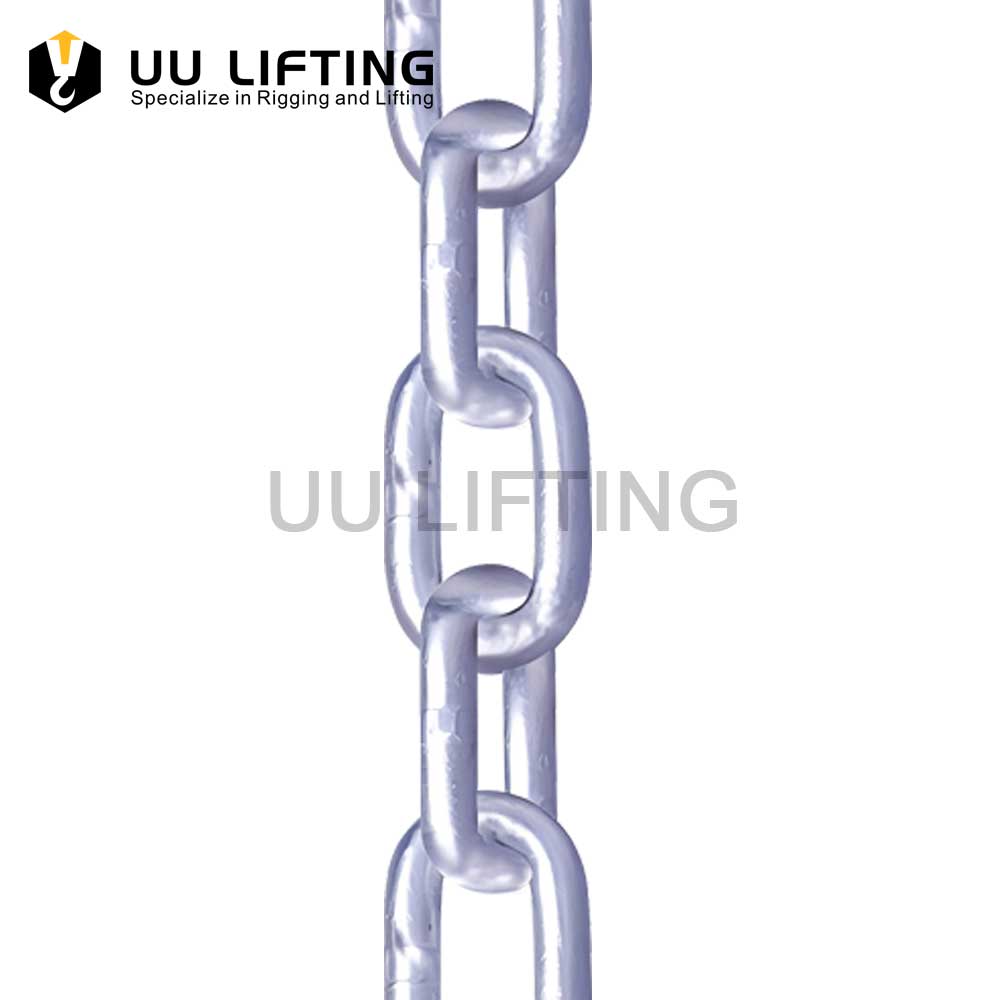
Agriculture (e.g., for securing equipment), Engineering (e.g., for machinery or construction), Industrial (e.g., for general-purpose lifting, securing, or towing tasks), Marine (e.g., for mooring)
* Agriculture (e.g., for securing equipment); * Engineering (e.g., for machinery or construction); * Marine (e.g., for mooring); * Industrial (e.g., for general-purpose lifting, securing, or towing tasks);
Packaging
Carton, Gunny Bag, Case Or Steel Drum. Custom Packaging Available
Din 763 Welded Link Chain Sizes:
Din 763 Welded Link Chain Sizes
Din 763 Welded Link Chain Sizes
Size
Inside Length
Outside Width
Working Load
Test Load
Breaking Load
Weight Per M
(mm)
(mm)
+(mm)
(mm)
+(mm)
(kg)
(N)
(N)
(kg)
3
26
1.2
12
0.6
55
1050
3200
0.15
4
32
1.5
16
0.8
100
2000
6000
0.27
5
35
1.8
20
1
160
3150
10000
0.43
6
42
2
24
1.2
224
4500
14000
0.63
7
49
2.5
28
1.4
300
6000
18000
0.86
8
52
2.5
32
1.6
400
8000
25000
1.1
9
59
3
36
1.8
530
10500
32000
1.41
10
65
3.2
40
2
630
12500
40000
1.75
11
72
3.4
44
2
790
15800
47500
2.11
12
78
3.6
48
2.3
940
18800
56500
2.55
13
82
4
52
2.5
1000
21200
63000
2.95
16
100
5
64
3.2
1600
33000
100000
4.45
18
113
5.2
70
3.2
2120
42300
127000
5.65
19
119
5.6
72
3.4
2370
47300
142000
6.25
20
120
6
75
3.8
2500
50000
160000
7
22
127
6
82
4
3170
63300
190000
8.55
25
140
6.6
88
4.2
4090
81700
245000
10.9
28
152
7
96
4.7
6000
120000
300000
13.9
32
171
7.8
108
5.2
8000
160000
400000
18.2
What Is A DIN 763 Welded Link Chain And When Should You Use It?
DIN 763 is a German standard for long-link, welded, round steel chains. It is not calibrated and is used for general purposes like fencing, lashing, or decorative applications. It is not intended for overhead lifting due to its specifications and construction.
What Are The Key Specifications Of A DIN 763 Chain?
The key specifications for DIN 763 chain include the nominal size (diameter), pitch (link length), inner and outer width, weight per meter, and working load limit (WLL). These numbers define the chain’s size, strength, and suitability for a specific task.
Understanding the Dimensions
The most important specs are the dimensions and the load limit. The “nominal size” is simply the diameter of the steel wire used to link. A bigger diameter means a stronger chain. The “pitch” or “split” is the internal length of each link. DIN 763 is a “long-link” chain. This means it has a longer pitch compared to short-link chains like DIN 766. This makes it more flexible. But it is less suitable for use with windlasses.
Strength and Load
The most critical number for safety and function is the Working Load Limit, or WLL. This is the maximum weight the chain is designed to handle in normal use. It is very important never to exceed this limit.
Here is a simple table based on our product data to make it clearer:
Nominal Size (mm)
Working Load Limit (kg)
Use Case Example
4
100
Light security, animal leash
8
400
Securing gates, trailer safety
13
1000
General lashing, mooring aid
16
1600
Heavy-duty securing
Choosing the right size is not just about the load. You also need to consider if it will fit the attachment points you are using.
How Is DIN 763 Chain Made, and What Does It Mean For Quality?
DIN 763 chain is made by bending steel wire into a link shape and then welding the ends together. Quality depends on the steel grade, the welding process, and the finish. We use high-quality, traceable steel and automated welding for consistent strength and reliability.
The Welding Process
Next comes manufacturing. The steel wire is formed into links. Then, the most important step happens: welding. This is where the ends of the link are fused. A poor weld is a major weak point. We use automated welding machines. This ensures every single link has a strong, consistent weld. After welding, the chain is often heat-treated to increase its strength and durability.
Finishing Touches
Finally, the chain is finished. This is usually a coating to protect it from rust and corrosion. Common finishes include:
Self-Colored: No finish, so that it will rust. It is best for indoor or dry environments.
Zinc Plated (Electro-galvanized): A shiny finish that offers good corrosion resistance. It’s a popular choice for general use.
Hot-Dip Galvanized (HDG): A thick, dull gray coating that provides excellent rust protection. This is ideal for marine or outdoor applications where the chain is exposed to weather.
When you’re buying, ask the supplier about their raw materials and their welding process. A good supplier will be transparent about these details.
Is DIN 763 Chain Suitable For Overhead Lifting?
No, the DIN 763 chain is not suitable for overhead lifting. It is a general-purpose, non-calibrated chain. For lifting, you must use a specifically graded and certified lifting chain, such as Grade 80 (EN 818-2), which is designed for that purpose.
Lifting Chains vs. General-Purpose Chains
Lifting chains are a completely different category. They are made from special alloy steels. They go through rigorous testing and certification processes. Here’s a quick comparison:
Feature
DIN 763 (General Purpose)
Grade 80 (Lifting Chain)
Purpose
Lashing, securing, pulling
Overhead lifting
Material
Mild Carbon Steel
Quenched & Tempered Alloy Steel
Standard
DIN 763
EN 818-2, ASME B30.9
Safety Factor
Typically less than 4:1
Minimum 4:1
Elongation
Low
High (stretches before breaking)
Certification
Certificate of conformity
Detailed test certificate per batch
The key difference is the material and heat treatment. Lifting chains like Grade 80 are designed to stretch a lot before they break. This provides a visual warning that the chain is overloaded. The DIN 763 chain is made from standard carbon steel. It will snap without warning. Using it for lifting is like playing with fire. It’s not a risk worth taking.
How Do You Choose The Right DIN 763 Chain Supplier?
Choose a supplier who is transparent about their manufacturing process, provides clear specifications, and offers traceability for raw materials. Look for responsive communication and a partner who understands your business needs, not just someone selling a product. A factory-direct supplier often offers better control.
Key Factors for Supplier Selection
Transparency and Traceability: A good supplier won’t hide anything. They should be able to tell you exactly where their steel comes from. They should show you their production line. Ask for material traceability. This is your best defense against poor quality.
Technical Knowledge: Your supplier should be more than a salesperson. Can they answer technical questions about weld quality, material grades, and the differences between standards? If they can’t, it’s a red flag. They should be a resource for you.
Communication: This is a big one. Mark always complains about slow replies and language barriers. You need a partner who responds quickly, understands your questions, and can solve problems efficiently. My email is always open for this reason: info@uulifting.com.
Proof of Quality: Don’t just trust a certificate. Ask for batch test reports. A reliable manufacturer regularly tests its products. For example, they do tensile strength tests. We test our chains to ensure they meet or exceed the stated WLL.
Finding a supplier is like a partnership. You are trusting them with your money and your reputation. Do your homework. Ask the tough questions. It will save you a lot of headaches later.
OUR FACTORY
Raw materials of our products are made of high-quality steel that meets the standards, and the raw materials are traceable. And multiple production lines and machines minimize lead times for rigging and lifting equipment.
Raw Material
Forged
Cast
Chain Machine
Heat Treatment
Powder Plastified
Package
Warehouse
MANUFACTURING PROCESSES
With eight automatic forging and semi-automatic forging line of up to 1600ton press machines and specialized drillng, tapping, heat treatment and inspection equipment. Strict and standardized production process ensures you receive perfect products.
QUALITY CONTROL
All rigging and lifting products are subjected to strict working tension and breaking the tension test. Complied with ISO9001 and CE certification. Our promise to you: Guaranteed safety at work for people and materials.