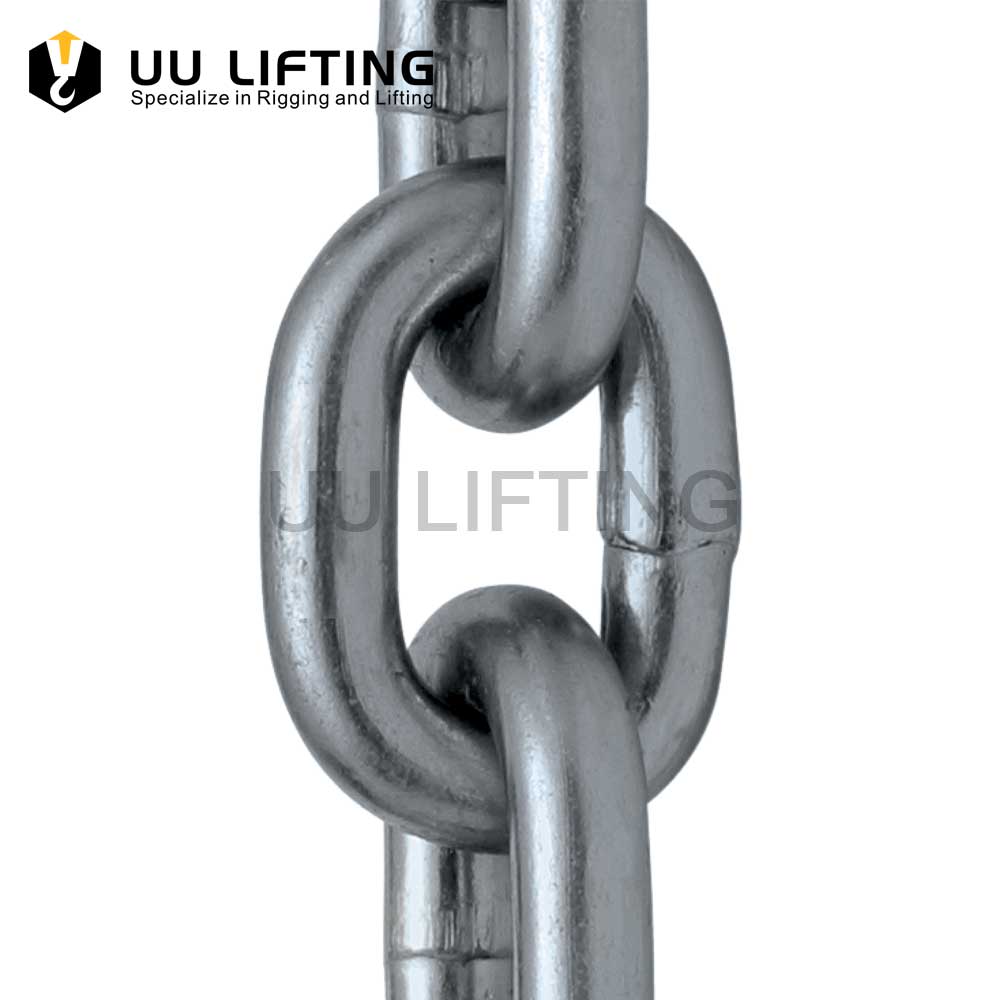
What Is Short Link G43 High Test Chain and Why Is It So Popular?
Short Link G43 High Test Chain is a carbon steel chain known for its high strength-to-weight ratio. It is not approved for overhead lifting but is excellent for load securing, towing, and lashing applications due to its durability and NACM (National Association of Chain Manufacturers) specifications.
What Do “Grade 43” and “High Test” Actually Mean?
“Grade 43” refers to the chain’s strength, with a minimum tensile strength of 43,800 pounds per square inch. “High Test” means it is factory proof-tested to twice its working load limit, ensuring reliability for demanding, non-lifting tasks.
The “Grade” in G43
The “Grade” is a standard rating that tells you the chain’s strength. G43 is made from carbon steel. The number 43 signifies its strength properties, as defined by industry standards like the NACM. A higher grade number usually means the chain is made from a stronger material.
The Meaning of “High Test”
“High Test” is a quality control promise. It means the chain was subjected to a significant load at the factory before being sold. This is called a proof test. For the G43 chain, the proof test load is double its rated Working Load Limit (WLL). This test ensures there are no hidden weaknesses in the links or welds.
“Short Link” Dimension
The term “Short Link” refers to the dimensions of each link. A shorter pitch makes the chain more flexible and less likely to kink. This makes it fit loads better and work smoothly with hooks and binders.
Here is how the strength ratings relate to each other:
Rating
Description
Working Load Limit (WLL)
The maximum load the chain should ever be subjected to in daily use.
Proof Test
The load applied at the factory for quality control. It is 2x the WLL for G43.
Minimum Breaking Force
The minimum force at which the chain will break. It is 3x the WLL for G43.
How is the G43 Chain Different from Other Common Grades?
G43 is stronger than standard Grade 30 (Proof Coil) chain but not as strong as Grade 70 (Transport) chain. It is much different from alloy chains like G80/G100, which are heat-treated and specifically designed for safe overhead lifting.**
Not all chains are created equal. This was a key point in my discussion with Mark. He was reselling chains for securing loads on trailers, so he needed something stronger than basic hardware-store chains, but did not need an expensive lifting chain. The right choice depends entirely on the job. Using a G43 chain where a G80 is needed is extremely dangerous. Using a G80 where a G43 would do is simply a waste of money. The biggest difference between these chains is the material and manufacturing process, which determines their strength and safe use. Carbon steel chains like G30, G43, and G70 are for binding and tie-downs. Alloy steel chains, such as G80 and G100, are used for overhead lifting.
Here is a simple table to help you see the differences:
Attribute
Grade 30 (Proof Coil)
Grade 43 (High Test)
Grade 70 (Transport)
Grade 80 (Alloy)
Material
Low Carbon Steel
Carbon Steel
Heat-Treated Carbon Steel
Heat-Treated Alloy Steel
Primary Use
Light duty, barriers
Load binding, tie-downs
Heavy load binding, trucking
Overhead Lifting
Strength (Relative)
Standard
Higher
High
Very High
Overhead Lifting?
NO
NO
NO
YES
Common Marking
3, 30
4, 43
7, 70
8, 80
As you can see, the G43 chain hits a sweet spot. It offers a significant strength advantage over G30 proof coil chain, making it suitable for more demanding jobs. But it remains more affordable than the G70 transport chain and much cheaper than the specialized alloy chains required for lifting.
What Are the Best Applications for the G43 High-Test Chain?
G43 High Test chain is ideal for non-lifting jobs that require high strength. This includes load binding on trucks, vehicle tie-downs, towing, logging, and farming. It must never be used for overhead lifting under any circumstances.
Common and Recommended Uses
Load Binding & Tie-Downs: This is the most popular use. G43 chains are used with chain binders (both lever and ratchet types) to secure heavy equipment, logs, steel, and other materials to truck beds and trailers.
Towing & Safety Chains: It’s a great choice for safety chains on trailers and for medium-duty towing applications. Its strength provides a secure connection between the vehicle and the towed object.
Agriculture & Logging: In farming and forestry, the G43 chain is used for everything from pulling stumps and logs to securing gates and implements. Its toughness withstands rough outdoor use.
Barrier Chains: They are often used as strong visual and physical barriers for parking lots, work zones, and private property.
Critical Applications to Avoid
The single most important rule is this: Do not use the G43 High Test chain for overhead lifting. This includes using it in chain slings to hoist materials with a crane or other lifting device. G43 is made of carbon steel. It is designed to be strong, but it will break without stretching much first. Alloy lifting chains like G80 and G100 are made differently. They are designed to stretch noticeably before breaking, giving a visual warning that they are overloaded. This is a critical safety feature that the G43 chain lacks.
How Can You Ensure the Quality of Your G43 Chain Supply?
Always partner with a reputable manufacturer that provides transparent documentation. Request proof-test certificates and evidence of compliance with standards such as ISO 9001. Check for clear grade markings (e.g., G43, 43) on the links themselves. This is your proof of quality.
1. Look for Grade Markings
A reputable manufacturer will emboss the grade directly onto the chain. Look for “G43,” “43,” or just “4” stamped on the links every foot or so. If a chain has no markings, assume it is a low-quality, low-strength hardware chain and is not suitable for any load-bearing task.
2. Demand Full Certification
Don’t just take a supplier’s word for it. Ask for documentation. We provide our clients with a full set of papers for every batch. This includes:
ISO 9001 Certificate: This indicates that the manufacturer has a certified quality management system.
CE Certificate: This indicates that the product meets EU health, safety, and environmental protection standards.
Proof Test Certificate: This is a crucial document. It shows the specific batch of chain was tested to its proof load. It should list the chain size, quantity, and test results.
3. Ask About Their Testing Procedures
A good supplier will be happy to talk about their quality control. At our facility, every batch of chain undergoes a strict breaking tension test. We physically pull samples apart to ensure they meet and exceed the minimum breaking force standards. We conduct these link tests and chain tests in our own lab. This rigorous process guarantees the safety of the people and materials that will depend on our products. By working directly with a manufacturer who controls quality from start to finish, you eliminate the risk of fraud and get a product you can trust.
OUR FACTORY
Raw materials of our products are made of high-quality steel that meets the standards, and the raw materials are traceable. And multiple production lines and machines minimize lead times for rigging and lifting equipment.
Raw Material
Forged
Cast
Chain Machine
Heat Treatment
Powder Plastified
Package
Warehouse
MANUFACTURING PROCESSES
With eight automatic forging and semi-automatic forging line of up to 1600ton press machines and specialized drillng, tapping, heat treatment and inspection equipment. Strict and standardized production process ensures you receive perfect products.
QUALITY CONTROL
All rigging and lifting products are subjected to strict working tension and breaking the tension test. Complied with ISO9001 and CE certification. Our promise to you: Guaranteed safety at work for people and materials.