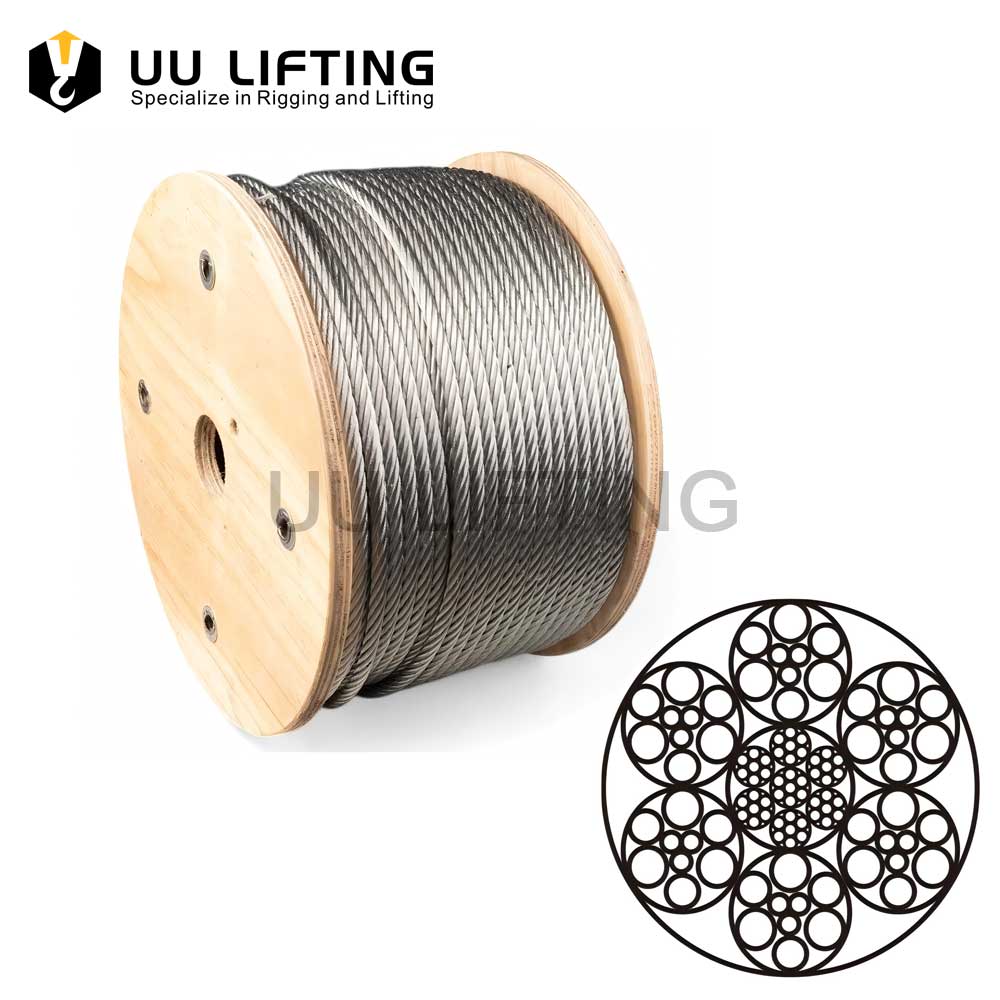
What is 6×9W Steel Wire Rope and Why Should You Consider It?
Are you struggling to find a wire rope that balances flexibility and strength for your projects? Choosing the wrong cable leads to equipment failure and lost time. My team and I often recommend 6×9W steel wire rope as a reliable solution for various industrial needs.
6×9W steel wire rope is a specialized construction used for general engineering applications. It offers a solid balance of strength and flexibility, available with either a fiber core (FC) or an independent wire rope core (IWR) to handle different load demands and environmental stresses.
I often talk to procurement officers who feel overwhelmed by the technical jargon in the lifting industry. You need a rope that gets the job done without extra headaches. This is why I want to explain exactly what 6×9W wire rope is and how it fits into your daily operations.
Where Can You Use 6×9W Steel Wire Rope?
Are you tired of buying different ropes for every single piece of machinery you own? It is frustrating to manage an inventory that doesn’t simplify your workflow. You need a versatile option that works across many tasks.
The 6×9W steel wire rope is ideal for cable carriage, rope and belt conveyors, cable drawing, and slope well winching. This versatility makes it a go-to choice for companies looking to streamline their supplies and reduce the complexity of their lifting operations.
When you look deeper into this rope, you will see why it works so well. The “W” stands for Warrington, which describes the pattern of the outer wires. This design helps the rope withstand wear and tear while remaining flexible enough to move around sheaves and pulleys.
I always suggest looking at the core type before you buy. The core is the heart of the rope. You have two main choices based on your specific application needs. I have broken down the differences in the table below to make your decision easier.
Core Type
Key Characteristic
Best Use Case
Fiber Core (FC)
Very flexible
Light-duty tasks and general rigging
Independent Wire Rope Core (IWR)
High strength/crushing resistance
Heavy-duty winching and deep-well tasks
If you are working on a project that needs a lot of movement, go with the Fiber Core. If your job involves heavy lifting where the rope might get crushed, choose the Independent Wire Rope Core. It really is that simple.
How Does 6×9W Perform in Harsh Environments?
Do you worry about your equipment rusting or breaking down when the weather gets tough? You cannot afford delays caused by corroded ropes, especially during your busiest seasons. You need a rope that survives the elements.
This rope is commonly galvanized, either electrically or hot-dipped, to prevent corrosion. This treatment creates a protective layer of zinc, allowing the rope to withstand harsh outdoor environments and keep your project running smoothly without constant replacements.
When I advise clients on long-term value, I always point to the surface treatment. Galvanized steel is a smart choice for most outdoor projects. It is much more cost-effective than stainless steel, yet still provides the protection you need against rain and humidity.
Think about where you are using the rope. If you are operating in a coastal area or a mine, the environment is aggressive. The zinc coating acts as a shield. It prevents the steel from reacting with moisture in the air. This simple layer saves you money by extending the life of the wire rope. You don’t have to worry about replacing your lines every few months because of rust. It is a practical way to manage your budget while maintaining high safety standards.
Conclusion
6×9W steel wire rope is a versatile, durable choice for industrial applications. By choosing the right core and surface treatment, you ensure both project safety and long-term cost savings.
OUR FACTORY
Raw materials of our products are made of high-quality steel that meets the standards, and the raw materials are traceable. And multiple production lines and machines minimize lead times for rigging and lifting equipment.
Raw Material
Forged
Cast
Chain Machine
Heat Treatment
Powder Plastified
Package
Warehouse
MANUFACTURING PROCESSES
With eight automatic forging and semi-automatic forging line of up to 1600ton press machines and specialized drillng, tapping, heat treatment and inspection equipment. Strict and standardized production process ensures you receive perfect products.
QUALITY CONTROL
All rigging and lifting products are subjected to strict working tension and breaking the tension test. Complied with ISO9001 and CE certification. Our promise to you: Guaranteed safety at work for people and materials.