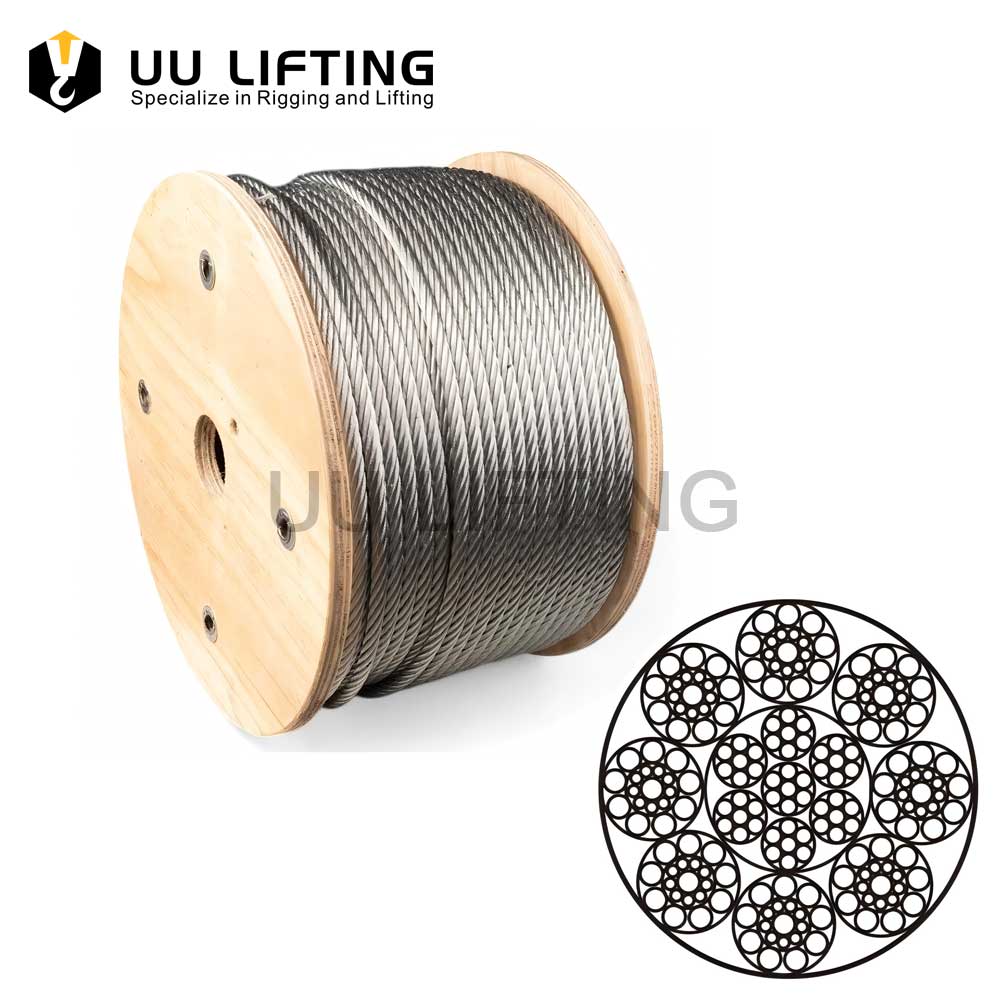
An 8x19S elevator wire rope is a specialized steel rope with eight strands, each made of 19 wires. The ‘S’ stands for Seale construction, meaning it has large outer wires for excellent wear resistance, making it ideal for the constant movement in elevator traction systems.
When you first look at wire rope specifications, all the numbers and letters can seem confusing. I’ve had many customers, even experienced ones like Mark, ask me to explain what it all means. It’s not just technical jargon. These details directly affect the rope’s performance, safety, and longevity. Getting this right is the first step to a successful and safe installation. Let’s break down what makes this specific rope construction the standard for so many elevators.
How does the 8x19S construction actually work?
The 8x19S construction has 8 outer strands wrapped around a central core. Each strand contains 19 wires of different sizes arranged in a Seale pattern. This design gives the rope a smooth, durable surface for wear resistance and enough flexibility to bend over elevator sheaves repeatedly.
Let’s dive deeper into what each part of “8x19S” means for you. This is the kind of detail I often discuss with clients to ensure they get exactly what they need.
The Components of 8x19S
The “8” – Strands: This number tells us the rope is made of 8 individual strands. These strands are helically wrapped around a central core. Using eight strands instead of the more common six gives the rope a rounder shape and greater surface contact with the sheave groove. This helps distribute the load and wear more evenly.
The “19” – Wires per Strand: Each of the 8 strands consists of 19 individual wires. The arrangement of these wires is what gives the rope its specific characteristics.
The “S” – Seale Construction: This is the most important part for elevator applications. “S” stands for Seale. In a Seale construction, each strand has a single layer of large-diameter outer wires covering a single layer of smaller-diameter inner wires. The large outer wires create a tough, abrasion-resistant surface. This is perfect for the constant friction inside an elevator sheave.
The core is the final piece. For elevator ropes, a Fiber Core (FC) is very common. The fiber, often sisal, holds lubricant and provides excellent flexibility, which is needed for bending around sheaves. An Independent Wire Rope Core (IWRC) is stronger but less flexible.
Here is a simple table to show the difference:
Core Type
Key Benefit
Best Use Case in Elevators
Fiber Core (FC)
Flexibility, Lubricant Reservoir
Passenger elevators with high usage
IWRC
Strength, Crush Resistance
Heavy freight elevators, high-rise buildings
For most standard passenger elevators, the flexibility and lubrication from a Fiber Core make it the superior choice.
Why is wear resistance so important for elevator ropes?
Worn-out ropes cause dangerous situations and expensive downtime. Ignoring a rope’s wear characteristics can lead to frequent replacements. Choosing the right rope from the start saves a lot of money and headaches.
Wear resistance is critical because elevator ropes are always running over traction sheaves. The 8x19S Seale design uses large outer wires to create a smooth, durable surface. This reduces wear on both the rope and the sheave, extending service life and ensuring safe operation.
An elevator is a machine of constant motion. The wire rope that lifts the car is always in contact with the grooved wheel, or sheave, that drives the system. This constant contact creates friction and abrasion. Over time, this friction wears down both the rope and the sheave grooves. If the rope wears out too quickly, it becomes a major safety hazard. This is where the rope’s construction becomes so important.
I remember a client, let’s call him Mark, who owns a distribution company in America. He was sourcing ropes for a maintenance contract. He was using a more flexible 6×37 construction because he thought flexibility was the most important factor. But his team had to replace the ropes every 18 months due to excessive wear. The small outer wires of the 6×37 rope were not designed for the abrasive environment of a traction elevator.
I explained the benefits of the Seale construction in an 8x19S rope. The larger outer wires provide a much better defense against abrasion. They create a larger contact area in the sheave groove, which spreads the pressure and reduces wear. We supplied him with our 8x19S rope for his next project. He later told me the service life of the ropes nearly doubled. This saved his company a huge amount of money on materials and labor, and it improved the safety and reliability of the elevators he serviced.
What should you look for when inspecting an 8x19S elevator rope?
Are you unsure what to look for during a rope inspection? A missed sign of damage can lead to a catastrophic failure. You must learn the key inspection points to ensure safety.
When inspecting an 8x19S elevator rope, you must look for broken outer wires, a reduction in the rope’s diameter, and flat spots from surface wear. Also, check for corrosion and ensure the rope is properly lubricated. Any of these signs may indicate that the rope needs to be replaced.
First, let me be clear: elevator rope inspection must be done by a trained and certified professional. It is a critical safety task. However, as a procurement officer or business owner, you should know the basics of what they are looking for. It helps you understand why a rope might need to be replaced and appreciate the quality of a new one.
Key Inspection Points
Broken Wires: This is the most obvious sign of fatigue. Inspectors count the number of broken wires within a certain length of rope. If the number exceeds the limit set by safety standards (like ASME A17.1 in the US), the rope must be retired. The breaks often happen on the crown of the strands, where they contact the sheave.
Diameter Reduction: This is a very dangerous sign. If the rope’s diameter has shrunk, it often indicates that the internal core is failing, or that severe internal wear or damage is present. The rope is losing strength from the inside out, which is not always visible on the surface. We use precise calipers to measure this.
Abrasion and Wear: Constant rubbing of the sheave will eventually cause flat spots on the outer wires. This is normal wear, but it must be monitored. When the outer wire diameter is reduced by one-third, it is often time for replacement.
Corrosion: Rust is a major enemy of wire rope. It not only eats away at the steel but also prevents the internal wires and strands from sliding smoothly past one another as the rope bends. This restriction accelerates fatigue. We look for both external rust and signs of internal rust, like rust seeping from the valleys between the strands. This is why we ensure our ropes are properly lubricated during manufacturing.
At UU LIFTING, our quality control process addresses all these points from the start. We ensure wire consistency, flawless construction, and proper lubrication in every meter of rope. This gives our clients a reliable product with a long, predictable service life.
OUR FACTORY
Raw materials of our products are made of high-quality steel that meets the standards, and the raw materials are traceable. And multiple production lines and machines minimize lead times for rigging and lifting equipment.
Raw Material
Forged
Cast
Chain Machine
Heat Treatment
Powder Plastified
Package
Warehouse
MANUFACTURING PROCESSES
With eight automatic forging and semi-automatic forging line of up to 1600ton press machines and specialized drillng, tapping, heat treatment and inspection equipment. Strict and standardized production process ensures you receive perfect products.
QUALITY CONTROL
All rigging and lifting products are subjected to strict working tension and breaking the tension test. Complied with ISO9001 and CE certification. Our promise to you: Guaranteed safety at work for people and materials.