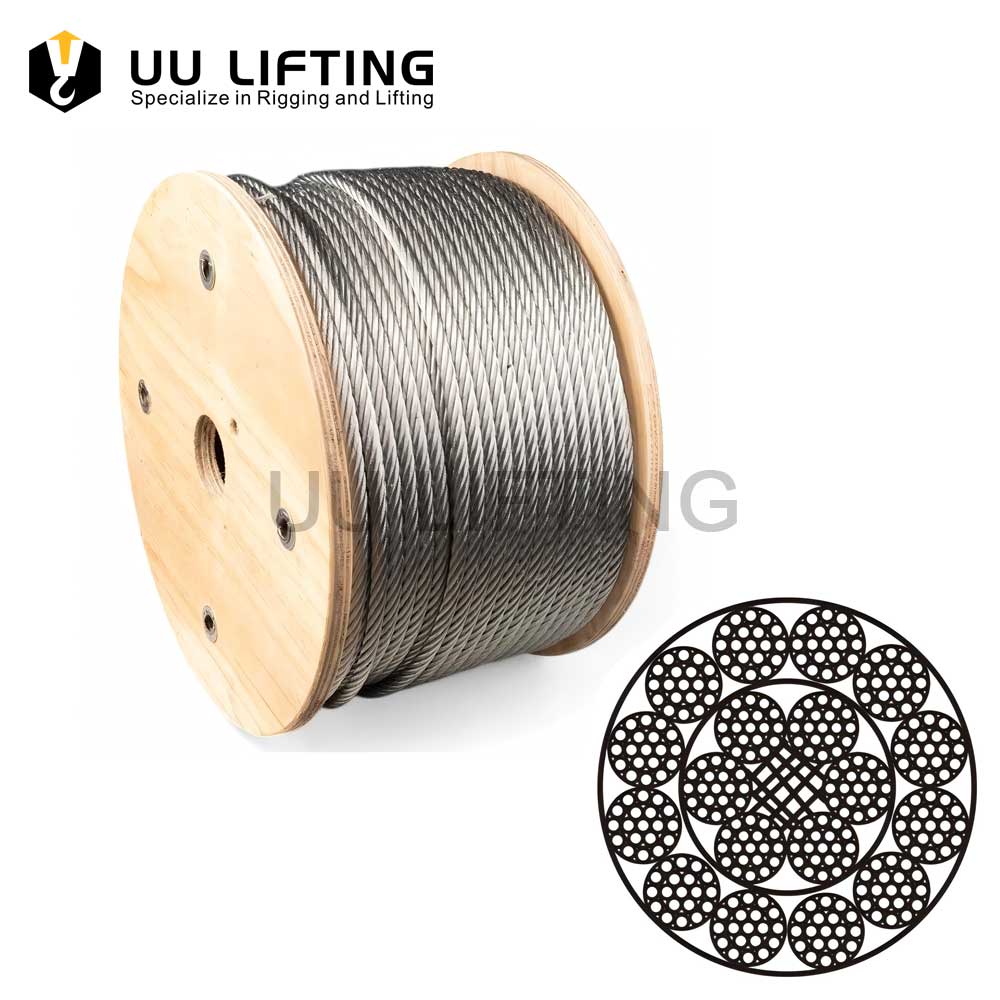
An 18×19 non-rotating steel wire rope is a special type of rope. It has two layers of strands wrapped in opposite directions. This design prevents the rope from twisting or spinning when lifting a heavy load. It is great for cranes and single-line hoists.
I remember talking to Mark, a client from the US. He was frustrated with his lifting operations. His loads were spinning out of control. It was a serious safety risk. This is a common issue when the wrong wire rope is used. Understanding the rope’s design is the first step to solving this problem. Let’s look closer at how it is made.
How is an 18×19 Wire Rope Constructed?
The “18×19” tells you its construction. It has 18 outer strands, each with 19 wires. These outer strands are wrapped around an inner rope core. The outer strands and inner core are wrapped in opposite directions, which creates its non-rotating quality.
Let’s break this down. Imagine you twist a small rope one way. Then, you take a bunch of those small ropes and twist them together the opposite way. That is the basic idea here. The competing forces cancel each other out.
The Two-Layer System
The core of an 18×19 rope is often an Independent Wire Rope Core (IWRC). This core is like a small wire rope itself. It provides strength and support. The outer strands are then laid over this core in the opposite direction. I always explain this to clients like Mark, who are great at business but not rope engineering. This simple explanation helps them see the value.
Understanding the Numbers
The numbers tell a story about the rope’s flexibility and wear resistance. Every detail matters for performance and safety.
Feature
What it Means
Why it Matters
18 Strands
More strands than a standard 6×19 rope.
Provides better rotation resistance and flexibility.
19 Wires per Strand
A good balance of wire size.
Offers good resistance to abrasion and fatigue.
Opposite Lay
Inner core and outer strands twist in opposite directions.
This is the key to preventing load spin.
Why is “Non-Rotating” So Important for Lifting?
The “non-rotating” feature is critical for safety and control. When a single line of rope lifts a load, standard ropes will try to unwind. This causes the load to spin. A non-rotating rope counteracts this force, keeping the load stable and secure during the lift.
When I was talking with Mark, he described exactly this problem. He was using a standard 6×19 rope for a single-fall hoist on his crane. The heavier the load, the faster it spun. His team had to use tag lines, but it was still inefficient and risky.
The Physics of Twist
Every wire rope has built-in tension from its manufacturing process. When you apply a load, this tension wants to release. This causes the rope to untwist. With a standard rope, there is nothing to stop this. But with an 18×19, the outer strands are trying to twist one way. And the inner core is trying to twist the other way. They work against each other.
Benefits of Stability
This stability provides huge benefits. First, safety is much higher. There is less risk of the load hitting people or structures. Second, it allows for more precise placement of the load. This is very important in construction or assembly work. Third, it reduces wear on the rope and other rigging components. This is because there is no constant twisting motion. This is a key point for buyers like Mark who care about long-term value and quality.
What are the Best Applications for 18×19 Wire Ropes?
18×19 non-rotating wire rope is best for single-line lifting applications. This includes tower cranes, mobile cranes, and overhead hoists where the load is not guided. It is also used in situations where the lifting height is significant, as rotation worsens with longer ropes.
Choosing the right rope is something I discuss with every client. For Mark, the switch to an 18×19 rope for his crane was a game-changer. His efficiency went up, and his team felt much safer. Making the correct choice from the start saves a lot of trouble.
Common Industry Uses
You will find these ropes in many demanding jobs. The construction industry relies on them for high-rise building cranes. Port operations use them for ship-to-shore cranes to load and unload containers precisely. Even in mining, they are used for deep shaft hoisting operations. The key factor is always a single, free-hanging load line, where stability is essential.
When NOT to Use It
It is also important to know when this rope is not the best choice. For applications with guided loads, a standard 6×19 might be better. Or in multi-part reeving systems where the blocks prevent rotation. In those cases, a standard rope can be more economical and wear-resistant. I always ensure my customers understand the trade-offs. The 18×19 is a specialist rope. It excels at its job, but it is not a one-size-fits-all solution. This is why clear communication is so important to avoid problems later on.
OUR FACTORY
Raw materials of our products are made of high-quality steel that meets the standards, and the raw materials are traceable. And multiple production lines and machines minimize lead times for rigging and lifting equipment.
Raw Material
Forged
Cast
Chain Machine
Heat Treatment
Powder Plastified
Package
Warehouse
MANUFACTURING PROCESSES
With eight automatic forging and semi-automatic forging line of up to 1600ton press machines and specialized drillng, tapping, heat treatment and inspection equipment. Strict and standardized production process ensures you receive perfect products.
QUALITY CONTROL
All rigging and lifting products are subjected to strict working tension and breaking the tension test. Complied with ISO9001 and CE certification. Our promise to you: Guaranteed safety at work for people and materials.