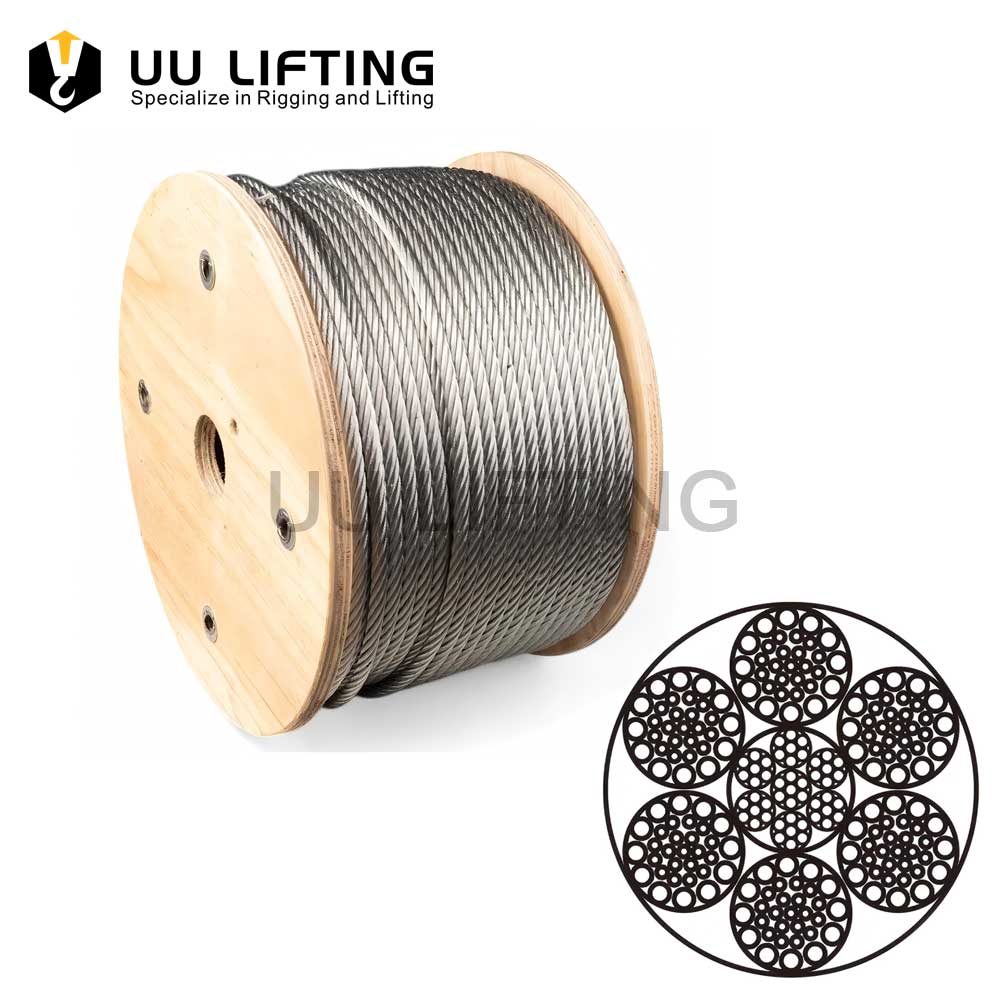
What is 6×31WS Steel Wire Rope and Why Should You Care?
Do you struggle to find the right wire rope for your heavy lifting equipment? Choosing the wrong cable leads to equipment failure, costly downtime, and serious safety hazards on your job site.
The 6×31WS steel wire rope is a specific construction featuring six strands with 31 wires each in a Warrington-Seale pattern. It offers a great mix of flexibility and abrasion resistance, making it an ideal choice for general engineering, crane operations, and heavy lifting tasks where reliability is non-negotiable.
I know that sifting through technical jargon can feel like a headache when you need to get the job done. I want to make this simple for you so you can choose the best gear without any guesswork.
What do these numbers actually mean for your lifting jobs?
Are you confused by the technical code name of your wire rope? Many of my clients get overwhelmed by these labels and end up buying the wrong product for their specific machinery.
The “6×31WS” code breaks down into simple, manageable parts that tell you exactly how the rope is built. It is not just random math. It describes the steel’s physical architecture.
The “6” tells you the rope has six outer strands wrapped around a core. The “31” indicates that each of the six strands contains 31 individual steel wires. The “WS” is the most important part for performance. It stands for “Warrington-Seale.” This is a specific arrangement of the wires inside the strand. Warrington-Seale construction mixes different wire sizes and patterns. It combines the flexibility of a Warrington design with the wear resistance of a Seale design.
Component
Meaning
Function
6
Number of Strands
Provides the main rope structure.
31
Number of Wires
Affects flexibility and surface area.
WS
Warrington-Seale
Controls the internal geometry of wires.
This construction is smart. It places smaller wires inside for flexibility. It places larger, thicker wires on the outside. These thick outer wires resist rubbing and scraping. This makes the rope last much longer in tough environments.
How does the 6×31WS construction improve your lifting performance?
Do you want to know if this rope will actually hold up under the heavy loads you move every day? The wrong rope snaps under pressure or wears out way too fast.
The 6×31WS wire rope balances two competing needs: flexibility and strength. Most standard ropes force you to choose one or the other. If you choose a very strong, thick rope, it becomes too stiff and breaks when bent over pulleys. If you choose a very flexible rope, it often wears out quickly because the wires are too thin.
The Warrington-Seale design solves this compromise. Using larger outer wires helps the rope withstand abrasion. It drags against sheaves and drums without fraying immediately. Meanwhile, the internal structure allows the rope to bend without snapping under tension. This is critical for crane operators and anyone managing heavy loads. You get a rope that not only holds the weight but also moves smoothly through your machinery. This helps you avoid the frequent replacements that eat into your profits. You save money on maintenance and keep your workflow steady.
Is the 6×31WS wire rope the right choice for your specific project?
Are you worried about using this rope in the wrong application and risking a safety violation? Many buyers assume all wire ropes work for all machines, but that is a dangerous mistake.
This specific rope is a workhorse. I often recommend it for applications that require a balance of high breaking strength and good fatigue resistance. Think of cranes, hoists, and ship loading equipment. These machines move heavy loads and require frequent bending over sheaves. A simple 6×19 rope might be too stiff, and a 6×37 rope might be too flimsy for certain high-abrasion tasks. The 6×31WS sits right in the “sweet spot” for many of my industrial clients.
It performs well in vertical wells, ship loading, and complex rigging. It handles the constant cycle of bending and straightening. If your equipment uses smaller sheaves, this rope is usually a better fit than stiffer alternatives. However, you must always check your equipment manual. Do not guess. You need to match the rope diameter and the construction type to the drum and pulley system. Using the right rope keeps your staff safe and ensures your equipment runs at peak performance.
How can you verify the quality of your 6×31WS wire rope?
Do you fear getting cheated by suppliers who sell low-quality steel disguised as premium products? We all know that certificate fraud and poor-quality wire are massive issues in our industry today.
As a business owner, you cannot afford to have a rope fail during a lift. You must take control of the procurement process. Always ask for full, traceable documentation. When I talk to my clients, I stress that the “deal” price is not the only cost. A cheap rope that snaps is the most expensive purchase you will ever make. You need a supplier who provides clear certifications.
Look for mill test reports. Ensure the galvanization is even, and the wires are clean. If a price looks too good to be true, it probably is. I recommend performing a physical inspection upon arrival. Check for uniformity. Is the core consistent? Is the rope diameter the same from one end to the other? Do not rely on luck. You need a trusted partner who treats quality as a non-negotiable standard. This protects your reputation and, more importantly, your workers on the ground.
Conclusion
The 6×31WS wire rope provides an excellent balance of durability and flexibility for demanding lifting tasks. Always verify your certifications and match the construction type to your specific equipment needs.
OUR FACTORY
Raw materials of our products are made of high-quality steel that meets the standards, and the raw materials are traceable. And multiple production lines and machines minimize lead times for rigging and lifting equipment.
Raw Material
Forged
Cast
Chain Machine
Heat Treatment
Powder Plastified
Package
Warehouse
MANUFACTURING PROCESSES
With eight automatic forging and semi-automatic forging line of up to 1600ton press machines and specialized drillng, tapping, heat treatment and inspection equipment. Strict and standardized production process ensures you receive perfect products.
QUALITY CONTROL
All rigging and lifting products are subjected to strict working tension and breaking the tension test. Complied with ISO9001 and CE certification. Our promise to you: Guaranteed safety at work for people and materials.