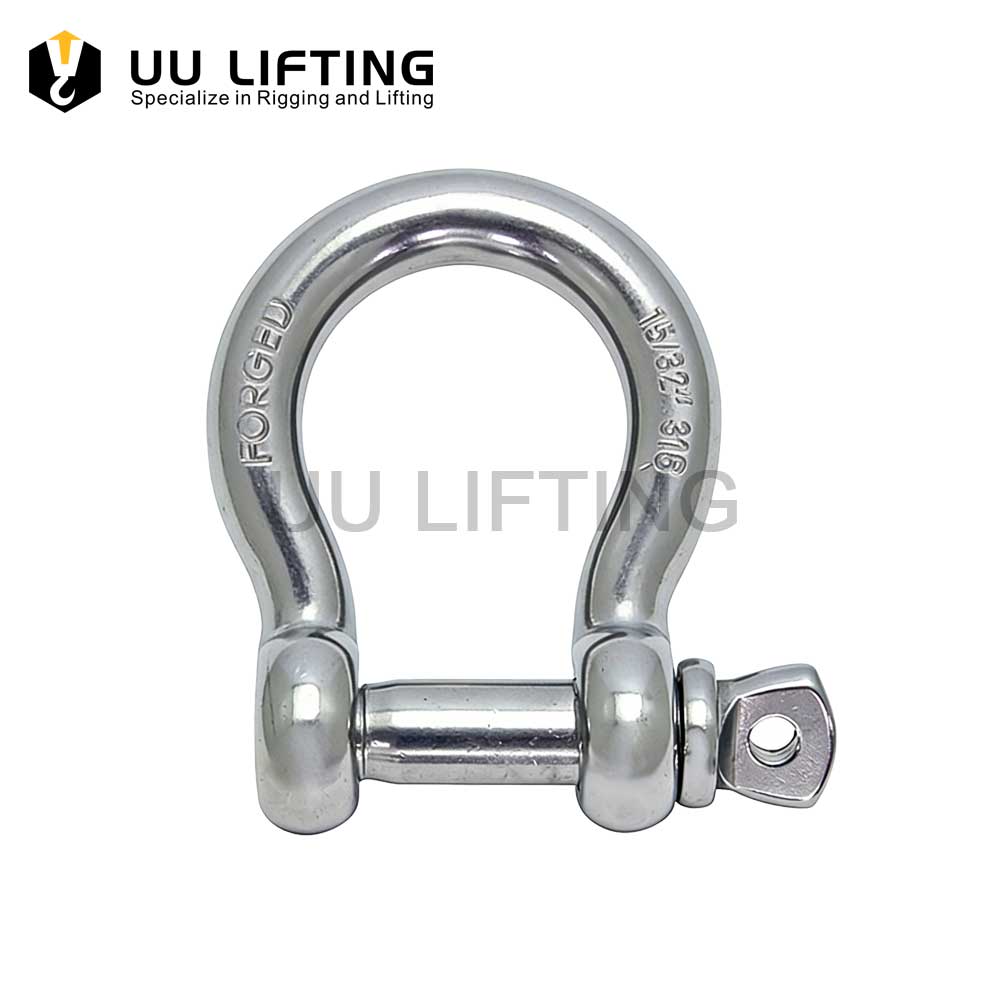
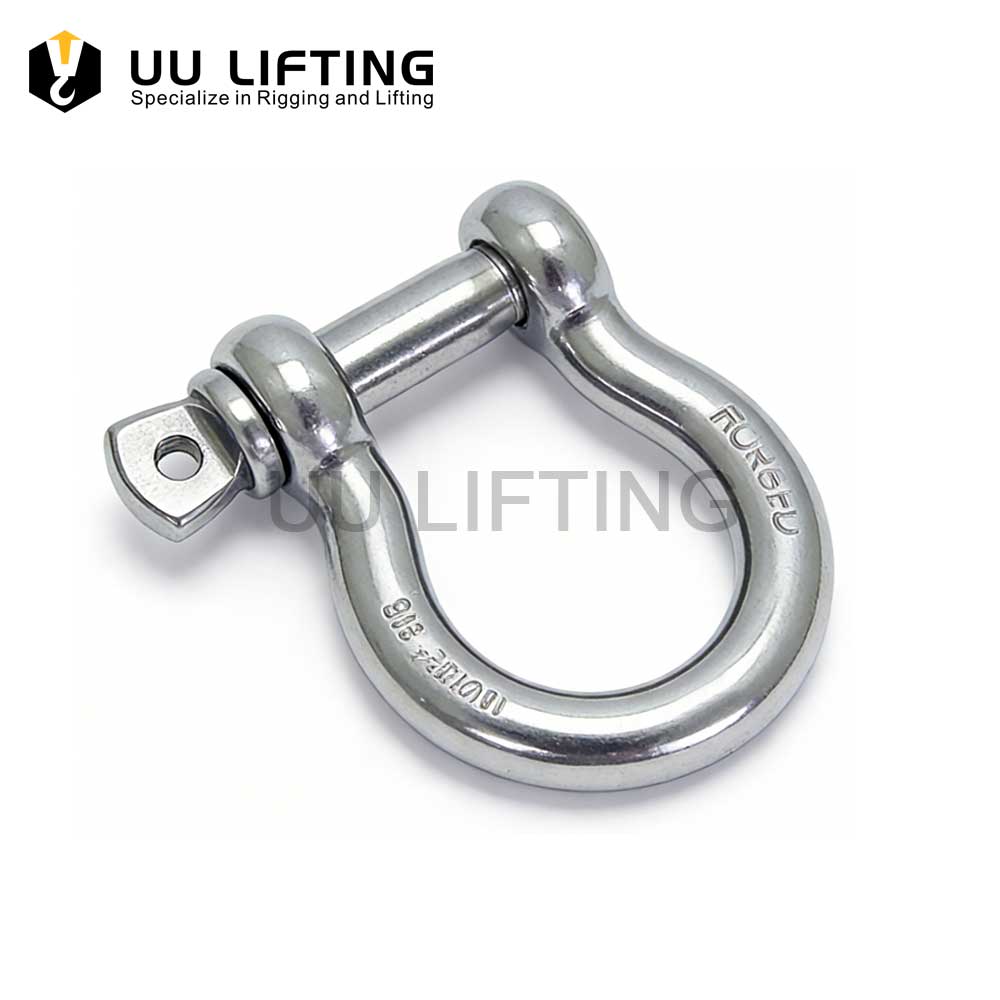
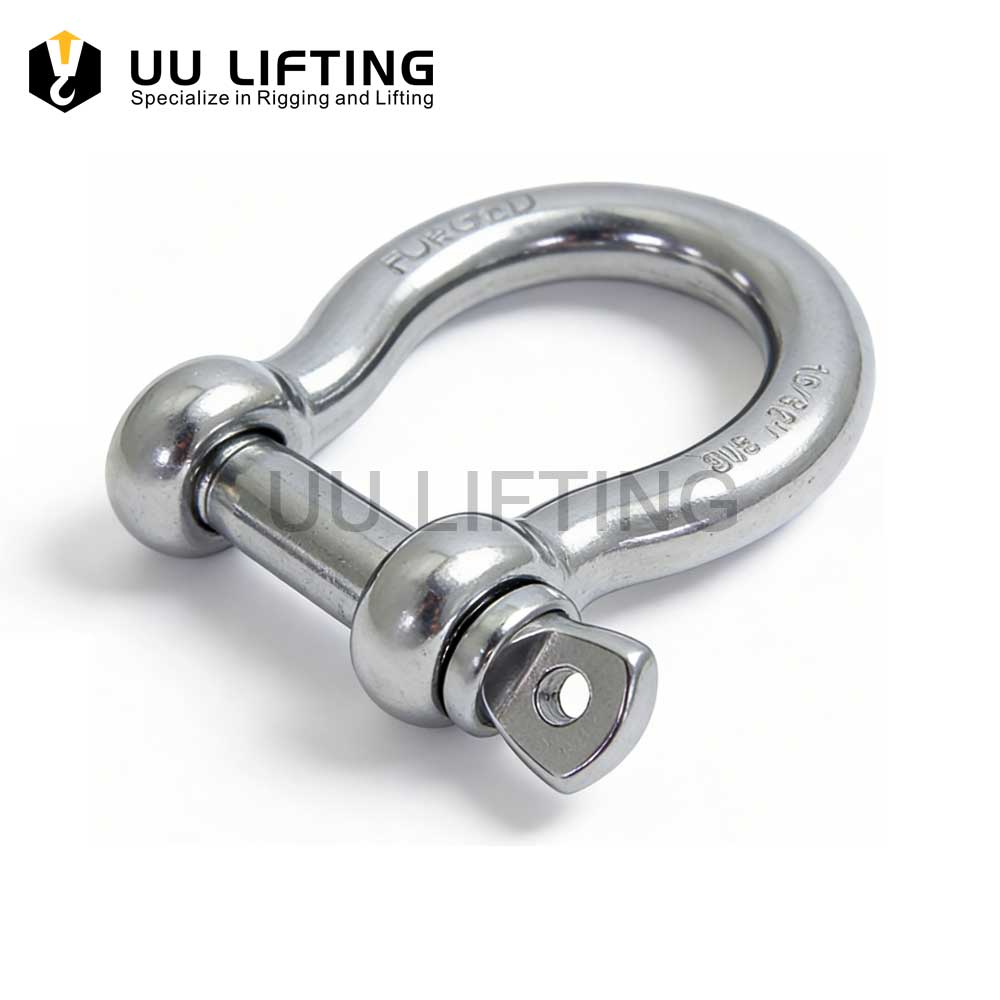
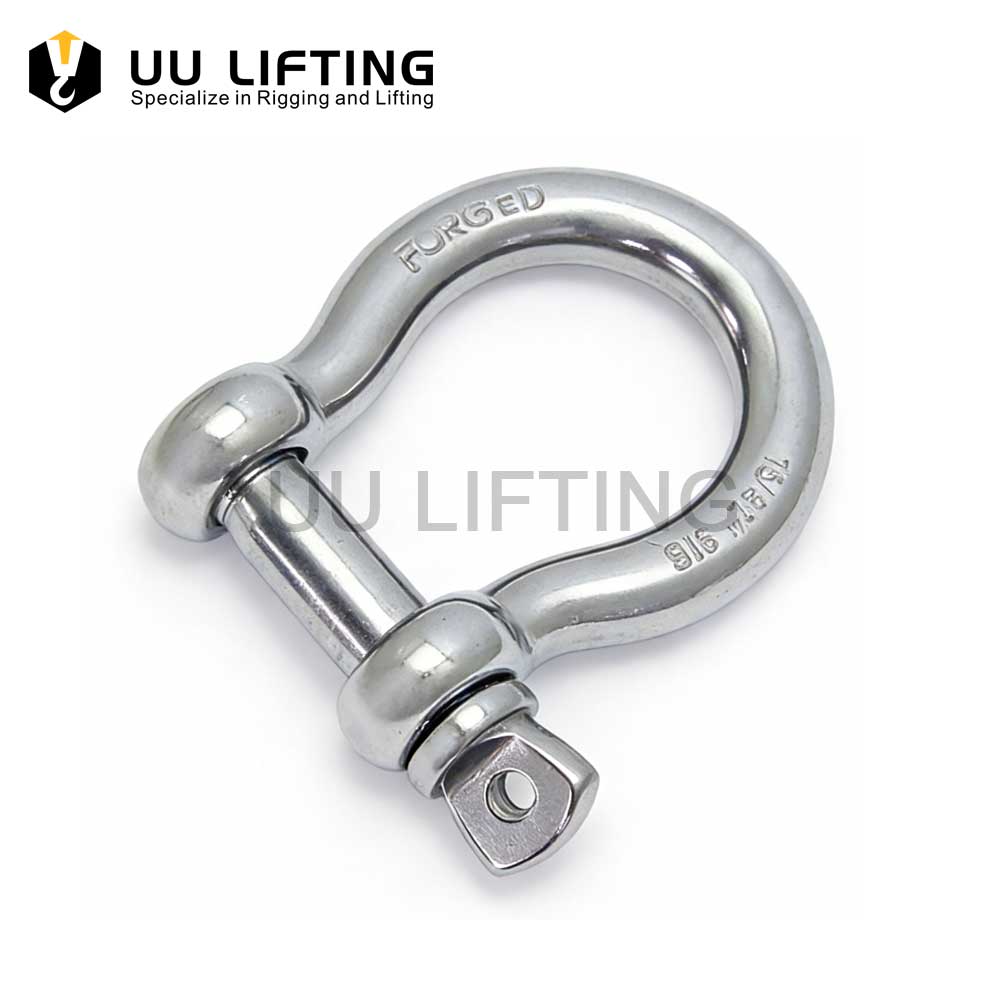
Stainless Steel Bow Shackle with Screw Pin Specifications:
MOQ
1 Pallet, 1 Ton or 3000USD
Material
Grade 316/304 Stainless Steel
Surface Finish
High Polished Finish
Sizes
From 3/16″ to 3/4″
Technique Procedure
Free Forging
Stainless Steel Bow Shackle with Screw Pin Sizes:
Stainless Steel Bow Shackle with Screw Pin Sizes
Stainless Steel Bow Shackle with Bolt Sizes
A Size (in)
Weight (lb)
Work Load Limit (lb)
Dimension (inch)
B
C
D
E
X
Y
Z
3/16″
0.03
500
0.19″
0.41″
0.78″
0.67″
1.23″
1.25″
0.41″
1/4″
0.06
750
0.23″
0.52″
0.93″
0.83″
1.48″
1.50″
0.47″
5/16″
0.14
1000
0.31″
0.66″
1.25″
1.11″
1.95″
2.05″
0.62″
3/8″
0.26
2000
0.39″
0.83″
1.57″
1.28″
2.43″
2.52″
0.78″
15/32″
0.46
3000
0.47″
0.98″
1.96″
1.50″
2.86″
3.07″
0.94″
5/8″
1.09
4000
0.62″
1.31″
2.49″
2.20″
3.96″
3.93″
1.20″
3/4″
2.09
5500
0.77″
1.62″
3.10″
2.55″
4.72″
5.13″
1.57″
What Is A Stainless Steel Bow Shackle With A Screw Pin?
A stainless steel bow shackle with a screw pin is a strong, O-shaped connector used for lifting and rigging. The stainless steel material resists rust, while the threaded screw pin enables quick, easy attachment. It’s perfect for temporary jobs in marine or harsh environments.
Why choose a bow shape over a D-shape shackle?
A bow shackle, also called an anchor shackle, has a larger, “O”- shaped opening. This design is better for handling loads from multiple angles. It is ideal for connecting multi-leg slings, while D-shackles are meant for straight, in-line pulling only.
The shackle body’s shape is one of its most essential features. It directly affects how you can use it safely. When I talk to buyers, I always stress this point. Using a D-shackle for an angled lift can significantly weaken the lift. The bow shackle’s design solves this problem.
Handling Angular Loads
The main advantage of the bow shape is its ability to handle loads from multiple directions. Think about using a two-leg sling to lift a wide object. The slings will pull on the shackle at an angle. A D-shackle’s straight sides are not designed for this stress. The bow shackle’s rounded “O” shape distributes these angular forces evenly around its body. This makes it the only safe choice for use with multi-leg bridle slings.
Comparing Bow and D-Shackles
To make it simple, I’ve put the key differences in a table. This is the kind of information I share with clients to help them make a quick, informed decision.
Feature
Bow Shackle (Anchor Shackle)
D-Shackle (Chain Shackle)
Shape
“O” or Bow-shaped
“D” or U-shaped
Best Use
Multi-leg slings, angular loads
In-line, straight pulls only
Load Angles
Can handle side loads
Cannot handle side loads
Versatility
High, for various rigging setups
Low, for specific in-line use
When should you use a screw pin instead of a bolt pin?
Use a screw pin shackle for temporary lifting or jobs that require frequent connection and disconnection. The threaded pin is fast and easy to install and remove. For long-term or permanent installations, a bolt-type shackle offers more security.
The pin type depends on the application. Are you setting up rigging for a single lift, or is this a permanent connection? The answer determines which pin is correct for you. A customer in construction once told me they saved hours each week just by switching to screw pins for their temporary setups.
Speed and Convenience
The most significant benefit of a screw pin is speed. You can secure or release the pin in seconds just by turning it. No extra tools or parts, such as nuts or cotter pins, are needed. This design is ideal for jobs where you constantly assemble and disassemble your rigging. It simplifies the process and keeps the project moving. However, this convenience comes at the cost of permanent security.
Security Considerations
For long-term use, a screw pin is not the best choice. Vibrations or shifting loads can cause the pin to rotate and loosen over time. This creates a serious safety risk. You must verify that the pin is secure before each use. Bolt-type shackles, often called “safety shackles,” use a bolt, nut, and a cotter pin. This system locks the pin in place, preventing it from backing out. It’s the standard for permanent or semi-permanent applications where you can’t risk the connection coming loose.
Feature
Screw Pin Shackle
Bolt-Type Shackle
Best For
Temporary lifts, quick changes
Long-term or permanent use
Security
Good, but can loosen over time
Excellent, with a cotter pin
Installation Speed
Very fast to install and remove
Slower, requires more steps
Inspection Need
Check tightness before each lift
Inspect for wear periodically
What makes stainless steel the right material for your shackle?
Stainless steel is the right material for shackles used in harsh environments because of its excellent corrosion resistance. It withstands saltwater and chemicals, making it ideal for marine, food-processing, or chemical-plant applications. This ensures a more extended, safer service life.
The material of your rigging hardware is not just a detail; it’s critical for safety and longevity. I’ve seen too many buyers try to save a little money by using galvanized shackles where stainless steel was needed. They always end up replacing them sooner, resulting in higher long-term costs.
Superior Corrosion Resistance
The key property of stainless steel is its built-in resistance to rust and corrosion. Unlike galvanized steel, which has a protective zinc coating that can be scratched off, stainless steel’s corrosion resistance is built into the metal itself. This is because it contains chromium, which forms a passive, protective layer on the surface. This makes it the ideal choice for any application involving moisture, especially saltwater. Different grades, such as 304 and 316, offer varying levels of protection, with 316 the top choice for marine environments.
Strength and Durability
Beyond resisting rust, stainless steel is a strong, durable material. It maintains its integrity across a wide range of temperatures and conditions. This makes it a reliable choice for critical lifting operations where failure is not an option. Many of our clients in the food processing and pharmaceutical industries rely on stainless steel not just for its corrosion resistance but also for its ease of cleaning and sterilization, which helps prevent contamination.
How can you ensure the quality of your stainless steel shackles?
To ensure quality, always verify material certifications (e.g., 304 or 316 stainless steel). Look for clear markings, such as the Working Load Limit (WLL), on the shackle body. Most importantly, partner with a reputable supplier who provides transparent quality inspection reports.
Check for Markings and Certifications
A high-quality shackle will always have markings forged into its body. These should include the manufacturer’s name or trademark, the material grade, the shackle size, and the Working Load Limit (WLL). If these markings are missing, that is a major red flag. I always tell my clients to demand a material test certificate for every batch. This document proves that the steel is the grade you ordered. A trustworthy supplier will provide this without hesitation. If they can’t, it’s best to find someone who can.
Inspect the Product Physically
When you receive your order, take a moment to look at the shackles. The finish should be smooth, without any cracks, sharp edges, or signs of poor manufacturing. Check the threads on the screw pin. They should be clean and well-defined, allowing the pin to turn easily without binding. At UU LIFTING, we have a multi-step quality control process. We inspect everything from raw materials to the final product to ensure every shackle we ship meets the highest standards.
FORGING PROCESS
With eight automatic forging and semi-automatic forging line of up to 1600ton press machines and specialized drillng, tapping, heat treatment and inspection equipment. Strict and standardized production process ensures you receive perfect products.
All rigging and lifting products are subjected to strict working tension and breaking the tension test. Complied with ISO9001 and CE certification. Our promise to you: Guaranteed safety at work for people and materials.