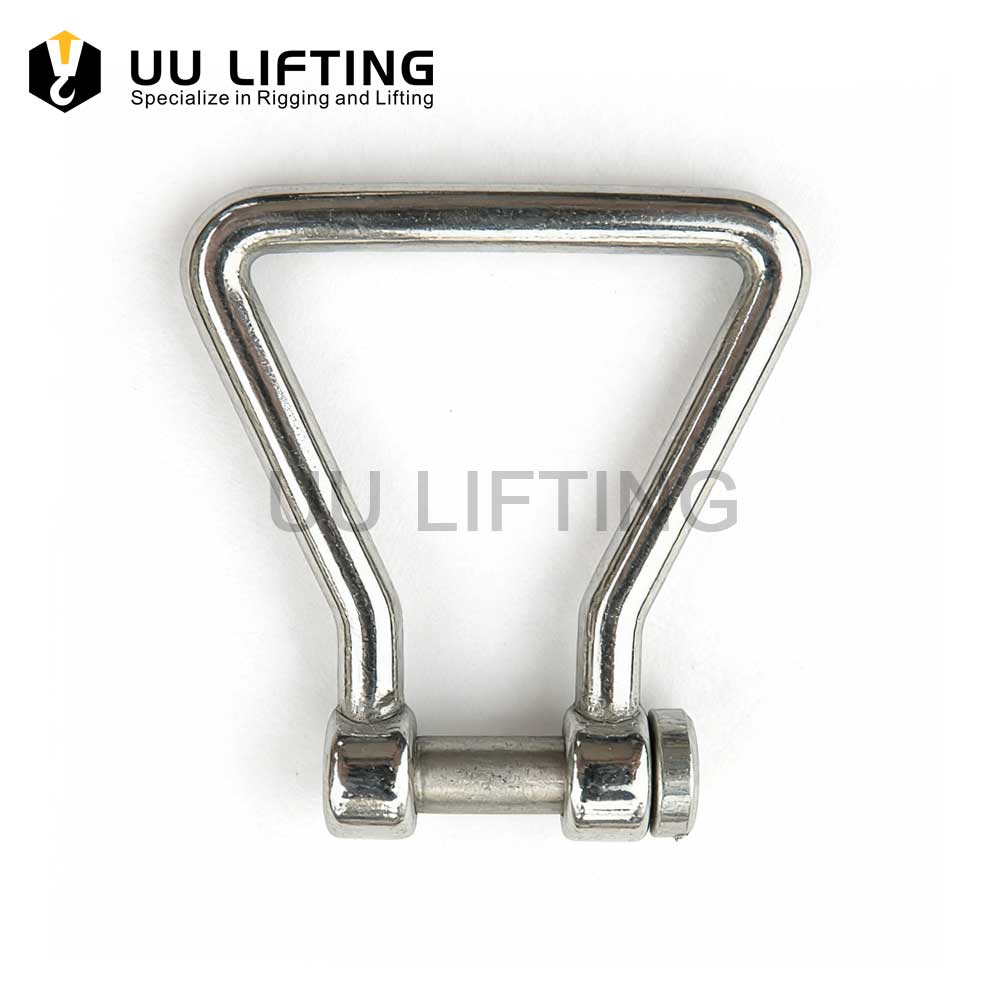
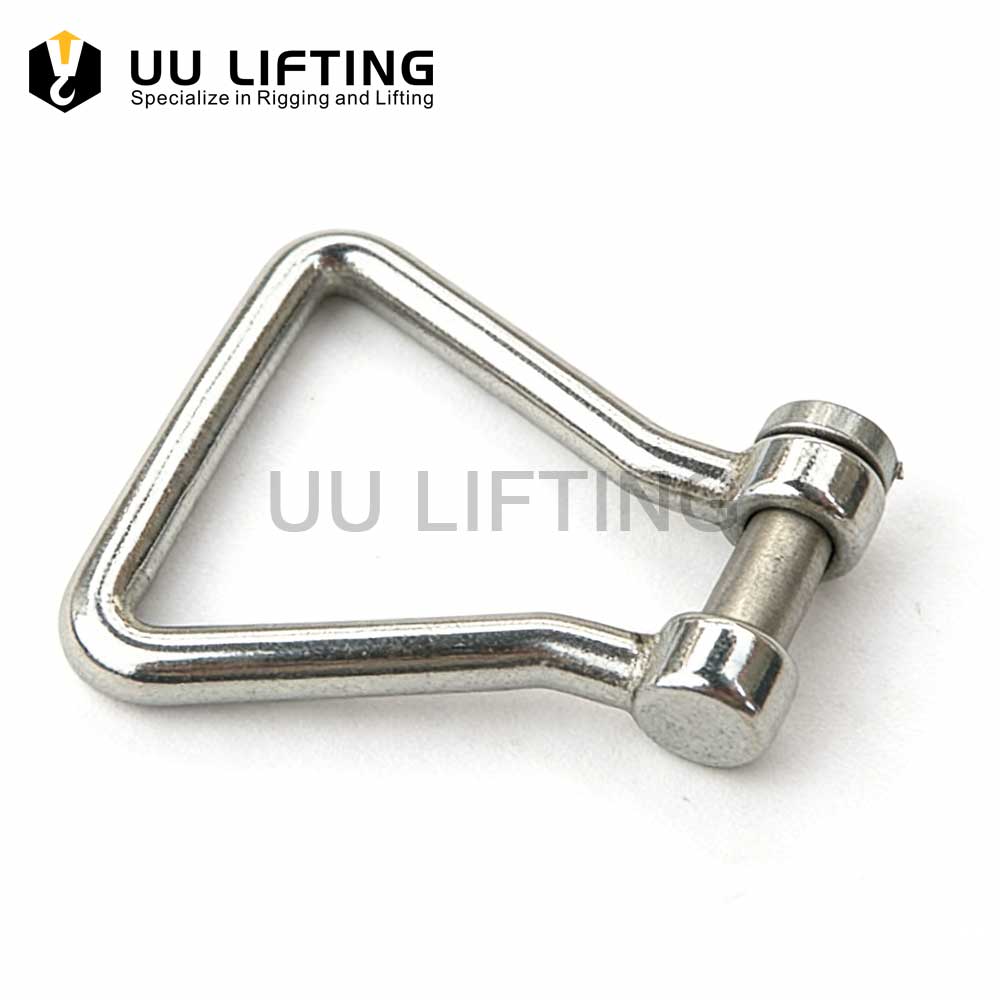
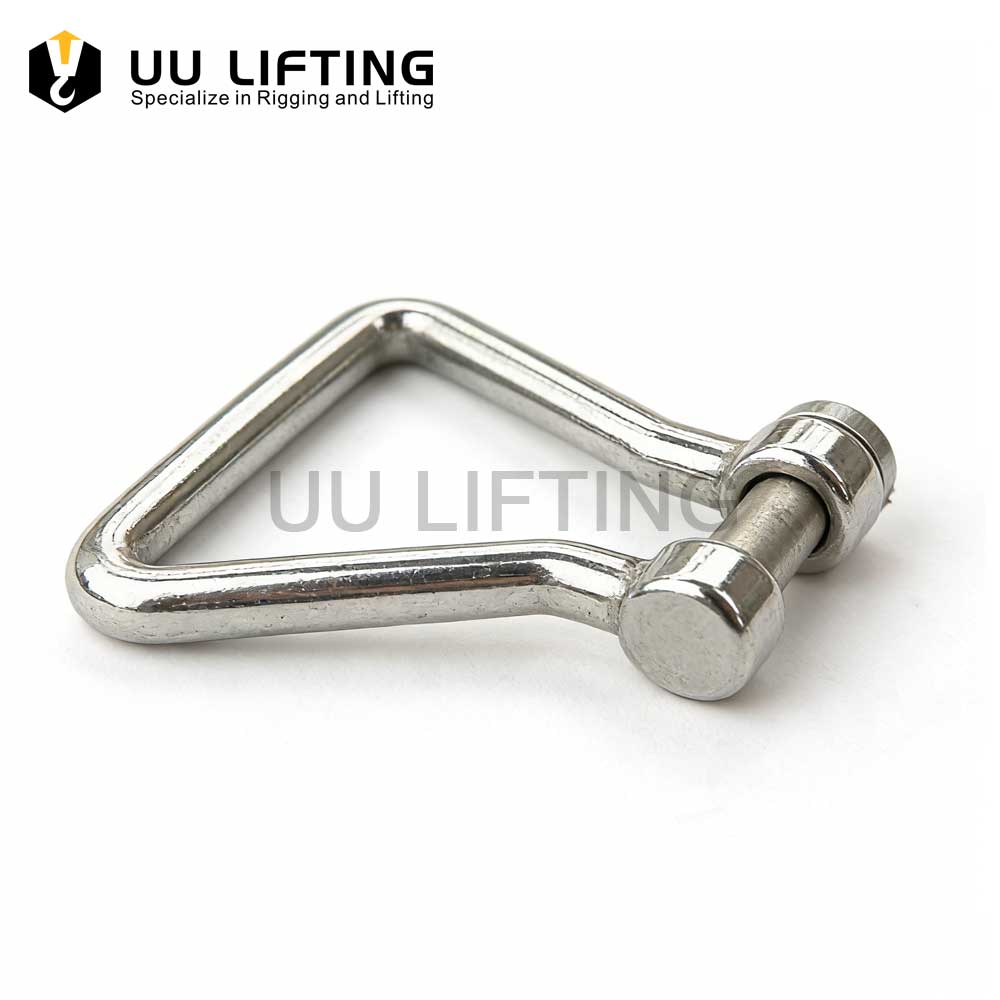
A stainless steel webbing shackle is a specialized connector designed for synthetic webbing slings. Its wider, flatter body prevents sling damage. The stainless steel offers superior corrosion resistance, making it ideal for harsh environments and ensuring the longevity of your lifting gear.
How is it different from a standard shackle?
A webbing shackle has a much broader and flatter bow compared to a standard shackle. This design distributes the load evenly across the webbing’s surface. A standard shackle’s round shape can pinch and cut the sling fibers under load, causing premature failure.
Key Design Differences
The most important feature is the shackle body itself. The “bow” is much broader and has a flattened surface where the sling rests. Think of it like pulling the same strap over a wide, flat board rather than a narrow bar. The pressure is distributed over a larger surface area. This simple change supports the sling’s full width and prevents bunching or damage.
Comparing Shackle Bodies
Feature
Standard Shackle (e.g., Bow Shackle)
Webbing Shackle
Body Shape
Rounded
Wide and Flat
Contact Area
Small, concentrated line
Large, distributed area
Effect on Webbing
Pinches, bunches, causes friction wear
Supports, prevents cuts and abrasion
Best For
Wire rope, chain, round slings
Flat polyester webbing slings
This small design change radically extends the service life of a webbing sling. For my customers, that means their investment lasts longer, and their lifts are safer. For me, it means happier, repeat customers and fewer complaints about product quality.
Why choose stainless steel for a webbing shackle?
Stainless steel provides the best corrosion resistance, especially against saltwater and chemicals. This makes it essential for marine, offshore, or chemical plant applications. It ensures long-term reliability and safety, whereas other materials, such as galvanized steel, would quickly degrade.
Material Properties Breakdown
There are different grades of stainless steel, but for rigging hardware, my suppliers usually focus on two main types.
AISI 30s is a great, general-purpose stainless steel. It performs well in most environments and is resistant to many common forms of corrosion. It’s often a bit more affordable, making it a good choice for general construction.
AISI 316: The premium option for truly harsh environments. It contains molybdenum, which gives it superior chloride resistance. That means it holds up exceptionally well against saltwater. This is the grade my marine and offshore clients demand. It costs more, but the incredible longevity makes it worth the investment.
Stainless vs. Galvanized
Property
Galvanized Steel
Stainless Steel (AISI 316)
Corrosion Method
Sacrificial zinc coating
Inherent property of the alloy
Durability
Coating can be scratched or worn off
Resists scratches and surface wear
Ideal Use Case
General construction, dry areas
Marine, chemical plants, food processing
Lifespan in Saltwater
Short to Medium
Very Long
Offering stainless steel options allows me to confidently sell to a broader range of industries. I know the product won’t fail due to rust, which protects my business’s reputation for quality.
What should you check when buying them?
Always check for key markings, including the Working Load Limit (WLL), the manufacturer’s ID, and the material grade (e.g., 304 or 316). More importantly, ask for material test certificates and proof of load testing to verify strength and compliance.
My Sourcing Checklist
Clear, Permanent Markings: Every shackle must be permanently stamped or forged with legible markings. I look for the Working Load Limit (WLL) and the manufacturer’s name or symbol. For stainless steel, I also require the material grade (like ‘316’) to be on it. If a shackle has no markings, it’s immediately rejected.
Material Test Certificate (MTC): I don’t just take their word for it that it’s Grade 316 stainless steel. I require an MTC that shows the exact chemical composition of the metal from that specific production batch. This is my proof that the material meets the required specification.
Proof Load Certificate: This is completely non-negotiable for me. The supplier must provide documentation that a sample from the batch has been tested to a proof load of 2× the WLL without deformation.
Finish and Build Quality: Before placing a large order, I always ask for high-resolution photos or a physical sample. The finish must be smooth, especially on the wide, flat surface where the webbing will sit. Any burrs, sharp edges, or rough spots are unacceptable because they can damage the sling.
This process takes more time upfront, but it has saved me from massive headaches and financial losses. It effectively weeds out the unreliable suppliers and helps me build strong, trusting relationships with the good ones.
OUR FACTORY
Raw materials of our products are made of high-quality steel that meets the standards, and the raw materials are traceable. And multiple production lines and machines minimize lead times for rigging and lifting equipment.
Raw Material
Forged
Cast
Chain Machine
Heat Treatment
Powder Plastified
Package
Warehouse
MANUFACTURING PROCESSES
With eight automatic forging and semi-automatic forging line of up to 1600ton press machines and specialized drillng, tapping, heat treatment and inspection equipment. Strict and standardized production process ensures you receive perfect products.
QUALITY CONTROL
All rigging and lifting products are subjected to strict working tension and breaking the tension test. Complied with ISO9001 and CE certification. Our promise to you: Guaranteed safety at work for people and materials.