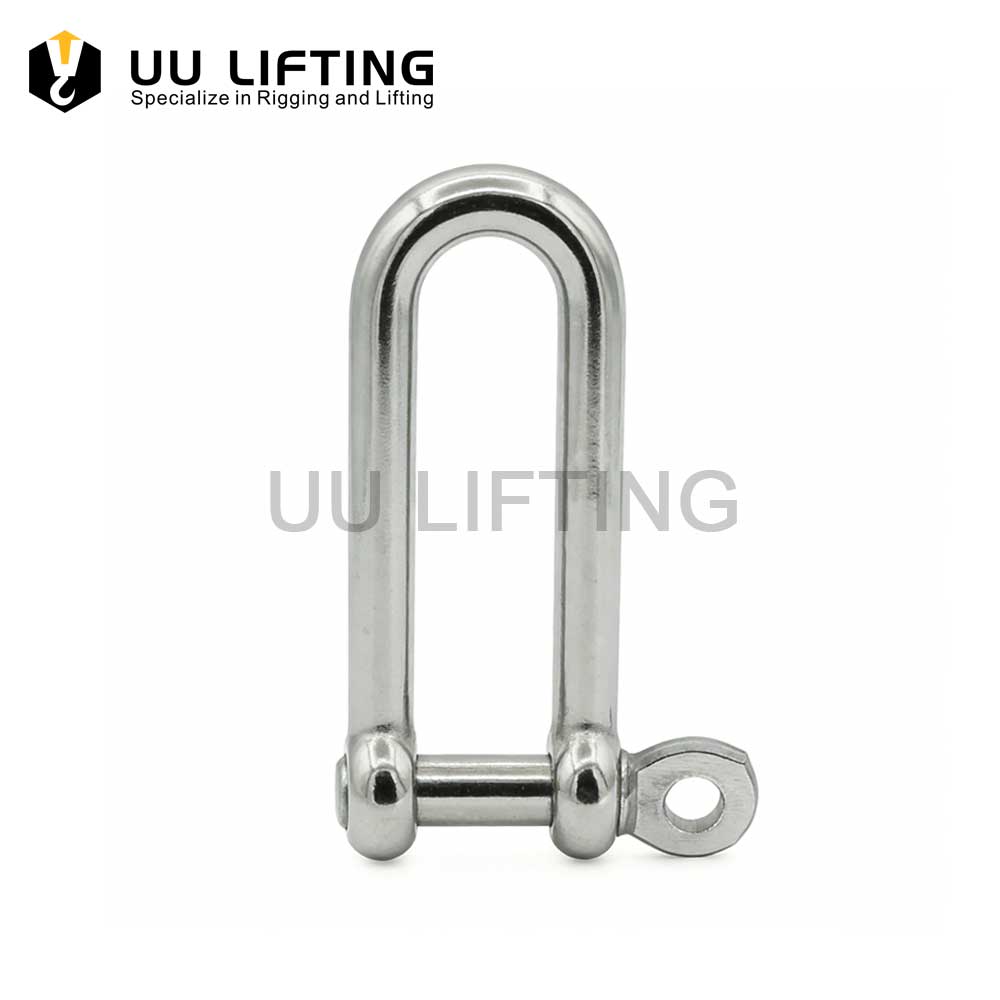
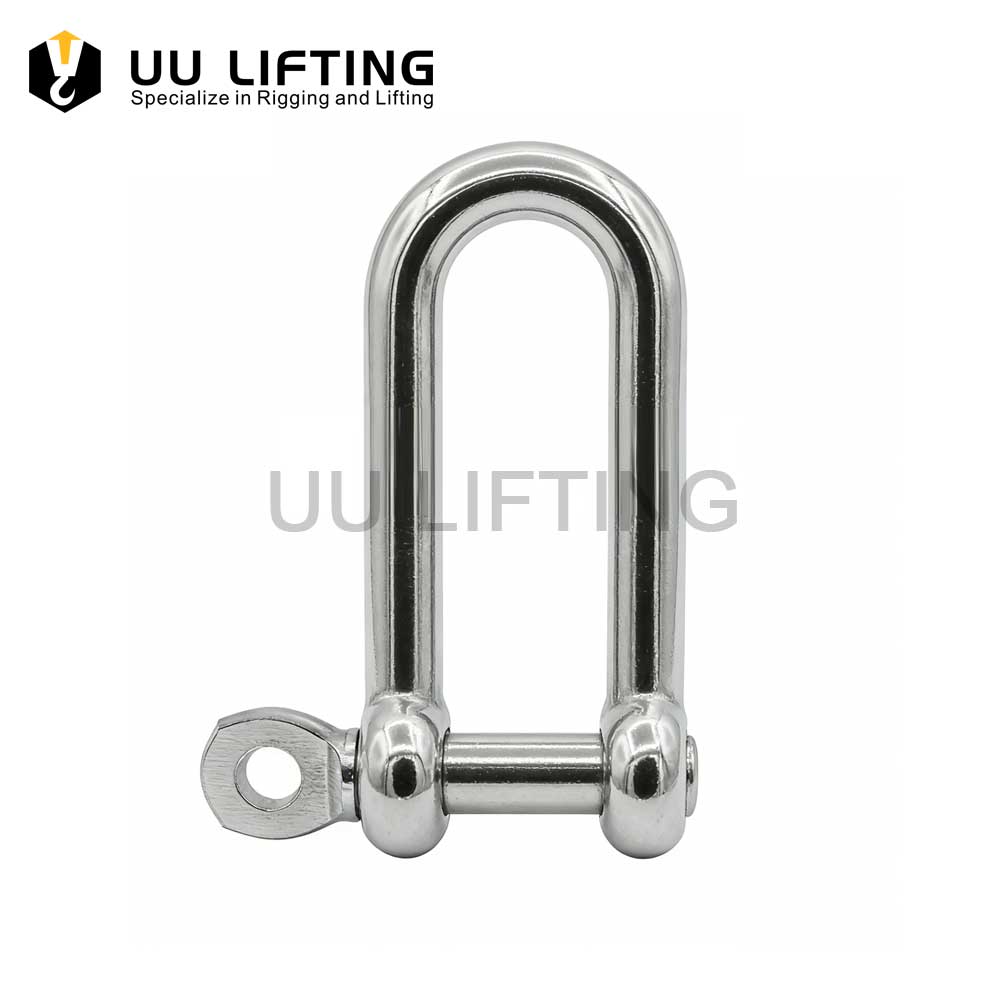
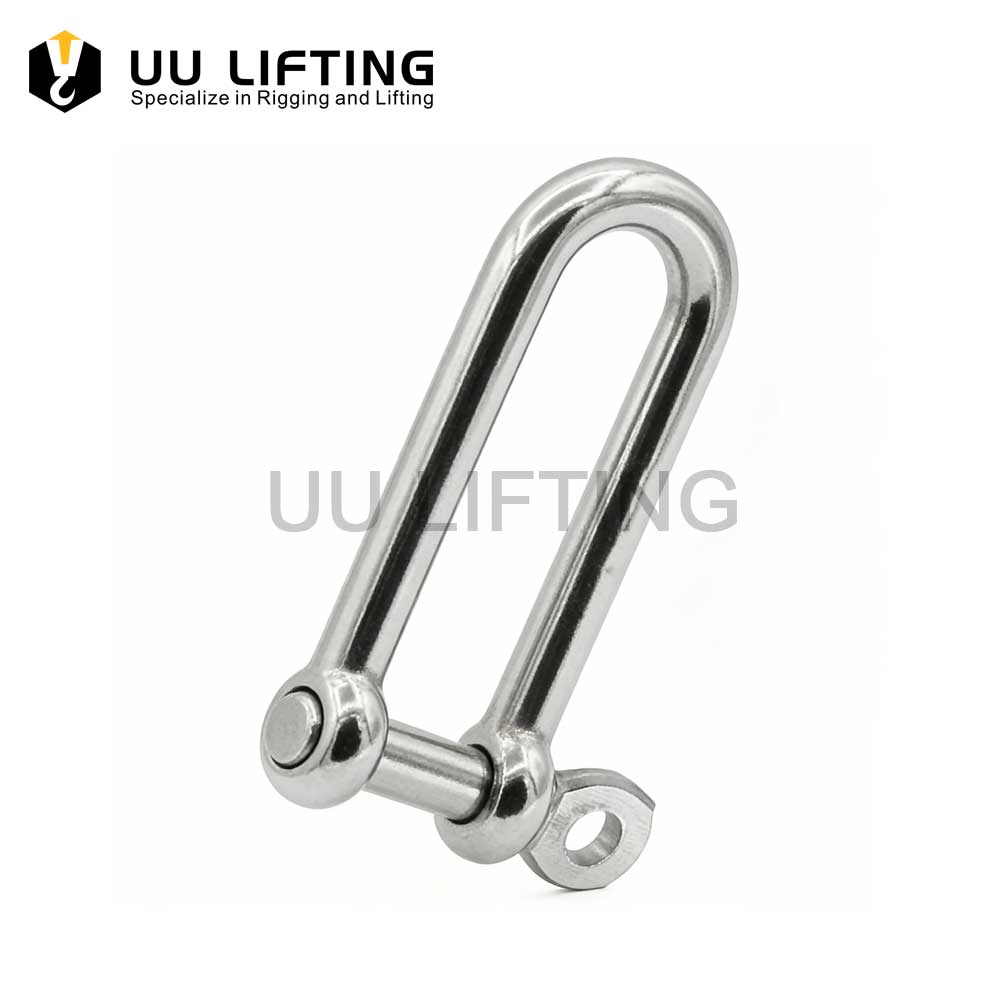
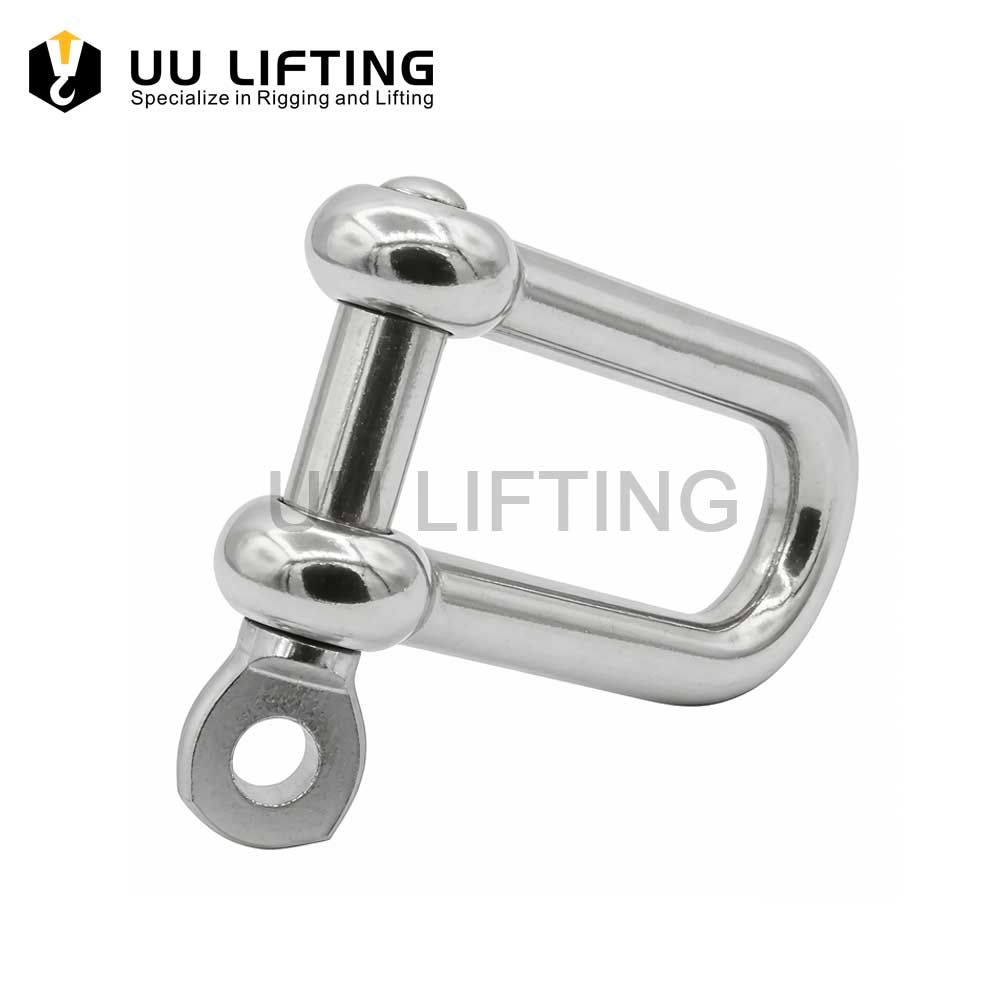
Stainless Steel Long D Shackle with Captive Pin Specifications:
MOQ
1 Pallet, 1 Ton or 3000USD
Material
Grade: 316 Stainless Steel
Surface Finish
High Polished Finish
Sizes
From 5/32″ to 1/2″
Technique Procedure
Free Forging
Stainless Steel Long D Shackle with Captive Pin Sizes:
Stainless Steel Long D Shackle with Captive Pin
Stainless Steel Long D Shackle with Captive Pin Sizes
A Size (in)
Weight (lb)
Work Load Limit (lb)
Dimension (inch)
B
C
D
X
Y
Z
5/32″
0.03
200
0.15″
0.30″
1.17″
0.92″
1.54″
0.31″
3/16″
0.05
500
0.19″
0.39″
1.47″
1.16″
1.97″
0.38″
1/4″
0.08
750
0.23″
0.46″
1.77″
1.32″
2.40″
0.48″
5/16″
0.19
1000
0.31″
0.61″
2.36″
1.76″
3.17″
0.64″
3/8″
0.36
1200
0.38″
0.78″
2.95″
2.23″
3.95″
0.79″
1/2″
0.62
1500
0.47″
0.93″
3.54″
2.65″
4.68″
0.95″
What is a Stainless Steel Long D Shackle with a Captive Pin?
A Stainless Steel Long D Shackle with a Captive Pin is a durable, corrosion-resistant D-shaped connector. Its elongated body handles larger connections, and the pin cannot be entirely removed. This prevents loss and improves safety, especially in marine or high-vibration settings.
Why Choose Stainless Steel for Shackles?
Stainless steel is the best choice for shackles used outdoors or in marine environments. Its natural properties provide excellent resistance to rust and corrosion. This ensures long-term strength, reliability, and safety for your investment.
Material Grades Matter
Not all stainless steel is the same. There are different grades, and as a buyer, I need to know exactly what I am getting. For example, some grades offer better protection against saltwater than others. This is a key quality detail I always confirm with my suppliers. It ensures my customers receive a product that is right for their specific use case. Asking for material certifications is a standard part of my process. It avoids problems later.
Strength and Durability
It’s not just about preventing rust. Stainless steel is also very tough and strong. It can handle heavy loads safely. While galvanized steel offers some protection, it’s just a coating. That coating can chip or wear away. Stainless steel’s corrosion resistance is inherent to the metal, so it provides more consistent, long-term protection.
Feature
Standard Carbon Steel
Galvanized Steel
Stainless Steel
Corrosion Resistance
Low
Good (coating)
Excellent (inherent)
Best For
Dry, indoor use
Outdoor, moist
Marine, harsh
Maintenance
High (needs repainting)
Medium (coating can chip)
Low
Long-term Value
Low
Medium
High
What Makes a “Long D” Shackle Different?
A “Long D” shackle has a more stretched-out body than a standard D-shackle. This extra length provides more room inside the bow. It’s perfect for connecting to thicker objects or fitting multiple sling eyes.
Key Applications
The extra space makes this shackle incredibly versatile. It’s not just a niche product. I see my customers use them to attach rigging to thick steel plates, to connect multiple wire ropes or straps to a single point, or in towing applications where the connection points are bulky. It gives riggers more options and helps them work more safely.
Design Considerations
Even with a longer body, the shackle must be appropriately rated for the load. The Working Load Limit (WLL) should be clearly and permanently marked on the body. This is a non-negotiable for me during my quality inspections. D-shackles are designed for in-line pulls, and this rule still applies to the extended D version. Using it for side-loading is risky and can cause failure. I always ensure the product specifications are precise to prevent misuse.
How Does a Captive Pin Improve Safety and Efficiency?
A captive pin is a screw pin that cannot be entirely removed from the shackle’s body. This simple design feature prevents the pin from dropping out. It improves worksite safety, reduces replacement costs, and accelerates rigging.
The Mechanism Explained
The design is simple but very clever. The pin has threads just like a standard screw pin shackle. However, there is a small flattened area or a retaining mechanism at the end of the threads. This prevents the pin from being completely unscrewed from the shackle ear. It can be opened wide enough to attach your rigging, but it will not fall out. It’s a small manufacturing detail that significantly impacts usability.
Safety and Speed
The benefits go beyond just not losing the pin. It makes the entire process faster. A worker can often operate the shackle with one hand, which is a big deal when they are on a ladder or in a tight space. It also improves safety by ensuring the correct pin is always used with the correct shackle body. Mismatched parts can have different load ratings, which is extremely dangerous. The captive pin eliminates that risk.
OUR FACTORY
Raw materials of our products are made of high-quality steel that meets the standards, and the raw materials are traceable. And multiple production lines and machines minimize lead times for rigging and lifting equipment.
Raw Material
Forged
Cast
Chain Machine
Heat Treatment
Powder Plastified
Package
Warehouse
MANUFACTURING PROCESSES
With eight automatic forging and semi-automatic forging line of up to 1600ton press machines and specialized drillng, tapping, heat treatment and inspection equipment. Strict and standardized production process ensures you receive perfect products.
QUALITY CONTROL
All rigging and lifting products are subjected to strict working tension and breaking the tension test. Complied with ISO9001 and CE certification. Our promise to you: Guaranteed safety at work for people and materials.