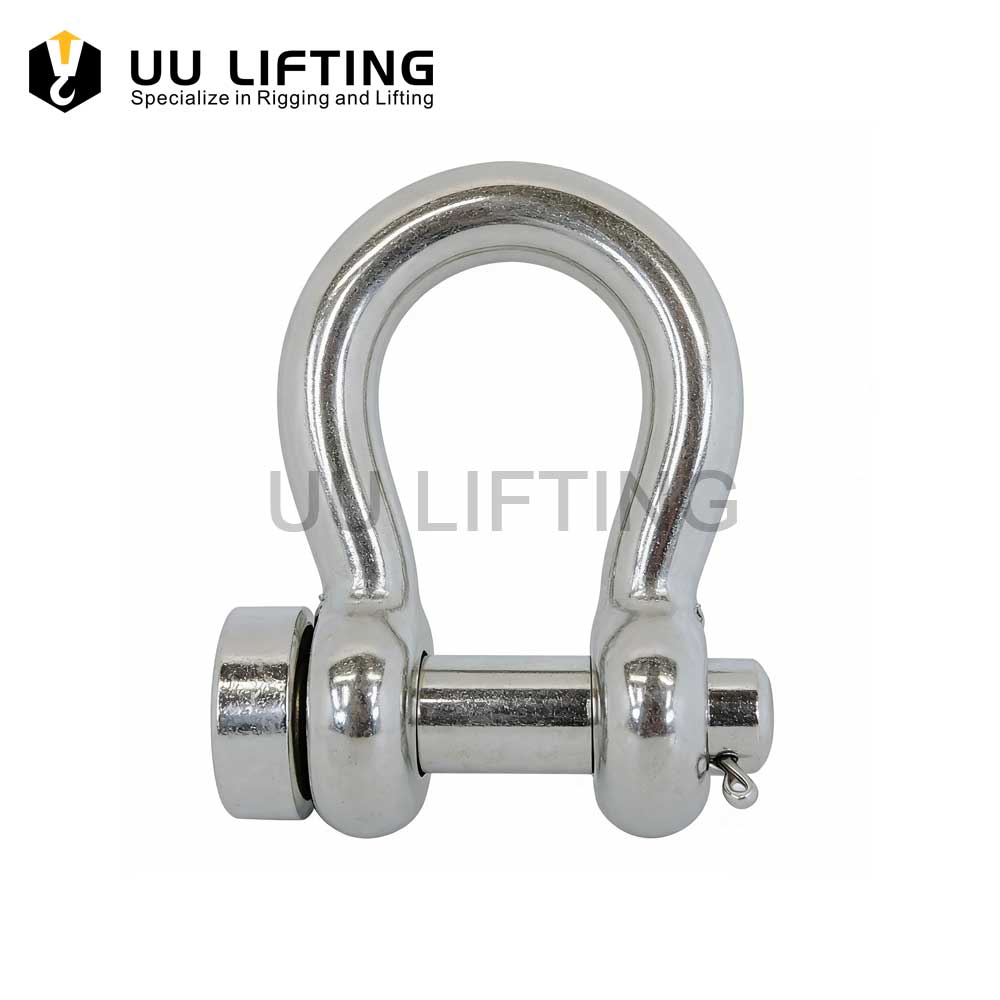
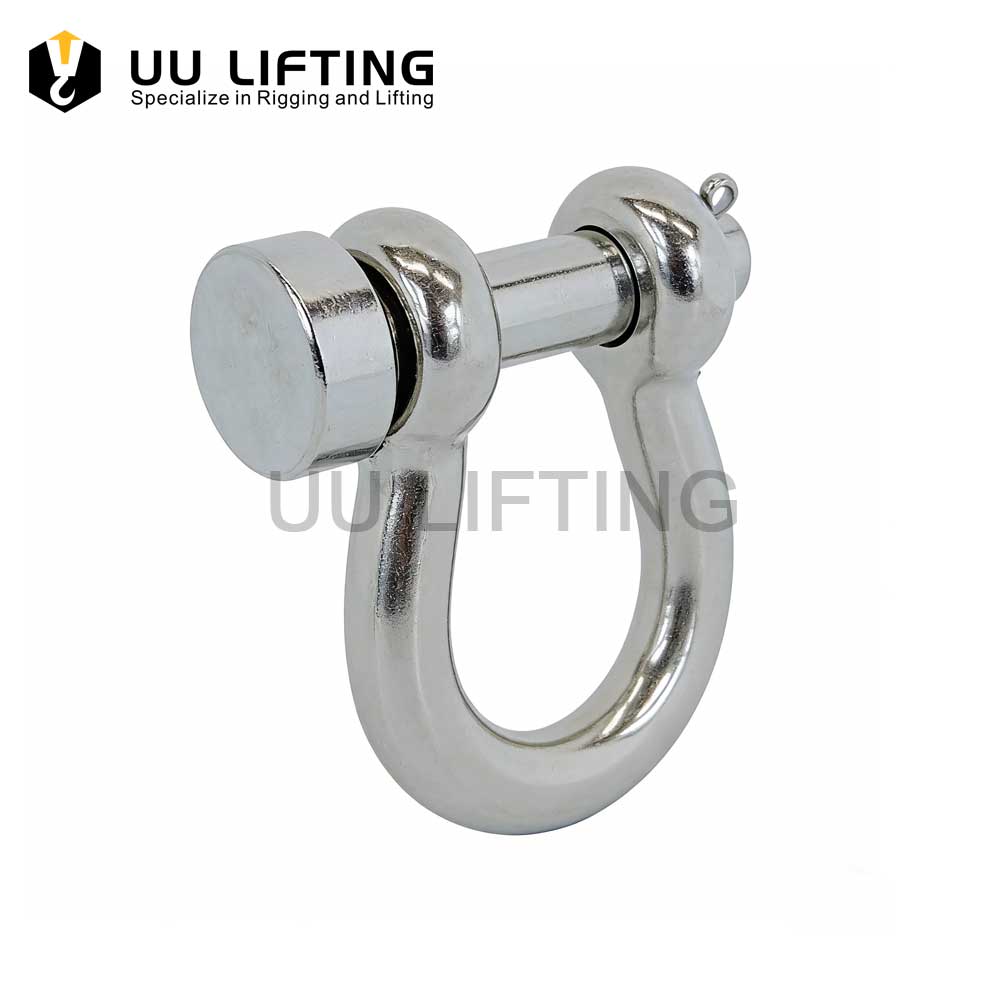
What Is a Stainless Steel Round Pin Anchor Shackle?
A stainless steel round pin anchor shackle is a highly corrosion-resistant, “O”-shaped connector used for rigging. Its non-threaded round pin is ideal for applications where rotation may occur. The stainless steel makes it perfect for marine, food processing, or chemical environments.
Why Choose Stainless Steel for an Anchor Shackle?
Choose stainless steel for its superior corrosion resistance, especially in saltwater or chemical environments. It is tougher and more reliable than galvanized steel for long-term exposure. This prevents rust and potential structural failure, making it ideal for marine, food processing, and pharmaceutical industries.
Material Grade Matters
Not all stainless steel is the same. The grade you choose is very important. Two of the most common grades in rigging are Type 304 and Type 316.
Grade
Key Feature
Best For
Type 304
General corrosion resistance
Freshwater environments, general industrial
Type 316
Excellent corrosion resistance
Saltwater, chemical, and high-chloride environments
When Should You Use a Round Pin Shackle?
Use a round pin shackle in applications where the load may cause the pin to rotate. They are best for static loads in tie-down, towing, or suspension jobs. They should never be used for overhead lifting, as the pin could potentially dislodge during movement.
Pin Types Explained
Each pin type has a specific job. Using the right one is not optional; it is a fundamental part of rigging safety.
Pin Type
Security Mechanism
Best For
Round Pin
Cotter Pin
Static loads where the pin might rotate; towing.
Screw Pin
Threaded Pin
Temporary or quick-connect lifts; not for long-term use.
Bolt Type Pin
Bolt, Nut, and Cotter Pin
Long-term or permanent installations; overhead lifting.
A screw pin is great for quick jobs. You twist it in. But vibration can make it loosen over time. I always tell my customers to hand-tighten a screw pin before every single lift. A bolt-type shackle is the most secure. The nut-and-cotter-pin system prevents it from ever coming loose accidentally. This makes it the only choice for permanent installations or critical overhead lifts. The round pin meets a unique need: rotation is expected,d but the load remains stable, as in a straight-line tow.
What Makes an Anchor Shackle Different?
An anchor shackle, also called a bow shackle, has a larger, “O”-shaped body. This is different from the narrow “D” shape of a chain shackle. This wider shape allows it to safely handle loads from multiple directions, making it perfect for multi-leg slings.
Anchor (Bow) vs. Dee (Chain) Shackle
Choosing between these two basic shapes is one of the first decisions in rigging.
Dee Shackle: Also called a chain shackle. It has a “D” shape, similar to a chain loop. Its narrow design is perfect for connecting two items in a straight line, like a sling to a lifting eye or two pieces of chain. It is not designed for angular loads.
Anchor Shackle: Also called a bow shackle. It has a larger, rounded “O” shape. This bow provides more room for connections. It is the correct choice when you need to connect a multi-leg sling (like a 2-leg or 3-leg bridle). The wider shape allows the slings to connect at their proper angles without side-loading the shackle. This design increases the force-bearing area and extends the product’s service life. As a manufacturer, this is critical. We forge our shackles, so the steel’s internal grain structure follows the curve of the bow, which gives it maximum strength right where it’s needed most.
OUR FACTORY
Raw materials of our products are made of high-quality steel that meets the standards, and the raw materials are traceable. And multiple production lines and machines minimize lead times for rigging and lifting equipment.
Raw Material
Forged
Cast
Chain Machine
Heat Treatment
Powder Plastified
Package
Warehouse
MANUFACTURING PROCESSES
With eight automatic forging and semi-automatic forging line of up to 1600ton press machines and specialized drillng, tapping, heat treatment and inspection equipment. Strict and standardized production process ensures you receive perfect products.
QUALITY CONTROL
All rigging and lifting products are subjected to strict working tension and breaking the tension test. Complied with ISO9001 and CE certification. Our promise to you: Guaranteed safety at work for people and materials.