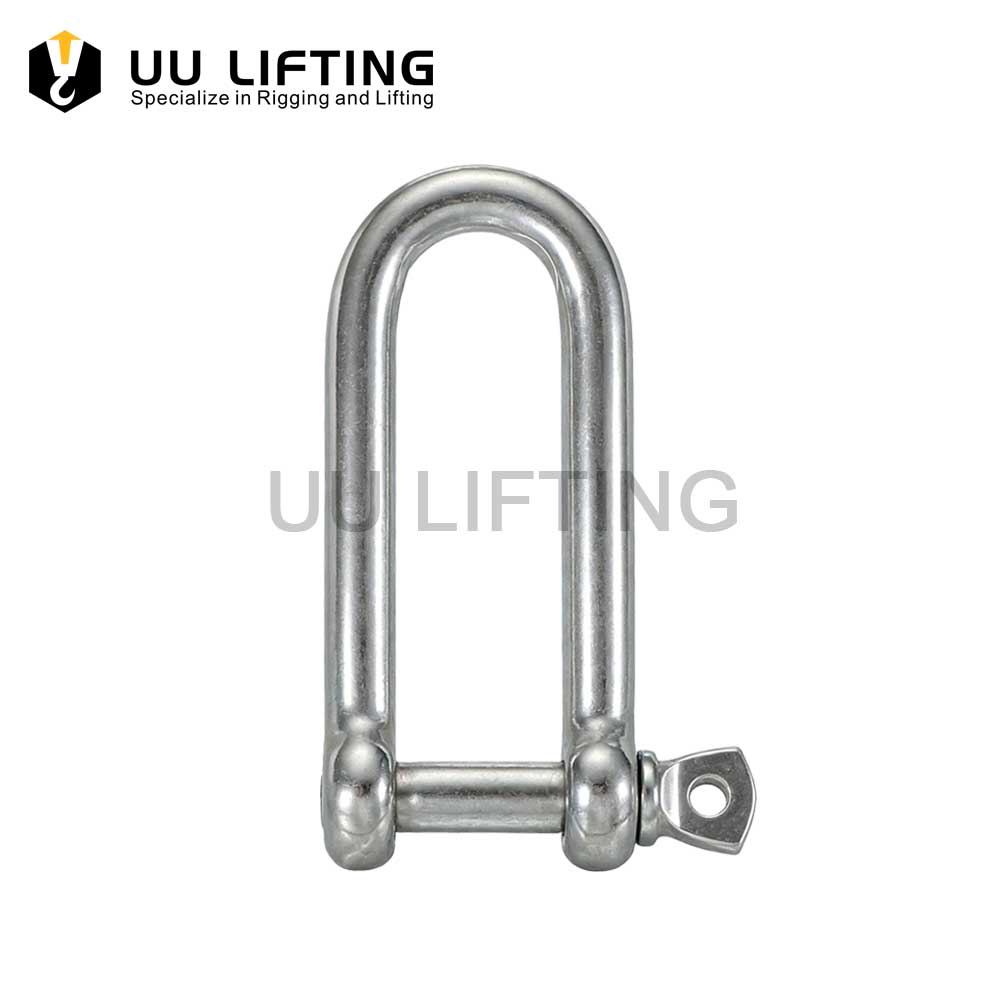
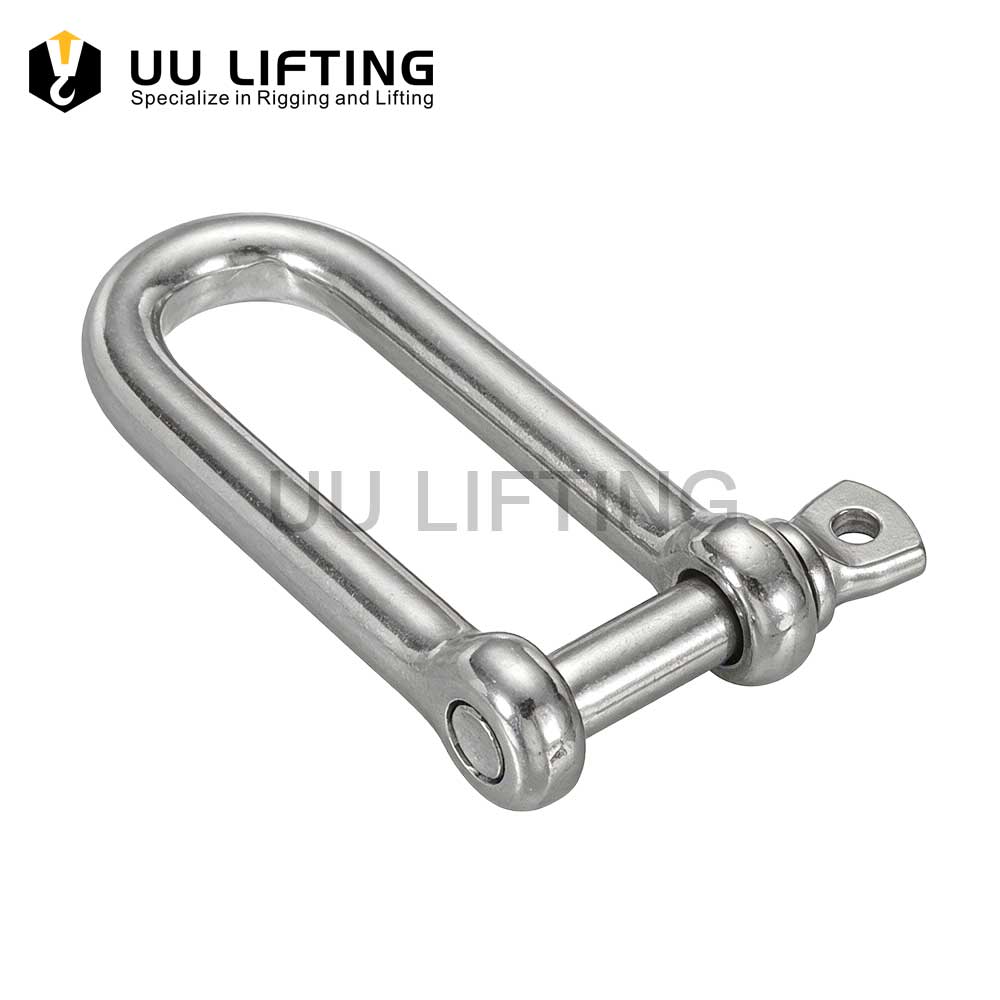
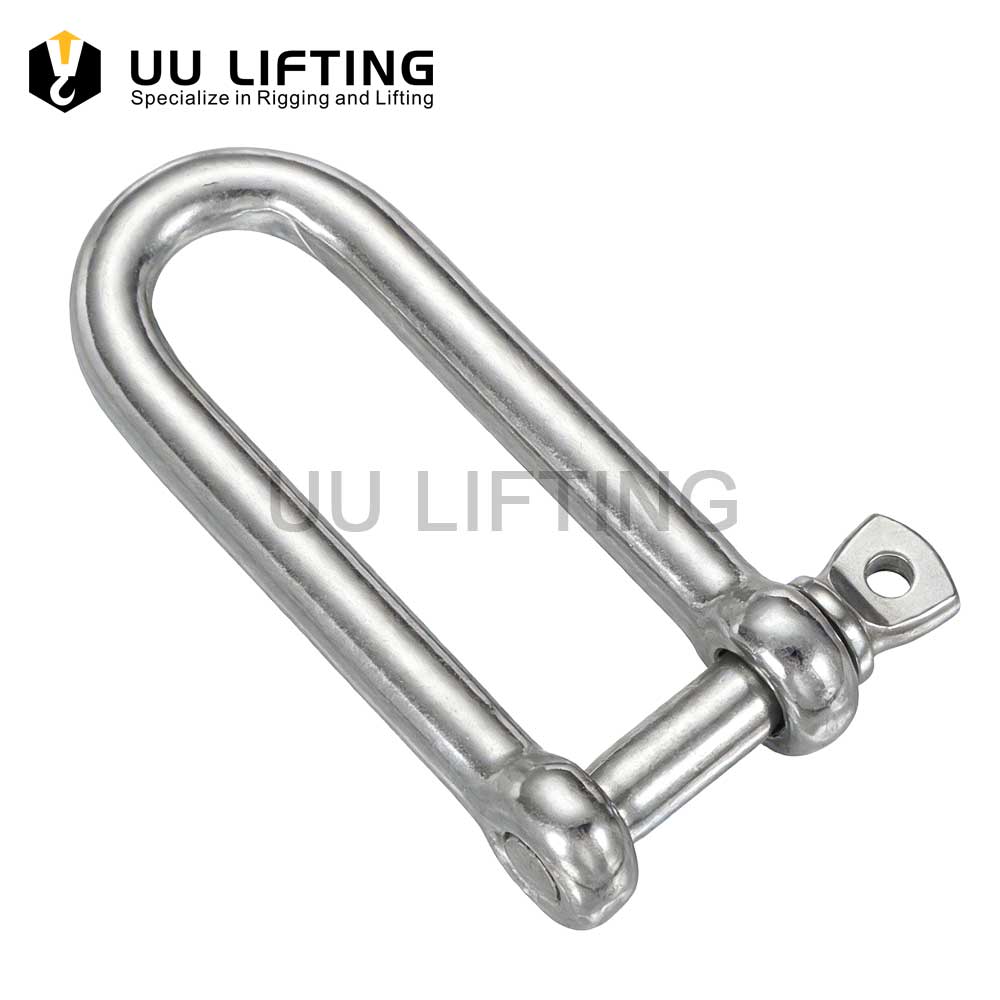
Stainless Steel Long D Shackle with Screw Pin Specifications:
MOQ
1 Pallet, 1 Ton or 3000USD
Material
Grade: 316 Stainless Steel
Surface Finish
High Polished Finish
Sizes
From 5/32″ to 1/2″
Technique Procedure
Free Forging
Stainless Steel Long D Shackle with Screw Pin Sizes:
Stainless Steel Long D Shackle with Screw Pin Sizes
Stainless Steel Long D Shackle with Screw Pin Sizes
A Size (in)
Weight (lb)
Work Load Limit (lb)
Dimension (inch)
B
C
D
X
Y
Z
5/32″
0.02
200
0.15″
0.32″
1.19″
0.97″
1.54″
0.31″
3/16″
0.05
500
0.19″
0.43″
1.50″
1.32″
1.97″
0.38″
1/4″
0.09
750
0.23″
0.49″
1.74″
1.50″
2.40″
0.48″
5/16″
0.2
1000
0.31″
0.68″
2.31″
1.97″
3.17″
0.64″
3/8″
0.37
1200
0.38″
0.78″
2.88″
2.35″
3.95″
0.79″
1/2″
0.62
1500
0.47″
0.93″
3.50″
2.77″
4.68″
0.95″
What Exactly Is A Stainless Steel Long D Shackle with Screw Pin?
A Stainless Steel Long D Shackle with a Screw Pin is a specific type of rigging connector. It has a U-shaped body made of corrosion-resistant steel, an extended length for more connection space, and a threaded pin for quick, easy securing of temporary loads.
Why Is Stainless Steel The Right Material Choice?
Stainless steel is the best choice for its exceptional resistance to rust and corrosion, especially in marine or chemical environments. This material ensures the shackle remains strong and durable, with a longer lifespan and minimal maintenance, making it a reliable and cost-effective option for demanding applications.
Key Advantages of Stainless Steel
When I evaluate a product, I look at its core features. For stainless steel shackles, the benefits are clear.
Corrosion Resistance: This is the main selling point. Stainless steel contains chromium, which creates a passive layer that protects it from rust and corrosion. This is essential for marine, food processing, or chemical industries.
Strength and Durability: Don’t let the shiny finish fool you. Stainless steel is highly durable and can withstand heavy loads without deforming. It maintains its structural integrity under significant stress.
Longevity: Because they resist rust and wear, these shackles last much longer than their carbon steel counterparts. This makes them more cost-effective over the long term, since you replace them less frequently.
Here’s a simple table I use to decide which material is best for a job.
Feature
Galvanized Steel
Stainless Steel (AISI 304)
Stainless Steel (AISI 316)
Corrosion Resistance
Fair to Good
Good
Excellent (Marine Grade)
Best Environment
Dry, Inland
General, Industrial
Marine, Coastal, Chemical
Initial Cost
Low
Medium
High
Long-Term Value
Fair
Good
Excellent
For my business, I stock both 304 and 316 grades. It allows me to provide the right solution for my customers without over-specifying or unnecessarily increasing costs.
What Makes The ‘Long D’ Shape Different From Other Shackles?
The “D” shape, also called a chain shackle, is explicitly designed for in-line pulling applications. The “long” variation provides a wider inside clearance, making it suitable for connecting to thicker objects or when more room is needed within the shackle bow.
D-Shackle vs. Bow Shackle
The most common point of confusion is between a D-shackle and a bow shackle. Using them interchangeably is a critical mistake.
D-Shackles (Chain Shackles): Their narrow, U-shaped body is designed to take a load in a straight line (in-line). Think of connecting a single sling to a lifting point. They have a high capacity for their size but should never be side-loaded, as this can cause them to twist or break.
Bow Shackles (Anchor Shackles): Their larger, O-shaped bow is designed to handle loads from multiple angles. This makes them perfect for connecting multi-leg slings to a single hook.
Here is how they compare:
Feature
D-Shackle (Chain Shackle)
Bow Shackle (Anchor Shackle)
Shape
Narrow “U” or “D”
Wide “O” or “Bow”
Primary Use
Single, in-line pulls
Multi-leg or angled loads
Side Loading
Never Recommended
Acceptable (with reduction)
Nickname
Chain Shackle
Anchor Shackle
The “long D” is a specialty version of the D-shackle. It offers the same in-line strength but with an elongated body to accommodate thicker connections or more components without crowding.
Is a Screw Pin Shackle Safe for Your Lifting Job?
A screw pin shackle is highly safe for temporary lifting tasks or applications requiring frequent connections. However, for permanent or long-term installations, a bolt-type shackle with a cotter pin is the safer choice to prevent the pin from backing out over time.
Understanding Pin Types
The pin is the part that closes the shackle and bears the load, so it’s a critical component. The screw pin is popular for its simplicity.
Mechanism: It’s a simple threaded pin that you screw into the ear of the shackle body. You tighten it by hand, and for the final turn, it’s good practice to use a small bar (a marlinspike) to make sure it’s snug.
Best Use Case: Designed for “pick and place” operations—temporary lifts, aredone quickly, or where the rigging is frequently changed.
However, their convenience comes with a trade-off. Here’s a clear breakdown:
Screw Pin Shackles
Pros
Cons
Speed
Very fast to connect and disconnect.
Not for permanent or long-term installations.
Ease of Use
No special tools are required.
Pin can loosen due to vibration or movement over time.
Simplicity
Fewer parts to lose (no cotter pin).
Must be checked for tightness before every single lift.
The most important rule for a buyer or user is this: if the shackle will be left in place for an extended period or is subject to vibration, do not use a screw pin. In those situations, you must use a bolt-type shackle, which features a bolt, nut, and split cotter pin to secure it. It’s the safest option for permanent rigging.
OUR FACTORY
Raw materials of our products are made of high-quality steel that meets the standards, and the raw materials are traceable. And multiple production lines and machines minimize lead times for rigging and lifting equipment.
Raw Material
Forged
Cast
Chain Machine
Heat Treatment
Powder Plastified
Package
Warehouse
MANUFACTURING PROCESSES
With eight automatic forging and semi-automatic forging line of up to 1600ton press machines and specialized drillng, tapping, heat treatment and inspection equipment. Strict and standardized production process ensures you receive perfect products.
QUALITY CONTROL
All rigging and lifting products are subjected to strict working tension and breaking the tension test. Complied with ISO9001 and CE certification. Our promise to you: Guaranteed safety at work for people and materials.